Category Archives: Video Marketing Basics

Why Testimonial Videos Are One of the Most Powerful Marketing Tools

Most businesses say the same thing: “We’re the best,” “We deliver quality,” “We care about our customers.” The problem is, those claims don’t mean much on their own anymore. People hear them all the time, across every industry, from every competitor.

What actually breaks through that noise is something far more grounded—real customers sharing real experiences in their own words. That’s where testimonial videos come in, and why they’ve become one of the most effective tools in modern marketing.

Unlike polished advertisements, testimonial videos don’t try to convince in a traditional sense. Instead, they show proof. And in today’s environment, proof matters more than promotion.

Why Testimonial Videos Are One of the Most Powerful Marketing Tools
image generate by ChatGPT

Why People Trust Other People More Than Brands

There’s a simple reason testimonial videos work so well: people trust other people more than they trust companies.

When someone is deciding whether to buy a product or hire a service, they naturally look for reassurance. They want to know if it has worked for someone else, especially someone who seems relatable.

This is where psychology plays a big role. Humans rely heavily on social proof when making decisions. If others have had a good experience, it reduces uncertainty. It makes the choice feel safer.

A written review can help with that, but video goes further. When you see a real person speaking, you pick up on details that text cannot carry—tone, emotion, hesitation, excitement, confidence. All of these signals shape how believable the message feels.


The Difference Between Hearing It and Seeing It

There’s a major gap between reading a testimonial and watching one.

A written review might say:
“Great service, highly recommended.”

But a video shows someone explaining:
what problem they had,
why they were frustrated,
how they discovered the solution,
and what actually changed afterward.

That narrative structure matters. People don’t just want praise—they want context. They want to understand the journey.

Video makes that journey visible. It adds facial expressions, voice tone, and real reactions. Those small details make the story feel less like marketing and more like a conversation.


Why Testimonial Videos Build Trust Faster Than Anything Else

Trust usually takes time to develop. Businesses often spend months or even years building credibility through branding, content, and advertising.

Testimonial videos speed up that process significantly.

Instead of a company trying to convince a potential customer, the message comes from someone who has no obligation to promote the brand. That difference changes how the message is received.

It lowers skepticism. It reduces hesitation. And it replaces “Is this really true?” with “This seems to have worked for them.”

In many cases, that shift is enough to move someone from browsing to buying.


Why Video Testimonials Convert Better Than Written Reviews

Written testimonials still have value, but they are easy to overlook. People scroll past them, skim them, or question their authenticity.

Video, on the other hand, demands attention.

It also holds attention longer. When someone is watching a testimonial video, they’re not just reading words—they’re observing a real human experience unfold. That engagement increases the chances that the message will actually stick.

There’s also an emotional element. A satisfied customer speaking with genuine enthusiasm is far more persuasive than text alone. Emotion plays a major role in decision-making, even when people think they are being purely logical.


How Testimonial Videos Influence Every Stage of Buying Decisions

Testimonial videos are useful at every stage of the customer journey.

At the beginning, they introduce your brand in a relatable way. Instead of a business explaining what it does, a customer explains what they experienced.

During the consideration stage, they help compare options. When someone is weighing different providers, real feedback often becomes the deciding factor.

At the final stage, they reduce doubt. Even when a customer is close to making a decision, hesitation can still appear. A strong testimonial can remove that final barrier.

This is especially true in industries where trust is essential—services, healthcare, coaching, real estate, and high-ticket products.


Authenticity Matters More Than Production Quality

One common mistake businesses make is overproducing testimonial videos. While high-quality visuals can be helpful, perfection is not the goal.

What actually works best is authenticity.

A slightly imperfect video, where a customer speaks naturally and casually, often feels more believable than a heavily scripted production. People can tell when something feels rehearsed, and that can reduce trust instead of building it.

What matters most is honesty. If the emotion is real, the video works.


How Businesses Should Approach Testimonial Videos

Getting effective testimonial videos is not about asking customers to repeat marketing messages. It’s about guiding them to tell their story.

A simple structure works best:
What problem did they have?
Why was it important to solve it?
What made them choose your business?
What happened after using your product or service?

This structure creates a natural narrative that viewers can follow easily.

Placement also matters. Testimonial videos should not be hidden away on a separate page. They perform best when placed where decisions are made—landing pages, product pages, checkout pages, and even social media ads.


The Impact on Conversions and Sales

Testimonial videos often have a direct effect on conversion rates.

When people see others achieving results, it reduces perceived risk. Buying anything involves uncertainty, and testimonials help remove that uncertainty by showing real outcomes.

This is why businesses that use testimonial videos often see stronger performance metrics, including higher engagement, longer time on page, and better sales conversions.

It’s not just about persuasion—it’s about reassurance.


Where Testimonial Videos Are Heading Next

As online competition continues to grow, trust will become even more important. And video is becoming the most natural way to build that trust at scale.

We are also starting to see new developments in personalization and distribution. Businesses are beginning to use testimonial content more strategically, matching different testimonials to different audience segments.

In the future, testimonial videos may become even more targeted, interactive, and integrated into customer journeys.

But even with all the changes in technology, the foundation remains the same.

People trust people.

That is something marketing will never replace.

source: Aleric Heck

Final Thoughts

Testimonial videos are powerful because they don’t feel like marketing. They feel like experience sharing. That difference is what makes them so effective.

They shorten the trust-building process, reduce hesitation, and help potential customers feel more confident in their decisions.

In a digital world filled with claims and promises, real voices stand out. And those real voices often make the difference between someone just looking—and someone actually buying.

The written content on this page was generated by ChatGPT.
Explainer Videos vs Product Demo Videos: Which One Should You Use First?

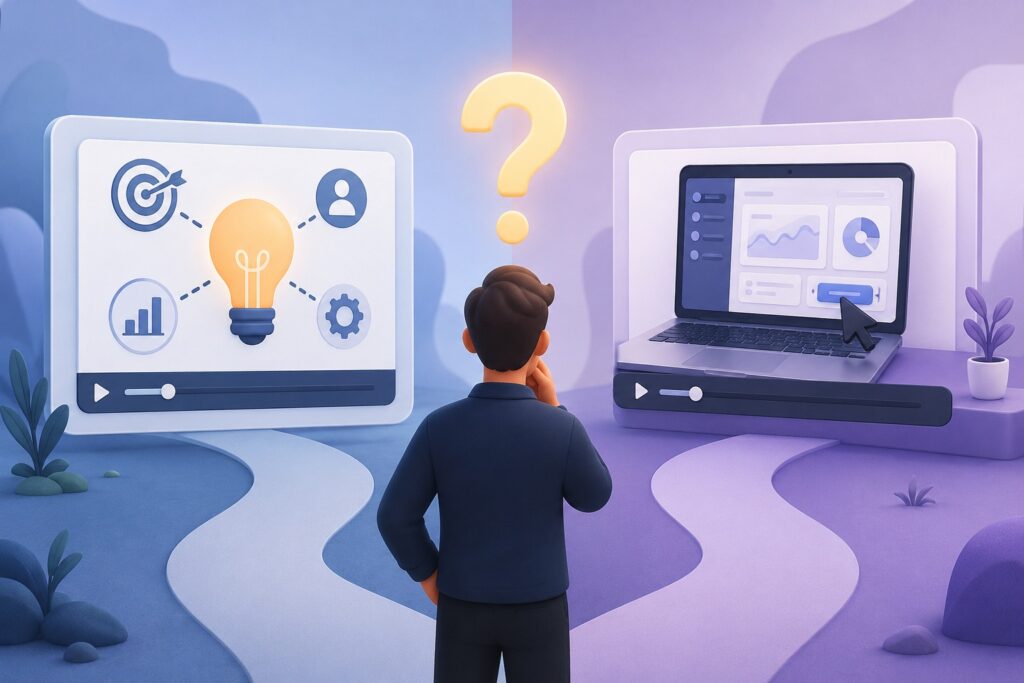
Most businesses don’t struggle with whether video marketing works. That part is already settled. The real challenge shows up much earlier—choosing what kind of video to start with.

Two of the most commonly used formats are explainer videos and product demo videos. On the surface, they might look similar. Both are short, both are promotional, and both are used to increase sales. But in practice, they serve very different roles in your marketing strategy.

So the real question is not just what they are—but which one actually makes sense to create first when you’re starting from zero or building a new campaign?

To answer that properly, it helps to understand how each one behaves in the real world.

Explainer Videos vs Product Demo Videos: Which One Should You Use First?

What an Explainer Video Actually Does for Your Business

An explainer video is usually the first “conversation” your business has with a potential customer.

At this stage, people don’t really know you yet. They may have landed on your website, seen a social post, or clicked an ad out of curiosity. They are not looking for deep technical details. They are still trying to answer something very basic:

“What is this, and why should I care?”

That’s exactly where explainer videos perform best.

Instead of focusing on features or step-by-step usage, they focus on clarity. They take something that might be complicated—like a service, software, or business model—and turn it into something easy to understand in under two minutes.

Where explainer videos really shine

They are especially effective when:

  • Your product or service is new to the market
  • Your idea needs context before it makes sense
  • Your audience is cold and unfamiliar with your brand
  • You need to simplify something technical or abstract

A good explainer video removes confusion. And in marketing, clarity often comes before interest.

For example, if a company offers a subscription-based cleaning service, most people won’t immediately understand how scheduling, pricing, or recurring visits work. An explainer video can walk through that entire experience in a simple story, helping the viewer understand the value without effort.

That “instant understanding” is what makes explainer videos powerful at the beginning of a customer journey.


What a Product Demo Video Actually Focuses On

A product demo video comes in at a very different stage.

By the time someone is watching a demo, they already have some level of interest. They are no longer asking what the product is. Instead, they are asking something more practical:

“How does it actually work, and will it solve my problem?”

This is where detail matters.

Unlike explainer videos, demos don’t simplify the idea—they prove it. They show the product in action, often step by step, so the viewer can visualize exactly what owning or using it would feel like.

Where product demo videos perform best

They are most effective when:

  • Your audience already understands the product category
  • You’re targeting warm leads or returning visitors
  • The purchase decision depends on features or usability
  • You need to reduce hesitation before buying

For example, if you’re selling a project management tool, the audience likely already knows what such tools do. What they need now is confidence. A demo video showing task creation, team collaboration, and workflow automation helps remove doubt and makes the decision easier.

In other words, demos don’t introduce—they reassure.


The Real Difference Between the Two

Although both formats sit under video marketing, they operate at different stages of persuasion.

Here’s a simple way to think about it:

  • Explainer videos build understanding
  • Product demos build confidence

That difference changes everything.

Explainer videos are emotional and conceptual. They focus on the “why.”
Product demos are logical and functional. They focus on the “how.”

One prepares the audience. The other convinces them.


So Which One Should You Create First?

If you’re just starting out, the safest and most effective answer is usually this:

Start with an explainer video.

That might feel less exciting, especially if you’re eager to show off your product. But in most cases, skipping the explainer stage creates a hidden problem—people don’t fully understand what you do, which means they don’t engage deeply enough to care about the demo.

There are a few reasons why explainer videos typically come first:

1. Most audiences need context before details

If someone doesn’t fully understand your offer, showing them features won’t help. It only adds more confusion.

2. Cold traffic needs simplicity

People seeing your brand for the first time are not ready for technical explanations. They need a clear message before anything else.

3. It forces you to refine your message

Creating an explainer video forces you to simplify your business into its core idea. That clarity improves everything else—ads, landing pages, and even sales conversations.


When a Product Demo Should Come First Instead

There are situations where starting with a demo actually makes more sense.

For example:

1. Your product category is already familiar

If people already understand what your product is (like smartphones, apps, or tools), you don’t need to explain the concept—you just need to show what makes yours better.

2. You already have warm traffic

If visitors are already aware of your brand, a demo becomes more powerful than another introduction.

3. Your focus is direct conversion

If your goal is immediate sales rather than awareness, demos can push people closer to purchase faster.


The Most Effective Strategy: Use Both in Sequence

The real strength of video marketing comes when you stop thinking in terms of “which one is better” and start thinking in terms of “what order makes sense.”

A strong funnel often looks like this:

Stage 1: Awareness

  • Explainer videos
  • Short brand introductions
  • Educational content

Stage 2: Consideration

  • Product demos
  • Tutorials
  • Feature breakdowns

Stage 3: Decision

  • Testimonials
  • Case studies
  • Reviews

When structured this way, each video has a clear job. Nothing overlaps, and nothing feels wasted.


A Simple Real-World Example

Imagine a small business offering an online fitness coaching app.

At the beginning, most people don’t know what makes it different from hundreds of other fitness apps. An explainer video helps introduce the concept, the benefits, and the transformation it offers.

Once that interest is built, a product demo shows how the app actually works—tracking workouts, logging meals, and following guided programs.

The result is a smoother customer journey. People understand the idea first, then see the proof, and finally feel comfortable committing.


A Mistake Many Businesses Make

One of the most common mistakes is skipping the explainer stage entirely and jumping straight into product demos.

On paper, it sounds logical. If you show the product, people should buy it. But in reality, it often fails because the viewer is still trying to figure out the bigger picture.

Without that foundation, even a great demo can feel irrelevant.

source: XPLAI

Final Takeaway

There is no universal winner between explainer videos and product demo videos. The right choice depends entirely on where your audience is in their journey.

But as a general rule:

  • Start with an explainer video when you need to build awareness and clarity
  • Use a product demo video when you need to build confidence and drive decisions
  • Combine both when you want a complete, structured marketing system

When used in the right order, these two video types don’t compete with each other—they support each other.

And that combination is often what separates average video marketing from campaigns that actually convert.

The written content on this page was generated by ChatGPT.

How Video Marketing Fits Into Your Overall Digital Marketing Strategy

There’s a moment many business owners hit where they realize traditional marketing just isn’t enough anymore. Social media is crowded, attention spans are shorter, and customers are increasingly making decisions based on what they can see rather than what they read.

That’s where video comes in.

The idea of video marketing often feels intimidating at first—especially if you have no experience, no editing skills, and a limited budget. It can seem like something reserved for big brands with professional teams and expensive equipment.

But that assumption is outdated.

Today, video marketing is one of the most accessible forms of content creation available. If you have a smartphone and a clear message, you already have enough to begin. The real challenge isn’t equipment—it’s knowing what to say, how to start, and how to stay consistent.

Let’s break it down in a practical way.

How Video Marketing Fits Into Your Overall Digital Marketing Strategy
image generate by ChatGPT

Why Video Marketing Is Worth Starting Early

Before focusing on tools or strategy, it helps to understand why video matters so much in the first place.

People process video faster than text. They trust what they can see. And they remember visual content far longer than written content alone. This is why even a simple video can often outperform a polished blog post or static image.

For small businesses, this creates a major advantage. Video allows you to:

  • Explain your service quickly without confusion
  • Show real proof of what you do
  • Build familiarity and trust with potential customers
  • Stand out in crowded feeds where text gets ignored

You don’t need to go viral. You just need to be visible and understandable.


Starting Without Equipment or Experience

One of the biggest mental barriers is the belief that you need “proper gear” before you can begin. In reality, most effective early-stage videos are shot with nothing more than a phone.

If your smartphone can record clear video and decent audio, that’s enough to start.

Instead of focusing on upgrades, focus on three basics:

Good lighting makes your video look clearer than expensive cameras ever will. Natural light near a window is often enough.

Stable framing helps your video feel more professional. You don’t need a tripod—stacking books or leaning your phone works fine.

Clear sound is more important than perfect visuals. People will tolerate average video quality, but they won’t tolerate unclear audio.

Once those basics are in place, you’re already ahead of most beginners who never start at all.


Choosing Your First Simple Video Idea

A common mistake at the beginning is trying to create something “impressive.” This usually leads to overthinking and no actual content being produced.

Instead, your first videos should be simple, direct, and based on what you already know.

Some of the easiest starting points include:

  • Introducing who you are and what your business does
  • Answering a common customer question
  • Showing how your service works in real time
  • Sharing a short tip related to your industry
  • Giving a behind-the-scenes look at your process

These types of videos work because they feel real, not scripted or forced.


A Simple Way to Structure Any Video

Even though you’re keeping things simple, having structure helps your message stay clear.

A basic framework you can always rely on is:

Start with a hook that quickly explains what the viewer will gain or learn. This prevents people from scrolling away in the first few seconds.

Then briefly introduce the problem your audience is facing. This creates relevance.

After that, present your solution—this is where your business naturally fits in.

Finally, include a simple next step. This could be visiting your website, sending a message, or calling your business.

You don’t need complexity. You just need clarity.


Recording Your First Video Without Pressure

The hardest part for most people is simply pressing record.

There’s often a fear of not sounding professional enough or making mistakes. But in reality, early videos are not about perfection—they’re about communication.

It’s normal for the first few videos to feel awkward. That discomfort fades quickly once you start getting used to speaking on camera.

What matters most is that you:

  • Speak slowly and clearly
  • Keep your message short
  • Avoid overthinking every sentence
  • Focus on helping the viewer rather than impressing them

The more natural you are, the more relatable your video becomes.


Editing Without Overcomplicating It

Editing often scares beginners, but it doesn’t need to.

Your goal is not to create cinematic content. Your goal is to make your message easy to understand.

Basic editing usually includes:

  • Cutting out long pauses or mistakes
  • Keeping the video concise
  • Adding simple text if needed for clarity
  • Making sure audio is balanced

That’s it.

Over-editing often makes videos feel less authentic, especially for small business content.


Where to Post Your Videos First

Creating a video is only half the process. The other half is making sure people actually see it.

You don’t need to be on every platform. In fact, starting with too many platforms can slow you down.

Instead, focus on one or two places where your audience already spends time. For many businesses, this might be Facebook, Instagram, or YouTube.

Consistency matters more than platform variety.


What Actually Makes Video Marketing Work Over Time

Most people assume video marketing works instantly. In reality, it builds gradually.

Your early videos are not about immediate results—they’re about learning what your audience responds to.

Over time, you’ll start noticing patterns:

  • Which topics get more attention
  • What type of videos people watch longer
  • What messages lead to inquiries or sales

That feedback loop is where real growth happens.


Mistakes That Slow Beginners Down

There are a few common issues that often hold people back:

Waiting too long to start because things don’t feel “ready” yet.

Trying to make every video perfect instead of just publishing consistently.

Making videos too complicated instead of keeping them simple and direct.

Ignoring audience feedback and continuing to post without adjustment.

Avoiding these mistakes is often more important than any advanced strategy.

source: Blake Ridder

Final Thoughts

Starting video marketing without experience or a large budget is not only possible—it’s increasingly the norm.

The businesses that succeed with video are rarely the ones with the most expensive production. They are the ones that begin early, stay consistent, and improve over time.

Your first video doesn’t need to be impressive. It just needs to exist.

Because once you start, everything becomes easier from there.

The written content on this page was generated by ChatGPT.
How to Choose the Right Video Format for Your Business Goals

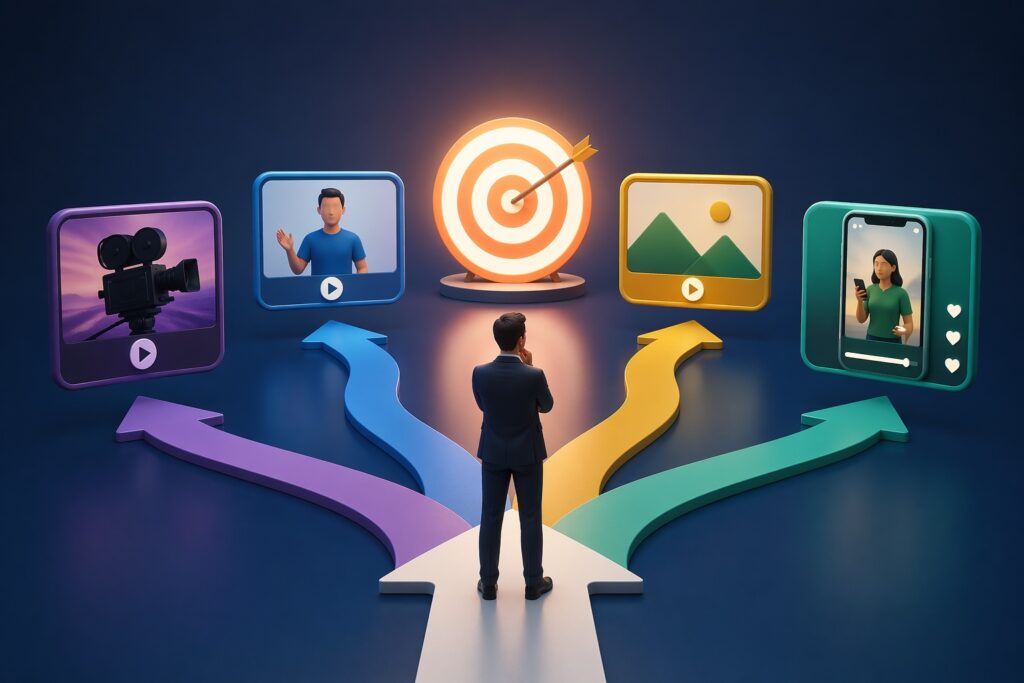
Not every video works the same way. A short clip that performs well on social media might completely fail on a landing page. On the other hand, a detailed explainer video might be too heavy for a quick scroll audience on Instagram.

This is where many businesses get stuck. They focus on creating videos, but not on choosing the right type of video for the right purpose.

The truth is simple. Video marketing works best when the format matches the goal. Once that alignment is clear, everything from engagement to conversions becomes easier to achieve.

Let’s break down how to choose the right video format in a way that actually fits your business needs.

How to Choose the Right Video Format for Your Business Goals
image generated by ChatGPT

Start With the Outcome, Not the Video

Before thinking about cameras, editing, or platforms, the first question should always be: What do I want this video to accomplish?

Most business goals fall into a few categories:

Some videos are meant to introduce your brand to new audiences. Others are designed to explain a product in detail. And some are focused purely on turning viewers into paying customers.

If the goal is unclear, the video usually ends up unfocused too.

So instead of starting with “What video should I make?” it helps to ask:

  • Am I trying to attract attention?
  • Am I trying to explain something?
  • Am I trying to convince someone to buy?
  • Or am I trying to build trust over time?

Once you answer that, the format becomes much easier to choose.


If You Want Attention, Keep It Short

When the goal is visibility or awareness, shorter videos tend to perform better.

These are the types of videos that show up on platforms like TikTok, Instagram Reels, and YouTube Shorts. They are quick, direct, and designed to stop someone from scrolling.

They don’t need to explain everything. In fact, trying to include too much often hurts performance.

Good examples include:

  • Quick tips related to your industry
  • Short transformations or before-and-after clips
  • Simple product highlights
  • A single strong message or idea

These videos work best when they feel effortless to watch. The goal is not depth, but reach.


If You Need Leads, Focus on Explaining Clearly

When your goal is lead generation, clarity becomes more important than entertainment.

This is where explainer videos come in. They usually run a bit longer, often between one and three minutes, and focus on breaking down a service or solution in a simple way.

Instead of trying to impress the viewer, the goal is to remove confusion.

These videos are especially useful when your business involves something people don’t fully understand right away. For example:

  • Service based businesses
  • Software or tech tools
  • Specialized professional services

A good explainer video answers three things quickly:

  • What is the service?
  • How does it work?
  • Why should I care?

If those are clear, viewers are more likely to take the next step.


If You Want Sales, Show the Product in Action

When someone is close to making a decision, they don’t want theory. They want proof.

That’s where product demo videos work extremely well.

These videos focus less on storytelling and more on demonstration. They show exactly how something works in real situations.

They are especially effective because they reduce hesitation. People can see the value instead of just reading about it.

Common examples include:

  • Step-by-step product walkthroughs
  • Feature demonstrations
  • Real usage scenarios

The more practical and real it feels, the more effective it becomes.


If Trust Is the Goal, Let Customers Speak

People trust people more than brands. That’s why testimonial videos are so powerful.

Instead of you explaining why your business is good, your customers do it for you.

These videos don’t need to be heavily produced. In fact, slightly raw and natural footage often performs better because it feels authentic.

Strong testimonial videos usually focus on:

  • The problem the customer faced
  • How your product or service helped
  • The outcome they experienced

When done well, these videos can remove doubts that no sales pitch ever could.


If You Want Authority, Teach Something Useful

Educational videos take a different approach. Instead of selling directly, they focus on helping.

These are often longer and more detailed, but they attract highly engaged viewers.

They work well because they position your business as someone who understands the industry deeply.

Some examples include:

  • Step-by-step tutorials
  • Industry insights
  • Common mistakes and how to avoid them
  • In-depth explanations of topics your audience searches for

Over time, this type of content builds long-term credibility and also performs well in search engines.


Don’t Ignore Live Video Opportunities

Live video adds something that edited content can’t fully replicate: real-time interaction.

There’s no script in the same way, and that makes it feel more human.

Businesses often use live video for:

  • Q&A sessions
  • Product launches
  • Behind-the-scenes updates
  • Live demonstrations

Even though it feels less polished, it often builds stronger engagement because viewers can participate in the moment.


The Platform Changes Everything

A video is never just about content. Where it is published matters just as much.

A detailed video might work well on YouTube but feel out of place on Instagram. A short clip might perform well on social media but lack depth for a website landing page.

Here’s a simple way to think about it:

  • YouTube works best for searchable, longer content
  • Social media works best for fast attention and short messages
  • Websites need focused videos that support conversions
  • Email works best for short, direct messaging

Matching format to platform ensures your effort doesn’t get wasted.


One Video Is Never Enough

A common mistake businesses make is trying to use one video everywhere.

The reality is that each platform and goal requires a slightly different version of your content.

A single idea can often be repurposed into:

  • A short teaser clip
  • A full explanation video
  • A testimonial angle
  • A promotional version

When you stop thinking in terms of “one video” and start thinking in terms of “video systems,” your results usually improve significantly.

source: lacapturevisuals

Final Thoughts

Choosing the right video format is less about creativity and more about intention.

When the format matches the goal, everything becomes more effective. Your message is clearer, your audience understands faster, and your results become more predictable.

Instead of asking what video to make next, it helps to ask what role that video needs to play.

Once that is clear, the right format usually becomes obvious.

The written content on this page was generated by ChatGPT.
Why Video Marketing Outperforms Text and Image Content

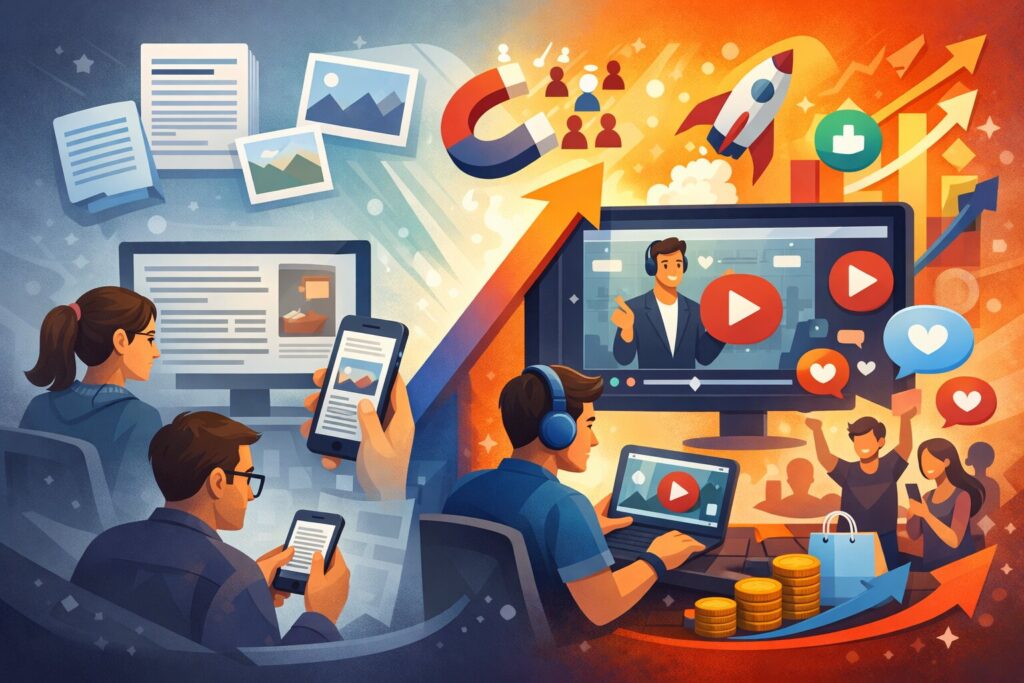
There was a time when a well-written blog post or a striking image was enough to capture attention online. That time hasn’t disappeared completely, but the way people consume content has shifted in a big way. Today, audiences don’t just want information. They want to experience it. That’s exactly where video steps in and changes the game.

From quick clips on social media to in-depth tutorials and product demos, video has become the format people naturally gravitate toward. It doesn’t just compete with text and images—it consistently outperforms them. Understanding why this happens can completely reshape how you approach marketing.

Why Video Marketing Outperforms Text and Image Content

People Don’t Just Read Anymore—They Watch

Reading takes effort. Even scanning requires focus. When someone lands on a page filled with text, they often skim or bounce unless something immediately hooks them.

Video removes that barrier.

Instead of asking someone to interpret words or imagine a scenario, video shows everything in real time. The viewer doesn’t have to work as hard to understand the message. It’s delivered through visuals, sound, and pacing all at once. That combination makes it easier to absorb and far more appealing, especially for busy audiences.

This shift isn’t just a preference. It’s a behavioral change. People now expect content to be quick, clear, and engaging—and video checks all three boxes.


Movement Naturally Pulls Attention

There’s a simple reason video stops people mid-scroll: motion stands out.

When everything around you is static—text blocks, still images, banners—anything that moves instantly grabs attention. It’s almost instinctive. Your eyes are drawn to it before you even realize it.

That small moment of attention is incredibly valuable. Once someone pauses to watch, even for a few seconds, you’ve already achieved something text rarely does: you’ve interrupted the scroll.

And once that attention is captured, it becomes much easier to deliver your message.


Video Holds Attention Longer

Getting attention is one thing. Keeping it is another.

With text, readers often skim headings or jump around. With images, the interaction is usually brief. But video encourages people to stay.

A well-paced video creates curiosity. What happens next? What’s the takeaway? That natural progression keeps viewers engaged from start to finish.

Even short videos can hold attention longer than written content because they guide the viewer through a complete experience instead of leaving them to navigate it on their own.


It Creates a Stronger Emotional Response

One of the biggest advantages of video is its ability to make people feel something.

Tone of voice, facial expressions, background music, and visual storytelling all work together to create emotion. That emotional layer is something text struggles to fully replicate and images can only partially deliver.

Think about the difference between reading a customer review and watching someone share their experience on camera. The written version might be informative, but the video version feels real. You can hear sincerity, see reactions, and connect on a human level.

That connection matters. People are far more likely to trust and remember content that made them feel something.


Complex Ideas Become Simpler

Some concepts are difficult to explain with words alone. You can write step-by-step instructions, but they may still leave room for confusion. Images can help, but they don’t always provide enough context.

Video simplifies everything.

You can show how something works, demonstrate a process, or walk someone through a solution in real time. There’s no guessing involved. The viewer sees exactly what you mean.

This is especially useful for:

  • Product demonstrations
  • Tutorials and how-to guides
  • Service explanations

Clarity builds confidence, and confidence leads to action.


Video Builds Trust Faster Than Any Other Format

Trust is one of the hardest things to earn online. People are cautious, especially when they’re considering a purchase or choosing a service.

Video speeds up that process.

When someone sees a real person ಮಾತನಾಡ, explaining, or demonstrating something, it feels more genuine. It’s no longer just a brand speaking—it’s a person communicating.

That human element makes a difference. It reduces skepticism and makes your message more believable.

For newer businesses or brands trying to stand out, this can be a major advantage.


Higher Engagement Leads to Greater Reach

Engagement is the currency of online visibility. The more people interact with your content, the more platforms push it out to others.

Video consistently performs better in this area.

Viewers are more likely to:

  • Watch a video all the way through
  • Share it with others
  • Leave comments or reactions

These interactions signal value, which increases your reach without needing to rely entirely on paid promotion.

In simple terms, video gives your content a better chance of being seen.


It Drives Better Results Where It Matters

At the end of the day, marketing isn’t just about views. It’s about results.

Video often leads to higher conversion rates because it answers questions quickly and builds confidence in a short amount of time. Instead of reading multiple sections or searching for details, viewers get everything they need in one place.

A short product video can remove doubts. A clear explanation can eliminate confusion. A compelling story can influence decisions.

All of these moments move people closer to taking action.


Search Engines Favor Video Content

Search engines pay attention to how users interact with your content. If people stay longer, engage more, and don’t immediately leave, that sends a strong signal that your content is valuable.

Video helps improve those signals.

Pages with video often see longer visit durations and better engagement overall. That can positively impact rankings over time. On top of that, video content can appear in multiple search formats, increasing your visibility.

When optimized properly, video becomes more than just content—it becomes a tool for discovery.


It Fits Perfectly Into Modern Viewing Habits

Most people are no longer sitting at a desk when they consume content. They’re on their phones, often multitasking or on the move.

Video fits naturally into this lifestyle.

It’s easy to watch during short breaks, while commuting, or even while doing something else. You don’t need to sit down and concentrate the same way you would with long-form text.

That convenience makes video the preferred choice for many users.


One Piece of Content Can Go Further

Another advantage that often gets overlooked is how flexible video is.

A single video can be repurposed in multiple ways:

  • Short clips for social platforms
  • Snippets for ads
  • Transcripts turned into blog content
  • Key moments used for promotions

This means you’re not just creating content—you’re building a system where one effort leads to multiple outputs.

That kind of efficiency is hard to match with text or images alone.


The Real Difference Comes Down to Experience

Text informs. Images illustrate. Video immerses.

That’s the real reason video outperforms both.

It combines multiple elements into one seamless experience, making it easier for people to understand, connect, and respond. It doesn’t replace text or images entirely, but it elevates how your message is delivered.

source: Biteable

Final Thoughts

The rise of video isn’t a passing trend. It reflects how people prefer to learn, engage, and make decisions today.

Businesses that rely only on text and images risk blending into the background. Those that embrace video create something more dynamic—something that captures attention and holds it.

If your goal is to communicate clearly, build trust quickly, and stand out in a crowded space, video gives you a clear advantage. It meets your audience where they are and delivers your message in a way that feels natural, engaging, and effective.

And in a digital world where attention is limited, that advantage matters more than ever.

The written content on this page was generated by ChatGPT.
Step-by-Step Guide to Planning Your First Marketing Video

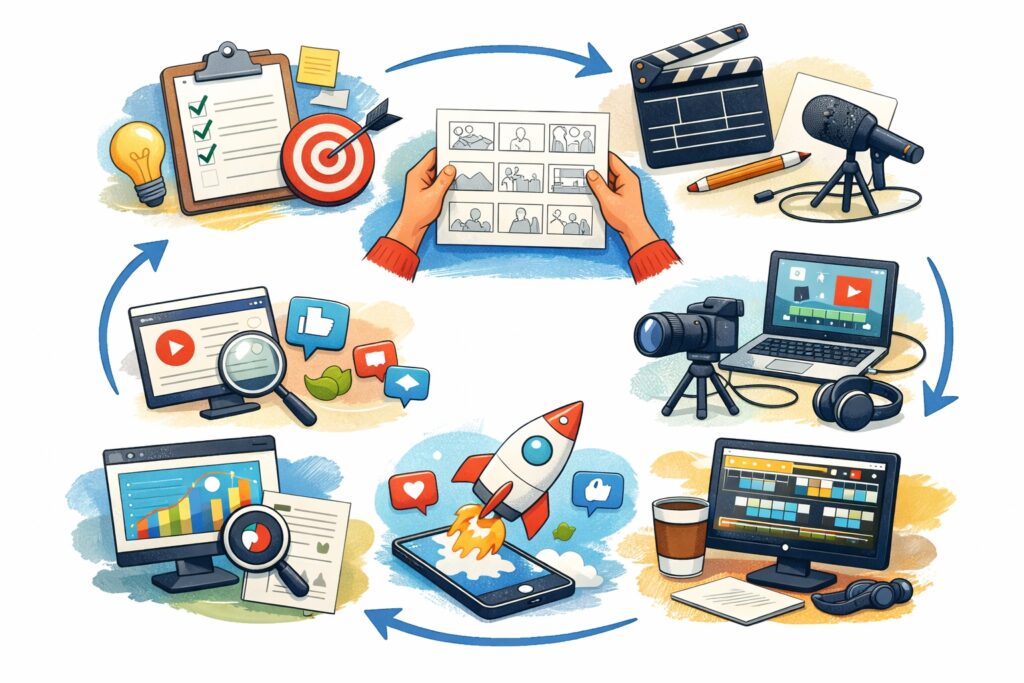
The first time a business decides to create a marketing video, excitement usually mixes with uncertainty. Ideas come quickly. Execution, however, feels less clear. Should the video sell something directly? Tell a story? Educate viewers? Many first attempts fail not because of poor filming or editing, but because planning was rushed or skipped entirely.

A successful marketing video rarely happens by accident. Behind every engaging video is a thoughtful process that defines the message, audience, and outcome long before the camera turns on. Planning gives direction, saves money, and prevents the common mistake of creating content that looks good but achieves little.

If you’re preparing to create your first marketing video, this guide walks through each stage carefully so you can move forward with confidence and purpose.

Step-by-Step Guide to Planning Your First Marketing Video

Start With One Clear Objective

Before thinking about visuals, scripts, or equipment, decide what success looks like.

Many businesses try to accomplish too much in a single video. They want to introduce the company, explain services, generate leads, and entertain viewers all at once. The result often feels scattered.

Instead, choose one primary goal:

  • Introduce your brand to new audiences
  • Explain how a product works
  • Drive traffic to a website
  • Generate inquiries or bookings
  • Build trust through education

A focused objective shapes every decision that follows. When viewers finish watching, the next step should feel obvious to them.


Understand Exactly Who You’re Talking To

A marketing video is not meant for everyone. The more specific your audience, the more effective your message becomes.

Think beyond general demographics. Consider real-world behavior:

  • What problems does your audience face daily?
  • What questions do they ask before buying?
  • Where do they usually discover businesses like yours?
  • What tone would feel natural to them: professional, casual, educational, or inspirational?

For example, a video aimed at small business owners should sound practical and solution-focused, while content for younger social media audiences may benefit from faster pacing and visual energy.

When viewers feel understood, they stay engaged longer, which improves both conversions and search visibility.


Choose the Right Type of Marketing Video

Your goal determines your video format. Each type serves a different role in the customer journey.

Common beginner-friendly formats include:

Explainer Videos
Perfect for introducing a service or simplifying complex ideas.

Product Demonstrations
Show how something works in real situations rather than describing it.

Educational or How‑To Videos
Build authority while helping potential customers solve problems.

Customer Testimonials
Create credibility through authentic experiences.

Short Social Media Videos
Designed for quick attention and brand exposure.

Your first video does not need cinematic production. Clarity and usefulness matter far more than elaborate visuals.


Develop a Simple but Intentional Story

People remember stories more than features or statistics. Even a short marketing video benefits from a basic narrative structure:

  1. Present a relatable problem
  2. Show the struggle or challenge
  3. Introduce your solution
  4. Demonstrate results
  5. Offer a next step

This structure keeps viewers emotionally invested while guiding them naturally toward your call to action.

Avoid scripting every sentence to sound overly polished. Natural language feels more trustworthy and keeps delivery authentic.


Write a Script That Sounds Human

A script prevents rambling and ensures your message stays clear, but it should never sound robotic.

Helpful scripting principles:

  • Open with a strong hook within the first few seconds
  • Use conversational language instead of corporate jargon
  • Keep sentences short and easy to follow
  • Speak directly to the viewer using “you”
  • End with a clear action step

Read the script aloud while writing. If it feels awkward to say, it will feel awkward to watch.

Many successful videos rely on structured talking points rather than rigid word-for-word scripts.


Create a Visual Plan Before Filming

Planning visuals saves enormous time during production.

A simple storyboard does not require artistic skills. Even rough sketches or bullet points work. Outline:

  • Camera angles
  • On-screen text or graphics
  • Demonstrations or product shots
  • Transitions between scenes

This preparation prevents missed footage and reduces reshoots later.

Think of the storyboard as a roadmap that keeps filming efficient and stress-free.


Prepare Equipment and Environment

High-quality video today is more accessible than ever. A modern smartphone can produce excellent results when used correctly.

Focus on essentials first:

  • Stable camera positioning using a tripod
  • Clear audio with an external microphone if possible
  • Good lighting, preferably natural light near windows
  • Clean, distraction-free background

Viewers will forgive simple visuals, but poor sound quality often causes them to stop watching immediately.


Decide the Ideal Length and Format

Attention spans vary depending on where the video will appear.

General guidelines:

  • Social media videos: 30–90 seconds
  • Website or landing page videos: 1–3 minutes
  • Educational or tutorial videos: 3–8 minutes

Also consider platform orientation:

  • Vertical format for mobile-first platforms
  • Square format for feeds
  • Horizontal format for YouTube and websites

Planning this early avoids editing complications later.


Plan Distribution Before Production

One of the most overlooked steps is deciding where the video will be used before filming begins.

Ask yourself:

  • Will this video live on your homepage?
  • Is it designed for YouTube search traffic?
  • Will clips be reused on social media?
  • Should shorter versions be created for ads?

Knowing distribution channels influences framing, pacing, and messaging choices during production.

A single well-planned video can often be repurposed into multiple smaller pieces of content.


Optimize the Video for Search Visibility

Creating a video is only half the work. Optimization determines whether people actually find it.

Key SEO practices include:

  • Writing keyword-focused titles that match search intent
  • Crafting detailed descriptions explaining the video’s value
  • Adding captions or transcripts for accessibility and indexing
  • Designing compelling thumbnails that encourage clicks

Search engines increasingly prioritize video content, especially when viewers stay engaged and watch longer.


Promote the Video Consistently

Publishing alone rarely generates results. Promotion amplifies reach.

Effective promotion strategies include:

  • Embedding the video in blog posts
  • Sharing across multiple social platforms
  • Including it in email campaigns
  • Pinning it to profiles or landing pages
  • Encouraging team members or partners to share

Consistency matters more than virality. Steady exposure builds momentum over time.


Measure Results and Improve the Next Video

Your first marketing video is not meant to be perfect. It is meant to teach you what works.

Track meaningful metrics such as:

  • Watch time and audience retention
  • Click-through rates
  • Comments or shares
  • Leads or conversions generated

Patterns quickly emerge. Maybe viewers drop off early, or perhaps shorter videos perform better. Each insight improves future planning.

Video marketing becomes easier and more effective with every iteration.

source: Elif Hız

Why Planning Makes the Biggest Difference

Many businesses assume success depends on expensive equipment or professional editing. In reality, clarity of purpose and preparation have a far greater impact.

Planning transforms video marketing from guesswork into strategy. It ensures your message reaches the right audience, communicates value quickly, and guides viewers toward action.

Your first video does not need perfection. It needs intention.

Start small. Learn from feedback. Refine your process. Over time, video becomes one of the most powerful marketing tools your business can use to build trust, visibility, and long-term growth.

The written content on this page was generated by ChatGPT.
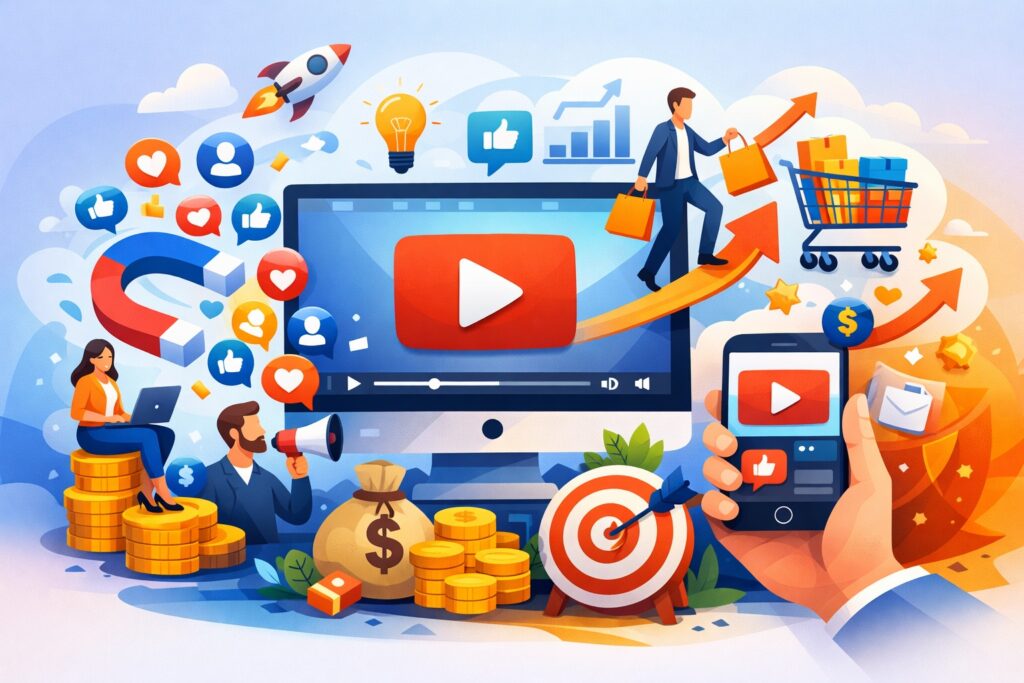
How Video Marketing Can Increase Engagement and Sales

Not long ago, most businesses relied on written descriptions and static images to promote their products and services. Today, that approach is no longer enough. Customers expect to see, hear, and experience what a business offers before they decide to trust it. Video has filled that gap. It gives businesses the ability to communicate quickly, clearly, and convincingly in a way that text alone cannot achieve.

People naturally respond to movement and sound. A well-crafted video can explain a product in seconds, demonstrate its value, and create a sense of familiarity that encourages customers to take action. This is why video marketing has become one of the most effective ways to increase engagement and drive sales across nearly every industry.

Businesses that use video strategically often see higher customer interest, stronger brand loyalty, and improved conversion rates. The impact goes beyond visibility. Video influences how customers feel, think, and ultimately decide.

How Video Marketing Can Increase Engagement and Sales

Why Video Captures Attention Better Than Other Content

Attention is the first step toward any sale. Without attention, even the best products remain unnoticed. Video is uniquely effective because it delivers information through multiple senses at once. Viewers can see the product, hear the explanation, and observe how it works in real situations.

This combination makes video easier to absorb and more memorable. Instead of asking customers to imagine how something works, video shows them directly. This reduces confusion and makes the message clearer.

Another advantage is speed. Many customers scan online content quickly. Video allows businesses to communicate their message within seconds. Even short videos can leave a lasting impression that encourages viewers to learn more.

Because of this, video often becomes the first point of meaningful interaction between a business and a potential customer.


Video Encourages Deeper Engagement

Engagement is more than just views. It reflects how interested people are in your content and how willing they are to interact with your brand. Video naturally encourages higher engagement because it feels more personal and easier to consume.

When visitors land on a website and see a video, they are more likely to stay longer. Instead of leaving quickly, they watch, listen, and absorb the information. This additional time creates more opportunities to influence their decision.

On social media, video consistently generates more interaction than other types of content. People are more likely to comment on videos, share them with others, and return to watch more. Each interaction increases your visibility and helps your business reach new audiences without additional advertising costs.

Engagement also strengthens familiarity. The more often customers see your brand through video, the more comfortable they become with it.


Video Builds Trust Faster

Trust is essential in any business relationship. Customers are more likely to buy from businesses they trust, and video helps establish that trust quickly.

When people see a real person explaining a product or sharing knowledge, it feels more genuine than reading anonymous text. Facial expressions, tone of voice, and body language all contribute to credibility.

Videos also create transparency. Showing how your product works, how it is made, or how it solves problems removes uncertainty. Customers can see the details for themselves instead of relying solely on written claims.

Testimonial videos are especially powerful. When potential customers see others sharing positive experiences, it reinforces confidence. This social proof reduces hesitation and makes purchasing decisions easier.

Over time, consistent video content helps build a reliable and trustworthy brand image.


Video Makes Products Easier to Understand

One of the most common reasons customers hesitate to buy is uncertainty. If they do not fully understand how a product works or how it benefits them, they may delay or avoid making a purchase.

Video removes this barrier by showing the product in action. Instead of explaining features in abstract terms, video demonstrates them clearly. Customers can see how the product fits into their lives and solves their problems.

This clarity simplifies decision-making. When customers understand the value, they feel more confident moving forward.

Instructional videos also reduce frustration after purchase. Customers who know how to use a product correctly are more satisfied, which leads to positive reviews and repeat business.


Video Strengthens Emotional Connection

Purchasing decisions are often influenced by emotion as much as logic. Video is one of the most effective tools for creating emotional connection because it combines storytelling, visuals, and sound.

A story told through video can inspire, reassure, or motivate viewers. It can show how a product improves someone’s life or solves a meaningful problem. These stories help customers see themselves in similar situations.

When customers feel emotionally connected, they are more likely to remember the brand and remain loyal over time. Emotional connection transforms one-time buyers into long-term customers.

This connection also encourages customers to share your content, expanding your reach naturally.


Video Improves Conversion Rates

Conversions happen when viewers take action. This could be making a purchase, signing up for a service, or contacting your business.

Video helps guide customers toward these actions by answering questions and removing doubts. When customers feel informed and confident, they are more willing to move forward.

Adding video to product pages often increases sales because customers gain a clearer understanding of what they are buying. Seeing the product demonstrated provides reassurance.

Video also improves the effectiveness of landing pages. Visitors are more likely to stay and engage with the content, increasing the likelihood of conversion.

Even email marketing benefits from video. Messages that include video often receive higher open and click rates because they attract curiosity and interest.


Video Enhances Your Online Visibility

Visibility is essential for attracting new customers. Video plays an important role in improving your online presence.

Search engines favor content that keeps users engaged. When visitors spend more time watching videos on your website, it signals quality and relevance. This can improve your search rankings.

Video content also appears in multiple places, including search results, video platforms, and social media feeds. This increases the number of ways customers can discover your business.

As more people view and share your videos, your brand becomes more recognizable. This increased exposure leads to more traffic and sales opportunities.


Video Supports Every Stage of the Customer Journey

Customers move through several stages before making a purchase. Video can support each step.

In the awareness stage, videos introduce your brand and attract attention.

In the consideration stage, videos explain how your product works and why it is valuable.

In the decision stage, testimonial and demonstration videos provide reassurance and encourage action.

After the purchase, instructional videos help customers use the product successfully, increasing satisfaction and loyalty.

This ongoing support strengthens your relationship with customers and encourages repeat business.


Different Types of Videos That Drive Results

A strong video marketing strategy includes various types of content designed for different purposes.

Explainer videos help customers understand services or products quickly.

Product demonstration videos show features and real-world use.

Customer testimonials build trust through real experiences.

Educational videos provide helpful information and establish expertise.

Short-form videos capture attention and increase social media engagement.

Each type contributes to stronger engagement and higher conversion rates.


Getting Started With Video Marketing

Starting with video marketing does not require expensive equipment or complex production. What matters most is clarity and authenticity.

Begin by identifying common customer questions. Create videos that answer those questions clearly.

Focus on providing useful information rather than trying to impress with production quality alone. Authentic content often performs better because it feels genuine.

Consistency is also important. Regular video content builds familiarity and strengthens your presence over time.

As you gain experience, you can refine your approach and improve quality gradually.


Long-Term Benefits of Video Marketing

Video marketing continues to deliver value long after it is published. Unlike traditional advertising, which stops when the campaign ends, videos remain accessible and continue attracting viewers.

Over time, your video library becomes a valuable resource that educates customers, builds trust, and supports sales.

This lasting impact makes video one of the most efficient and cost-effective marketing strategies available.

Businesses that invest in video now position themselves for sustained growth and stronger customer relationships.

source: Monica Beeman

Video marketing has fundamentally changed how businesses connect with their audiences. It captures attention quickly, builds trust through transparency, and helps customers understand products more clearly. These benefits lead directly to increased engagement and higher sales.

More importantly, video creates meaningful connections. It allows businesses to communicate with clarity, authenticity, and emotional impact. Customers who feel informed and confident are far more likely to take action.

As digital competition continues to increase, businesses that embrace video marketing gain a powerful advantage. Video is not just a trend. It is a proven strategy for attracting attention, building trust, and driving consistent business growth.

The written content on this page was generated by ChatGPT.

Top Mistakes to Avoid When Starting Your Video Marketing Journey

The first time you press “record” for your business can feel exciting and uncomfortable at the same time. You know video is powerful. You’ve seen competitors use it. You’ve heard that video boosts engagement, increases conversions, and builds trust faster than text alone. But what many business owners don’t realize is this: simply creating videos does not guarantee results.

Video marketing is not about having a camera. It’s about having a plan.

Plenty of brands jump in with enthusiasm, only to feel disappointed when views stay low and conversions barely move. The problem usually isn’t the platform. It isn’t even the algorithm. It’s the foundation. When you avoid the common beginner mistakes, your video marketing journey becomes smoother, smarter, and far more profitable.

Let’s break down the most common missteps and how to avoid them.

Top Mistakes to Avoid When Starting Your Video Marketing Journey

1. Starting Without a Clear Objective

Many businesses create videos because they feel they “should.” That mindset leads to random content with no measurable direction.

Before filming anything, ask yourself:
What is this video supposed to accomplish?

Are you trying to generate leads? Increase brand awareness? Educate customers? Drive product sales?

If you don’t define the goal first, you won’t know whether your video succeeded. A product demo and a brand awareness video serve completely different purposes. Without clarity, your messaging becomes scattered.

Instead, attach every video to a specific outcome. When your goal is clear, your script, visuals, and call to action naturally align with it.


2. Talking About Yourself Instead of the Audience

One of the fastest ways to lose viewers is to make your video entirely about your business.

New marketers often open with long introductions about company history, achievements, or features. While those details matter, your audience cares most about one thing: how you solve their problem.

Effective video marketing shifts the focus outward. It speaks directly to the viewer’s challenges, frustrations, and goals. When people feel understood, they keep watching.

Before writing your script, answer these questions:

  • Who is this video for?
  • What problem are they trying to solve?
  • What outcome are they hoping for?

Your video should feel like a conversation, not a corporate announcement.


3. Overlooking Production Basics

You don’t need a Hollywood studio to succeed in video marketing. But ignoring the basics can damage credibility.

Poor lighting, echoing audio, or shaky footage instantly lowers perceived professionalism. Even great content becomes hard to watch when viewers struggle to hear or see clearly.

The good news is that basic improvements make a huge difference:

  • Record in a quiet space.
  • Use natural light or affordable lighting equipment.
  • Invest in a quality microphone.
  • Stabilize your camera.

Quality builds trust. And trust drives conversions.


4. Skipping Planning and Structure

Spontaneity has its place, but completely winging your video rarely works.

Without structure, videos become repetitive, unfocused, or too long. Viewers drop off when they sense confusion or rambling.

You do not need a complicated production blueprint. A simple outline works:

  • Hook: Capture attention in the first few seconds.
  • Problem: Identify the viewer’s challenge.
  • Solution: Present your insight, product, or service.
  • Call to Action: Tell them what to do next.

Planning reduces editing time and increases clarity. Structured videos feel intentional and confident.


5. Ignoring Video SEO

Creating a strong video is only half the job. If no one can find it, its impact is limited.

Many beginners upload content without optimizing titles, descriptions, or keywords. That’s a missed opportunity. Search engines rely on text data to understand your content.

To improve visibility:

  • Use clear, keyword-focused titles.
  • Write detailed descriptions that explain what viewers will learn.
  • Add relevant tags.
  • Include captions or transcripts.

Search visibility compounds over time. A properly optimized video can generate traffic long after it’s published.


6. Expecting Immediate Viral Results

It’s easy to assume that one good video will explode overnight. That expectation often leads to frustration.

Video marketing is a long-term strategy. Growth comes from consistency, refinement, and audience trust. Most successful brands did not gain traction from a single upload. They improved steadily with each video.

Instead of chasing viral moments, focus on steady improvement:

  • Refine your message.
  • Improve production quality gradually.
  • Study what resonates with your viewers.

Consistency builds authority. Authority builds results.


7. Forgetting the Call to Action

You’ve captured attention. You’ve delivered value. And then the video ends.

This is one of the most overlooked mistakes in beginner video marketing.

If viewers don’t know what to do next, they move on.

Every video should include a clear next step:

  • Visit your website
  • Download a guide
  • Subscribe to your channel
  • Book a consultation
  • Follow your page

A strong call to action turns passive viewers into active participants.


8. Making Videos Too Long

Attention spans online are short. Long introductions and unnecessary details cause viewers to drop off early.

That doesn’t mean you must keep everything under 60 seconds. It means every second should earn its place.

Trim repetitive phrases. Remove filler words. Get to the point faster.

A concise video respects your audience’s time, and that respect increases engagement.


9. Not Reviewing Analytics

Publishing a video without reviewing performance data is like driving without checking the dashboard.

Analytics reveal what actually works:

  • Watch time
  • Audience retention
  • Click-through rates
  • Conversion rates
  • Engagement metrics

Pay attention to where viewers drop off. Notice which topics generate comments or shares. Use those insights to shape future content.

Data transforms guesswork into strategy.


10. Trying to Do Everything Alone

Video marketing involves scripting, filming, editing, optimization, and distribution. Attempting to master all of it instantly can become overwhelming.

You don’t have to outsource everything. But you also don’t have to carry every task alone.

Consider:

  • Hiring an editor for polishing footage.
  • Using templates for faster production.
  • Investing in user-friendly tools.
  • Collaborating with marketing professionals.

Smart delegation allows you to focus on strategy and storytelling.

source: Shane Hummus

Building a Stronger Start

Your video marketing journey does not need to be perfect. It needs to be intentional.

The businesses that succeed with video are not necessarily the ones with the biggest budgets. They are the ones that learn, adjust, and stay consistent.

Avoiding these common mistakes puts you ahead of most beginners. With clear goals, audience focus, thoughtful structure, proper optimization, and steady improvement, your videos can become powerful growth tools for your business.

Press record when you’re ready. Just make sure you press record with a plan.

The written content on this page was generated by ChatGPT.

Types of Marketing Videos: Which Ones Work Best for Your Business?

Scroll through your phone for five minutes and you’ll notice something: almost everything is video. Product launches. Customer reviews. Behind-the-scenes clips. Tutorials. Even emails now include embedded video thumbnails.

Video is no longer a “nice addition” to a marketing strategy. For many businesses, it has become the backbone of how they attract attention, build trust, and convert viewers into paying customers.

But here’s where most businesses get stuck.

They know they need video marketing. What they don’t know is which type of video actually fits their goals.

Should you create a polished brand story? A quick social media clip? A detailed product demo? A customer testimonial? The answer depends on what you’re trying to achieve and who you’re trying to reach.

Let’s break down the most effective types of marketing videos, how they work, and when to use them so you can choose the right format for your business.

Types of Marketing Videos: Which Ones Work Best for Your Business?

Explainer Videos: Turning Confusion Into Clarity

If your product or service requires explanation, an explainer video can become one of your most valuable marketing assets.

Explainer videos are typically short, focused pieces that clarify what you do, who you help, and why it matters. They are especially powerful for startups, tech companies, service providers, and businesses introducing something new to the market.

What makes them effective is their simplicity. A good explainer video answers three questions quickly:

  1. What problem does your audience have?
  2. How does your solution fix it?
  3. Why should they trust you?

When done well, explainer videos improve landing page conversions, reduce bounce rates, and make complex offers easier to understand. Animation works well for abstract ideas, while live-action works better for service-based businesses that want a human touch.

If your audience says, “I’m not sure I understand what you do,” start here.


Product Demonstration Videos: Show, Don’t Just Tell

There’s a big difference between describing a product and watching it solve a problem in real time.

Product demo videos walk viewers through how something works. Instead of listing features, they highlight benefits in action. This is especially important for e-commerce brands, SaaS tools, gadgets, and physical products.

Why are demo videos so persuasive?

Because they remove doubt.

Customers can see functionality. They can evaluate ease of use. They can imagine themselves using the product. That visualization shortens the buying cycle dramatically.

The most effective demos focus less on technical specifications and more on real-world application. Show the transformation. Show the before and after. Show the experience.

If your business depends on convincing customers that your product delivers, product demos are essential.


Testimonial and Case Study Videos: Building Trust Through Proof

Modern consumers are skeptical. They trust other customers more than they trust brands.

That’s why testimonial and case study videos often outperform other content when it comes to conversion.

A testimonial video is simple: a satisfied customer shares their experience. A case study video goes deeper, explaining the challenge, the solution, and measurable results.

These videos work because they provide social proof. Instead of saying “We’re great,” you let your customers say it for you.

For service-based businesses, consultants, agencies, and B2B companies, this format can be a game changer. Potential clients want reassurance before committing. Seeing real results from real people lowers risk in their mind.

Keep testimonials authentic. Overproduced or overly scripted reviews can feel staged. Honest stories resonate more than perfection.


Brand Story Videos: Creating Emotional Connection

Not every marketing video needs to push for a sale.

Some of the most powerful videos simply tell a story.

Brand story videos introduce your mission, your values, and the people behind your company. They create emotional alignment between your brand and your audience.

In crowded markets, this matters.

When customers feel connected to your story, they are more likely to choose you over competitors offering similar products or services. Emotional branding builds loyalty, not just transactions.

This type of video works especially well on homepages, about pages, and social media campaigns focused on awareness rather than direct response.

If you want people to remember your brand, not just your offer, storytelling is key.


Social Media Videos: Capturing Attention Quickly

Attention spans are shorter than ever, especially on social platforms.

Short-form videos designed specifically for social media are built for speed. They grab attention in the first few seconds and deliver value quickly.

These videos might include:

  • Quick tips
  • Mini tutorials
  • Behind-the-scenes moments
  • Product highlights
  • Industry insights

The goal here is engagement. Likes, shares, comments, and saves all signal relevance and increase visibility.

What makes social media videos different from other formats is pacing. They are fast, visually dynamic, and optimized for mobile viewing. Captions are essential since many users watch without sound.

If your goal is brand awareness and audience growth, short-form social video should be part of your strategy.


Educational and How-To Videos: Positioning Yourself as an Authority

When you teach something useful, you build credibility.

Educational videos and tutorials are among the most powerful long-term marketing tools because they attract organic search traffic and establish authority in your niche.

These videos answer specific questions your audience is already searching for. Over time, they become evergreen content that continues generating leads.

For example:

  • How to use your software
  • How to solve a common industry problem
  • Step-by-step guides related to your service

This format works particularly well on YouTube and blog pages embedded with video. Educational content builds trust before the sales conversation even begins.

If your business relies on expertise, tutorials can position you as the go-to resource in your field.


Live Videos and Webinars: Real-Time Engagement

Live video creates immediacy.

Whether it’s a product launch, Q&A session, workshop, or webinar, live formats allow direct interaction with your audience. Viewers can ask questions, leave comments, and engage in real time.

This interaction builds authenticity. It feels less scripted and more human.

Live video also creates urgency. People tune in because they don’t want to miss out.

For coaches, consultants, educators, and brands launching new offers, live video can significantly increase engagement and conversions.

Repurposing live sessions into shorter clips afterward extends their value even further.


Which Type of Marketing Video Is Right for You?

There is no single “best” marketing video. The right choice depends on your goals.

If you want clarity, use an explainer.
If you want persuasion, use a product demo.
If you want trust, use testimonials.
If you want connection, tell your story.
If you want visibility, create social videos.
If you want authority, teach.
If you want interaction, go live.

The most effective video marketing strategies combine multiple formats. A business might use social videos for awareness, explainer videos on landing pages, testimonials during the decision stage, and tutorials for long-term traffic.

The key is alignment. Your video type should match your audience’s needs and your business objectives.

source: Spiel Creative

Video marketing is not about producing the flashiest content. It is about choosing the right format for the right moment in your customer’s journey.

When businesses treat video as a strategic tool rather than a trend, results follow. Engagement increases. Trust grows. Conversions improve.

Start with one format that aligns with your immediate goals. Measure performance. Learn what resonates. Then expand your approach.

The businesses that win with video are not necessarily the ones with the biggest budgets. They are the ones who understand which types of marketing videos work best for their audience and use them intentionally.

And that is where real growth begins.

The written content on this page was generated by ChatGPT.