The first time a business decides to create a marketing video, excitement usually mixes with uncertainty. Ideas come quickly. Execution, however, feels less clear. Should the video sell something directly? Tell a story? Educate viewers? Many first attempts fail not because of poor filming or editing, but because planning was rushed or skipped entirely.
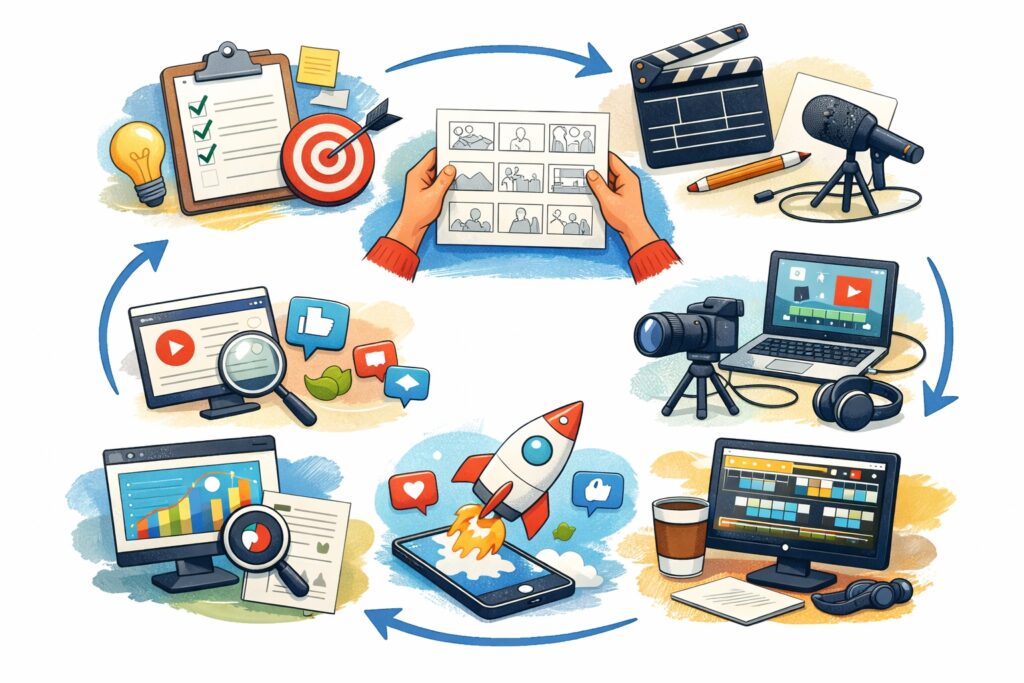
A successful marketing video rarely happens by accident. Behind every engaging video is a thoughtful process that defines the message, audience, and outcome long before the camera turns on. Planning gives direction, saves money, and prevents the common mistake of creating content that looks good but achieves little.
If you’re preparing to create your first marketing video, this guide walks through each stage carefully so you can move forward with confidence and purpose.
Start With One Clear Objective
Before thinking about visuals, scripts, or equipment, decide what success looks like.
Many businesses try to accomplish too much in a single video. They want to introduce the company, explain services, generate leads, and entertain viewers all at once. The result often feels scattered.
Instead, choose one primary goal:
- Introduce your brand to new audiences
- Explain how a product works
- Drive traffic to a website
- Generate inquiries or bookings
- Build trust through education
A focused objective shapes every decision that follows. When viewers finish watching, the next step should feel obvious to them.
Understand Exactly Who You’re Talking To
A marketing video is not meant for everyone. The more specific your audience, the more effective your message becomes.
Think beyond general demographics. Consider real-world behavior:
- What problems does your audience face daily?
- What questions do they ask before buying?
- Where do they usually discover businesses like yours?
- What tone would feel natural to them: professional, casual, educational, or inspirational?
For example, a video aimed at small business owners should sound practical and solution-focused, while content for younger social media audiences may benefit from faster pacing and visual energy.
When viewers feel understood, they stay engaged longer, which improves both conversions and search visibility.
Choose the Right Type of Marketing Video
Your goal determines your video format. Each type serves a different role in the customer journey.
Common beginner-friendly formats include:
Explainer Videos
Perfect for introducing a service or simplifying complex ideas.
Product Demonstrations
Show how something works in real situations rather than describing it.
Educational or How‑To Videos
Build authority while helping potential customers solve problems.
Customer Testimonials
Create credibility through authentic experiences.
Short Social Media Videos
Designed for quick attention and brand exposure.
Your first video does not need cinematic production. Clarity and usefulness matter far more than elaborate visuals.
Develop a Simple but Intentional Story
People remember stories more than features or statistics. Even a short marketing video benefits from a basic narrative structure:
- Present a relatable problem
- Show the struggle or challenge
- Introduce your solution
- Demonstrate results
- Offer a next step
This structure keeps viewers emotionally invested while guiding them naturally toward your call to action.
Avoid scripting every sentence to sound overly polished. Natural language feels more trustworthy and keeps delivery authentic.
Write a Script That Sounds Human
A script prevents rambling and ensures your message stays clear, but it should never sound robotic.
Helpful scripting principles:
- Open with a strong hook within the first few seconds
- Use conversational language instead of corporate jargon
- Keep sentences short and easy to follow
- Speak directly to the viewer using “you”
- End with a clear action step
Read the script aloud while writing. If it feels awkward to say, it will feel awkward to watch.
Many successful videos rely on structured talking points rather than rigid word-for-word scripts.
Create a Visual Plan Before Filming
Planning visuals saves enormous time during production.
A simple storyboard does not require artistic skills. Even rough sketches or bullet points work. Outline:
- Camera angles
- On-screen text or graphics
- Demonstrations or product shots
- Transitions between scenes
This preparation prevents missed footage and reduces reshoots later.
Think of the storyboard as a roadmap that keeps filming efficient and stress-free.
Prepare Equipment and Environment
High-quality video today is more accessible than ever. A modern smartphone can produce excellent results when used correctly.
Focus on essentials first:
- Stable camera positioning using a tripod
- Clear audio with an external microphone if possible
- Good lighting, preferably natural light near windows
- Clean, distraction-free background
Viewers will forgive simple visuals, but poor sound quality often causes them to stop watching immediately.
Decide the Ideal Length and Format
Attention spans vary depending on where the video will appear.
General guidelines:
- Social media videos: 30–90 seconds
- Website or landing page videos: 1–3 minutes
- Educational or tutorial videos: 3–8 minutes
Also consider platform orientation:
- Vertical format for mobile-first platforms
- Square format for feeds
- Horizontal format for YouTube and websites
Planning this early avoids editing complications later.
Plan Distribution Before Production
One of the most overlooked steps is deciding where the video will be used before filming begins.
Ask yourself:
- Will this video live on your homepage?
- Is it designed for YouTube search traffic?
- Will clips be reused on social media?
- Should shorter versions be created for ads?
Knowing distribution channels influences framing, pacing, and messaging choices during production.
A single well-planned video can often be repurposed into multiple smaller pieces of content.
Optimize the Video for Search Visibility
Creating a video is only half the work. Optimization determines whether people actually find it.
Key SEO practices include:
- Writing keyword-focused titles that match search intent
- Crafting detailed descriptions explaining the video’s value
- Adding captions or transcripts for accessibility and indexing
- Designing compelling thumbnails that encourage clicks
Search engines increasingly prioritize video content, especially when viewers stay engaged and watch longer.
Promote the Video Consistently
Publishing alone rarely generates results. Promotion amplifies reach.
Effective promotion strategies include:
- Embedding the video in blog posts
- Sharing across multiple social platforms
- Including it in email campaigns
- Pinning it to profiles or landing pages
- Encouraging team members or partners to share
Consistency matters more than virality. Steady exposure builds momentum over time.
Measure Results and Improve the Next Video
Your first marketing video is not meant to be perfect. It is meant to teach you what works.
Track meaningful metrics such as:
- Watch time and audience retention
- Click-through rates
- Comments or shares
- Leads or conversions generated
Patterns quickly emerge. Maybe viewers drop off early, or perhaps shorter videos perform better. Each insight improves future planning.
Video marketing becomes easier and more effective with every iteration.
Why Planning Makes the Biggest Difference
Many businesses assume success depends on expensive equipment or professional editing. In reality, clarity of purpose and preparation have a far greater impact.
Planning transforms video marketing from guesswork into strategy. It ensures your message reaches the right audience, communicates value quickly, and guides viewers toward action.
Your first video does not need perfection. It needs intention.
Start small. Learn from feedback. Refine your process. Over time, video becomes one of the most powerful marketing tools your business can use to build trust, visibility, and long-term growth.
The written content on this page was generated by ChatGPT.