Tag Archives: small business video marketing

How to Measure the ROI of Your First Video Marketing Campaign

The first time you publish a marketing video, there’s usually a mix of excitement and uncertainty. You might refresh your analytics page more often than you’d like to admit, watching the views climb and wondering what those numbers actually mean. Are those views turning into real customers, or are they just surface-level engagement?

This is where understanding ROI becomes essential. Without it, you’re guessing. With it, you’re making informed decisions that can shape every future campaign you create.

How to Measure the ROI of Your First Video Marketing Campaign

Why ROI Matters More Than Views

It’s easy to get caught up in vanity metrics. A video with thousands of views can feel like a win, but if it doesn’t lead to inquiries, sales, or even meaningful engagement, it’s not doing much for your business.

Return on investment goes deeper. It connects your effort and spending to real outcomes. Instead of asking “How many people watched this?” you begin asking “What did this video actually do for my business?”

That shift in thinking changes everything.


Define Success Before You Hit Publish

Before you even begin measuring ROI, you need to decide what success looks like for your campaign. This step is often skipped, which leads to confusion later.

A single video can’t do everything at once. Trying to make it generate sales, build awareness, grow followers, and educate your audience all at the same time usually leads to weak results across the board.

Instead, choose one primary goal:

  • Drive traffic to your website
  • Generate leads through a form or signup
  • Increase direct sales
  • Build brand awareness

Once your objective is clear, measuring ROI becomes much more straightforward because you know exactly what you’re looking for.


Break Down the Costs Behind Your Campaign

To understand your return, you first need to understand your investment. This includes more than just money spent on equipment or ads.

Think about everything that went into your video:

  • Time spent planning and scripting
  • Filming and editing
  • Any tools or software used
  • Paid promotions or boosted posts

Even if you handled everything yourself, your time has value. Assigning a reasonable cost to your effort gives you a more accurate picture of your total investment.


Choose Metrics That Match Your Goal

Not all metrics are created equal. The numbers you track should directly reflect your campaign objective.

If your goal is awareness, then reach and impressions matter. You want to know how many people your video is reaching and how often it’s being seen.

If your focus is engagement, then look at watch time, shares, comments, and how long viewers stay before clicking away. These indicators reveal whether your content is actually connecting with people.

For campaigns aimed at conversions, the most important numbers are leads, sign-ups, and purchases. These are the metrics that tie your video directly to revenue.

Trying to track everything at once can muddy the waters. Focus on what aligns with your goal and ignore the rest.


How to Calculate ROI Without Overcomplicating It

Once you have your cost and your results, calculating ROI is simpler than it sounds.

The basic formula is:

ROI = (Revenue earned – Total cost) ÷ Total cost × 100

Let’s say your video cost $800 to produce and promote. If it generated $2,000 in sales, your return is:

(2000 – 800) ÷ 800 × 100 = 150% ROI

That means you earned one and a half times what you invested.

If your campaign didn’t generate direct revenue, you can still estimate value. For example, if you collected leads, you can assign an average value to each lead based on your typical conversion rate.


Connect Your Video to Real Results

One of the biggest challenges with measuring ROI is figuring out where your results are actually coming from. If someone watches your video but purchases later, how do you know the video influenced that decision?

This is where tracking becomes important.

You can create a clearer connection by:

  • Using dedicated landing pages linked in your video
  • Adding unique tracking links
  • Offering a specific promo code mentioned only in the video
  • Monitoring behavior through analytics tools

These methods help you trace the path from viewer to customer, making your ROI calculation more reliable.


Don’t Ignore the Long-Term Impact

Not every video delivers instant results. In fact, some of the most valuable content works quietly in the background over time.

A helpful tutorial or informative video might continue attracting viewers months after it’s published. As more people discover it, it keeps generating traffic, leads, and even sales without additional effort.

This long-term performance is often overlooked, especially in first campaigns. If you only measure ROI within the first few days or weeks, you might underestimate the true value of your video.


Look for Indirect Gains That Add Up

Your first campaign might not produce massive revenue right away, and that’s normal. However, that doesn’t mean it failed.

There are several indirect benefits that contribute to future success:

  • Increased brand recognition
  • More followers on social platforms
  • Higher engagement across your content
  • Better understanding of your audience preferences

These gains create momentum. They make your next campaign more effective and often lead to stronger ROI over time.


Compare Performance Across Different Channels

Where your video is published can significantly influence its results. A video that performs well on one platform might struggle on another.

Pay attention to where your audience responds best:

  • Which platform drives the most clicks
  • Where viewers watch the longest
  • Which channel produces actual conversions

Once you identify the strongest platforms, you can focus your efforts there instead of spreading yourself too thin.


Use What You Learn to Improve

Your first campaign is rarely perfect, and that’s a good thing. It gives you real data to work with.

Look closely at how viewers interacted with your video:

  • Did they watch until the end or drop off early?
  • Which parts held attention the most?
  • What messaging led to clicks or conversions?

These insights are incredibly valuable. They allow you to refine your approach and create better-performing videos moving forward.


Common Pitfalls to Watch Out For

When measuring ROI for the first time, it’s easy to fall into a few traps.

Some of the most common include:

  • Relying too heavily on views instead of meaningful actions
  • Forgetting to include all costs in your calculations
  • Expecting immediate results from every video
  • Tracking too many metrics without a clear focus

Keeping your approach simple and aligned with your goal will help you avoid these issues.


Turning Insights Into a Repeatable Strategy

Once you understand how to measure ROI, video marketing becomes much less of a guessing game. You begin to see patterns in what works and what doesn’t.

Over time, this allows you to:

  • Invest more confidently in video content
  • Focus on formats that deliver results
  • Improve efficiency in production and promotion

What started as a single campaign evolves into a repeatable system that consistently supports your business growth.

source: Webrunner Media

Final Thoughts

Measuring the ROI of your first video marketing campaign isn’t about chasing perfect numbers. It’s about understanding the relationship between your effort and your results.

Start with a clear goal, track the metrics that matter, and take the time to analyze what you learn. Even if your first campaign isn’t a massive success, it provides the foundation for smarter decisions moving forward.

With each video you create, your strategy becomes sharper, your content becomes stronger, and your returns become more predictable.

The written content on this page was generated by ChatGPT.
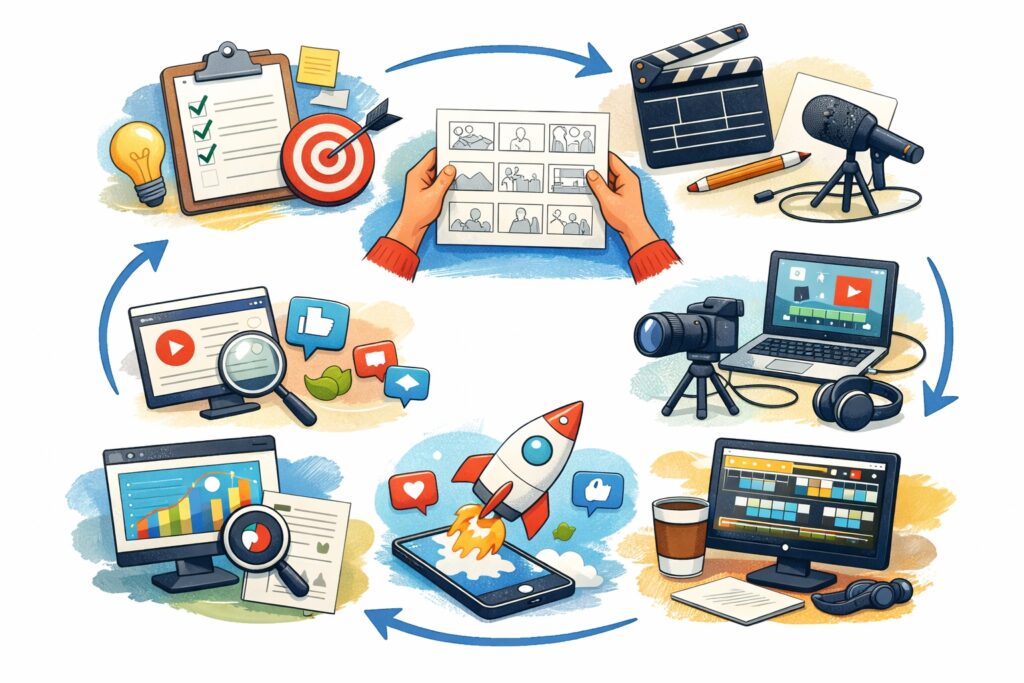
Step-by-Step Guide to Planning Your First Marketing Video

The first time a business decides to create a marketing video, excitement usually mixes with uncertainty. Ideas come quickly. Execution, however, feels less clear. Should the video sell something directly? Tell a story? Educate viewers? Many first attempts fail not because of poor filming or editing, but because planning was rushed or skipped entirely.

A successful marketing video rarely happens by accident. Behind every engaging video is a thoughtful process that defines the message, audience, and outcome long before the camera turns on. Planning gives direction, saves money, and prevents the common mistake of creating content that looks good but achieves little.

If you’re preparing to create your first marketing video, this guide walks through each stage carefully so you can move forward with confidence and purpose.

Step-by-Step Guide to Planning Your First Marketing Video

Start With One Clear Objective

Before thinking about visuals, scripts, or equipment, decide what success looks like.

Many businesses try to accomplish too much in a single video. They want to introduce the company, explain services, generate leads, and entertain viewers all at once. The result often feels scattered.

Instead, choose one primary goal:

  • Introduce your brand to new audiences
  • Explain how a product works
  • Drive traffic to a website
  • Generate inquiries or bookings
  • Build trust through education

A focused objective shapes every decision that follows. When viewers finish watching, the next step should feel obvious to them.


Understand Exactly Who You’re Talking To

A marketing video is not meant for everyone. The more specific your audience, the more effective your message becomes.

Think beyond general demographics. Consider real-world behavior:

  • What problems does your audience face daily?
  • What questions do they ask before buying?
  • Where do they usually discover businesses like yours?
  • What tone would feel natural to them: professional, casual, educational, or inspirational?

For example, a video aimed at small business owners should sound practical and solution-focused, while content for younger social media audiences may benefit from faster pacing and visual energy.

When viewers feel understood, they stay engaged longer, which improves both conversions and search visibility.


Choose the Right Type of Marketing Video

Your goal determines your video format. Each type serves a different role in the customer journey.

Common beginner-friendly formats include:

Explainer Videos
Perfect for introducing a service or simplifying complex ideas.

Product Demonstrations
Show how something works in real situations rather than describing it.

Educational or How‑To Videos
Build authority while helping potential customers solve problems.

Customer Testimonials
Create credibility through authentic experiences.

Short Social Media Videos
Designed for quick attention and brand exposure.

Your first video does not need cinematic production. Clarity and usefulness matter far more than elaborate visuals.


Develop a Simple but Intentional Story

People remember stories more than features or statistics. Even a short marketing video benefits from a basic narrative structure:

  1. Present a relatable problem
  2. Show the struggle or challenge
  3. Introduce your solution
  4. Demonstrate results
  5. Offer a next step

This structure keeps viewers emotionally invested while guiding them naturally toward your call to action.

Avoid scripting every sentence to sound overly polished. Natural language feels more trustworthy and keeps delivery authentic.


Write a Script That Sounds Human

A script prevents rambling and ensures your message stays clear, but it should never sound robotic.

Helpful scripting principles:

  • Open with a strong hook within the first few seconds
  • Use conversational language instead of corporate jargon
  • Keep sentences short and easy to follow
  • Speak directly to the viewer using “you”
  • End with a clear action step

Read the script aloud while writing. If it feels awkward to say, it will feel awkward to watch.

Many successful videos rely on structured talking points rather than rigid word-for-word scripts.


Create a Visual Plan Before Filming

Planning visuals saves enormous time during production.

A simple storyboard does not require artistic skills. Even rough sketches or bullet points work. Outline:

  • Camera angles
  • On-screen text or graphics
  • Demonstrations or product shots
  • Transitions between scenes

This preparation prevents missed footage and reduces reshoots later.

Think of the storyboard as a roadmap that keeps filming efficient and stress-free.


Prepare Equipment and Environment

High-quality video today is more accessible than ever. A modern smartphone can produce excellent results when used correctly.

Focus on essentials first:

  • Stable camera positioning using a tripod
  • Clear audio with an external microphone if possible
  • Good lighting, preferably natural light near windows
  • Clean, distraction-free background

Viewers will forgive simple visuals, but poor sound quality often causes them to stop watching immediately.


Decide the Ideal Length and Format

Attention spans vary depending on where the video will appear.

General guidelines:

  • Social media videos: 30–90 seconds
  • Website or landing page videos: 1–3 minutes
  • Educational or tutorial videos: 3–8 minutes

Also consider platform orientation:

  • Vertical format for mobile-first platforms
  • Square format for feeds
  • Horizontal format for YouTube and websites

Planning this early avoids editing complications later.


Plan Distribution Before Production

One of the most overlooked steps is deciding where the video will be used before filming begins.

Ask yourself:

  • Will this video live on your homepage?
  • Is it designed for YouTube search traffic?
  • Will clips be reused on social media?
  • Should shorter versions be created for ads?

Knowing distribution channels influences framing, pacing, and messaging choices during production.

A single well-planned video can often be repurposed into multiple smaller pieces of content.


Optimize the Video for Search Visibility

Creating a video is only half the work. Optimization determines whether people actually find it.

Key SEO practices include:

  • Writing keyword-focused titles that match search intent
  • Crafting detailed descriptions explaining the video’s value
  • Adding captions or transcripts for accessibility and indexing
  • Designing compelling thumbnails that encourage clicks

Search engines increasingly prioritize video content, especially when viewers stay engaged and watch longer.


Promote the Video Consistently

Publishing alone rarely generates results. Promotion amplifies reach.

Effective promotion strategies include:

  • Embedding the video in blog posts
  • Sharing across multiple social platforms
  • Including it in email campaigns
  • Pinning it to profiles or landing pages
  • Encouraging team members or partners to share

Consistency matters more than virality. Steady exposure builds momentum over time.


Measure Results and Improve the Next Video

Your first marketing video is not meant to be perfect. It is meant to teach you what works.

Track meaningful metrics such as:

  • Watch time and audience retention
  • Click-through rates
  • Comments or shares
  • Leads or conversions generated

Patterns quickly emerge. Maybe viewers drop off early, or perhaps shorter videos perform better. Each insight improves future planning.

Video marketing becomes easier and more effective with every iteration.

source: Elif Hız

Why Planning Makes the Biggest Difference

Many businesses assume success depends on expensive equipment or professional editing. In reality, clarity of purpose and preparation have a far greater impact.

Planning transforms video marketing from guesswork into strategy. It ensures your message reaches the right audience, communicates value quickly, and guides viewers toward action.

Your first video does not need perfection. It needs intention.

Start small. Learn from feedback. Refine your process. Over time, video becomes one of the most powerful marketing tools your business can use to build trust, visibility, and long-term growth.

The written content on this page was generated by ChatGPT.