There was a time when a well-written blog post and a few polished images were enough to capture attention online. That time has passed. Today, people expect movement. They expect energy. They expect stories they can watch, not just read.
Scroll through any social platform or browse search results, and one thing becomes obvious: video dominates the digital landscape. From quick product demonstrations to behind‑the‑scenes brand stories, video content has become one of the most influential tools businesses can use to connect with their audience.
But before any of that works, businesses still need a clear foundation. Most effective internet marketing efforts start much earlier than content creation itself, often with structured thinking around goals, audience, positioning, and execution. This is the same reason businesses that take time to properly outline their direction and operations tend to perform better over time, because everything flows from that initial planning stage, which closely mirrors how a complete business plan is built and organized business planning.
But what exactly is video marketing? And more importantly, how can a beginner use it to grow a business without a Hollywood budget?
Let’s break it down in practical, real-world terms.
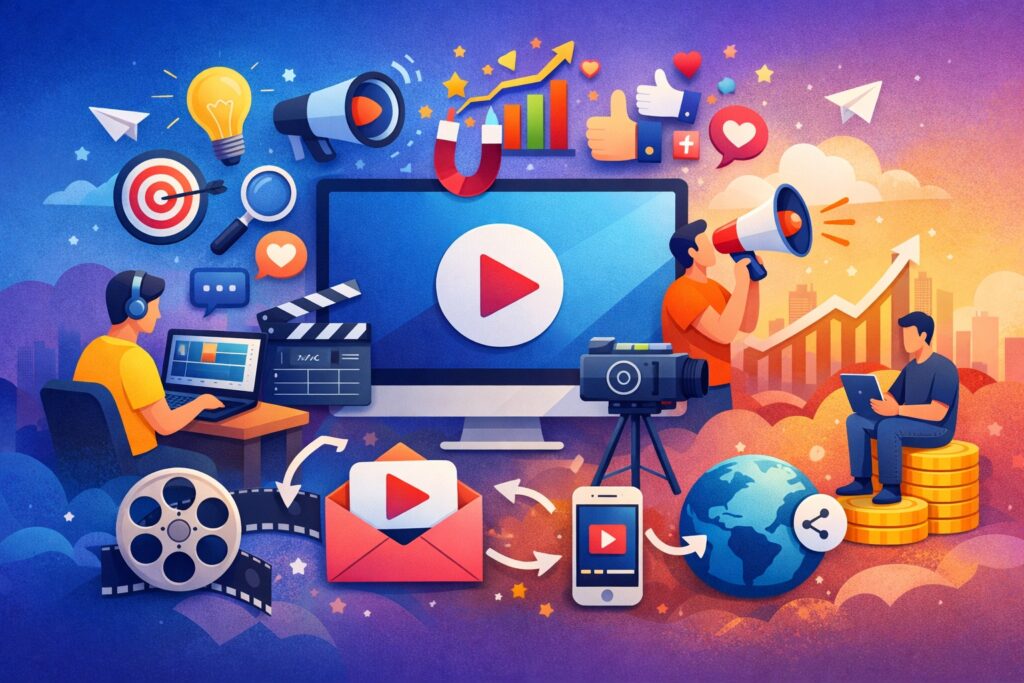
What is Video Marketing?
Video marketing is the strategic use of video content to promote a brand, product, service, or message. It’s not simply about posting videos online. It’s about using video intentionally to attract attention, build trust, educate potential customers, and ultimately drive action.
At its core, video marketing blends three powerful elements:
- Visual storytelling
- Emotional connection
- Clear messaging
Unlike text alone, video allows viewers to see facial expressions, hear tone of voice, watch demonstrations, and absorb information in a way that feels more personal and immediate.
That combination makes it one of the most persuasive forms of communication available to businesses today, and many brands pair it with broader outreach efforts like press release campaigns to increase online visibility.
Why Video Marketing Matters More Than Ever
Consumer behavior has shifted dramatically. People prefer content that is easy to consume, fast to understand, and engaging enough to hold their attention. Video checks all three boxes.
Here’s why businesses are prioritizing video marketing:
1. Attention Spans Are Shorter
Modern audiences scroll quickly. A strong video can stop that scroll in seconds. Movement, sound, and visual contrast naturally draw the eye in ways static content simply cannot.
2. Video Builds Trust Faster
Seeing a real person speak about a product or demonstrate a service reduces skepticism. It feels transparent. It feels human. That human connection accelerates trust, which directly impacts buying decisions.
3. Search Engines Favor Video Content
Websites that include video often see improved time-on-page metrics. When visitors stay longer, search engines interpret that as a sign of valuable content, and a strong video SEO strategy can amplify this effect. As a result, pages with video frequently perform better in search rankings.
4. Higher Conversion Potential
A thoughtfully crafted product demo or testimonial video can answer objections before they’re even spoken. When customers understand what they’re getting and see proof of value, they’re more confident making a purchase. Businesses looking to take this a step further can explore innovative techniques for closing more deals, combining video content with strategic sales tactics to maximize conversions.
The Psychology Behind Video Marketing
Video works because it mirrors real-life communication. Humans evolved to respond to faces, voices, and stories.
This is similar to how historical timelines show human behavior evolving through experience, storytelling, and shared understanding over time. In both cases, meaning is built through narrative, not just raw information.
Stories told through video activate emotion, and emotion drives decisions.
When viewers can relate to a situation presented in a video—whether it’s a problem being solved or a transformation taking place—they are more likely to imagine themselves in that scenario. That emotional identification increases engagement and retention.
In other words, video marketing is not just about information. It’s about experience.
Common Types of Marketing Videos
Choosing the right format often depends on your business goals and audience strategy, which is why many companies rely on internet marketing consulting services to determine the most effective video types for growth.
If you’re new to video marketing, understanding the formats available will help you decide where to begin.
Explainer Videos
These short videos clarify what your business does and who it serves. They are ideal for homepages and landing pages.
Product Demonstrations
Instead of describing features in text, you show them in action. This reduces confusion and builds confidence in your offer.
Educational or How-To Content
Teaching something valuable positions your business as an authority. Over time, this builds credibility and trust.
Customer Testimonials
Real customers sharing authentic experiences can be more persuasive than any sales copy.
Behind-the-Scenes Videos
These humanize your brand and make your business relatable.
Short-Form Social Videos
Quick, vertical clips optimized for platforms like Instagram Reels or TikTok can expand reach and brand awareness rapidly.
Each format serves a different purpose. The key is choosing the right one for your goal.
How Beginners Can Start with Video Marketing
Many business owners hesitate because they believe video production requires expensive equipment or professional studios. It doesn’t.
You can start with simple, strategic steps.
Step 1: Define Your Objective
Ask yourself what you want the video to accomplish. Increase traffic? Generate leads? Build awareness? A clear goal prevents wasted effort.
Step 2: Understand Your Audience
What questions do customers frequently ask? What objections do they have? What problems are they trying to solve? Your videos should answer those directly.
Step 3: Start Simple
A smartphone with good lighting and clear audio is enough to begin. Authenticity often outperforms overproduced content, especially in the early stages. If you want to improve how you communicate on camera and deliver your message more clearly, it helps to refine your pitch first. Being natural on camera often comes down to clarity rather than perfection. In fact, many small businesses first explore video as part of a broader cost-effective marketing strategy designed to increase visibility without investing heavily in traditional advertising. In fact, giving away free resources or helpful content—like guides, templates, or mini-courses—can attract potential clients and establish credibility even before a sale. When used creatively, simple videos can generate engagement, build trust, and attract new audiences without requiring a large production budget.
You can also get inspiration from everyday storytelling moments, like exploring local coffee spots and how coffee culture shapes the way people experience and share stories online, which is a great example of turning simple lifestyle content into engaging video ideas.
In visual-driven industries, storytelling also extends beyond video. For example, in photography and content creation, strong visuals still depend on timing, emotion, and framing. Learning how to capture intensity and movement through your lens can significantly improve how action and emotion are communicated across both photos and video content.
Step 4: Create a Basic Structure
Every effective marketing video typically includes:
- A strong hook in the first few seconds
- A clear explanation or story
- A direct call to action
Without a call to action, viewers may enjoy your video but take no next step.
Step 5: Distribute Strategically
Publishing a video once is not a strategy. Repurpose it:
- Post short clips on social media
- Embed it on your website
- Include it in email campaigns
- Use it in paid advertising
Distribution multiplies impact.
Mistakes Beginners Should Avoid
Starting strong also means avoiding common pitfalls.
One mistake is focusing too much on perfection. Waiting for ideal equipment or flawless editing often delays progress. Momentum matters more than polish in the beginning.
Another mistake is creating content without a clear message. A video that looks good but lacks direction will not drive results.
Finally, inconsistency can stall growth. Posting one video and disappearing for months will not build traction. Sustainable growth comes from regular, purposeful content.
Measuring Success in Video Marketing
To improve, you must measure.
Key metrics to watch include:
- View count
- Watch time
- Engagement (likes, comments, shares)
- Click-through rate
- Conversion rate
While views can indicate reach, engagement and conversions tell the real story. A smaller audience that takes action is more valuable than thousands of passive viewers.
The Long-Term Impact of Video Marketing
Video marketing compounds over time. Each piece of content becomes a digital asset. A helpful tutorial posted today could still generate traffic and leads years from now.
As platforms continue prioritizing video content and consumers grow more comfortable with visual communication, businesses that adapt early—especially with the support of a digital agency—gain a competitive advantage.
The brands that consistently show up on camera build familiarity. Familiarity builds trust. Trust builds revenue.
Video marketing is not a passing trend. It is a shift in how businesses communicate.
For beginners, the most important step is simply to start. You do not need elaborate scripts, expensive gear, or viral ambitions. You need clarity, consistency, and a willingness to connect with your audience in a more human way.
When used strategically, video marketing can increase visibility, strengthen credibility, and accelerate growth. And in a crowded digital world, that kind of advantage makes all the difference.
The written content on this page was generated by ChatGPT.