Tag Archives: video advertising

Why Your Business Videos Get Views but No Customers

Getting thousands of views on a business video can feel like a win. After all, people are watching your content, your numbers are going up, and your video may even be receiving likes and comments.

Then you check your sales.

Nothing has changed.

No calls. No quote requests. No contact forms. No new customers.

This situation is more common than many business owners realize. A video can attract plenty of attention without attracting the people who are actually ready to buy. The problem usually isn’t that video marketing doesn’t work. More often, the video is being used to generate views when it should be designed to move the right viewer toward the next step.

If your business videos get views but no customers, it’s time to look beyond the view count.

Why Your Business Videos Get Views but No Customers
image generated using Gemini

Views Are Not the Same as Customers

One of the biggest mistakes in video marketing is assuming that more views automatically mean more business.

A view simply tells you that someone watched your content. It doesn’t necessarily tell you who watched it, why they watched it, whether they need your product or service, or whether they have any intention of buying.

Imagine a plumbing company publishes a funny video titled “The 10 Strangest Things Plumbers Have Found in Drains.”

The video gets 50,000 views.

That sounds fantastic.

But many of those viewers may be watching because the video is entertaining. They aren’t necessarily looking for a plumber. Meanwhile, another video titled “What to Do When Your Water Heater Starts Leaking” might receive only 2,000 views but generate several serious inquiries.

The second video could be much more valuable to the business.

This is why qualified traffic matters more than raw traffic.

Your goal isn’t simply to get people to watch. Your goal is to attract people who have a problem your business can solve.

1. Your Videos Are Reaching the Wrong Audience

The first question to ask is simple:

Are the people watching your videos actually potential customers?

If the answer is no, a high view count isn’t particularly useful.

Entertainment-focused content can reach a huge audience, but those viewers may have little interest in your products or services. Even educational videos can attract people who are researching a topic without having any intention of purchasing.

For example, a landscaping company might create a video called “How to Grow Grass From Seed.”

It could attract homeowners, gardening enthusiasts, students, hobbyists, and people living in completely different regions.

That’s not necessarily bad.

However, a video such as “How Much Does Professional Lawn Care Cost?” is likely to attract viewers who are further along in the buying process.

The difference is search intent.

When planning business videos, think about the questions your potential customers ask immediately before contacting a company.

These questions often include:

  • How much does the service cost?
  • How long does the service take?
  • What option is right for me?
  • What problems can this product solve?
  • How do I know if I need professional help?
  • What should I look for when choosing a provider?
  • What mistakes should I avoid?
  • What happens if I don’t fix this problem?

These topics can attract viewers with much stronger commercial intent.

2. Your Video Is Informative but Doesn’t Lead Anywhere

Some businesses create genuinely helpful videos but forget what should happen after the viewer finishes watching.

The video ends.

The viewer moves on.

That’s it.

If you want video marketing to generate customers, you need to give viewers a logical next step.

That could be:

  • Visit a service page
  • Request a quote
  • Schedule an appointment
  • Call the business
  • Download a guide
  • View a product
  • Visit a location
  • Sign up for an email list
  • Watch another relevant video

The next step should make sense based on the subject of the video.

For example, a video explaining how to choose the right replacement garage door could end by directing viewers to a page where they can learn about available garage door options or request professional assistance.

The call to action shouldn’t feel like an interruption. It should feel like the natural continuation of the information you just provided.

3. Your Call to Action Is Too Vague

“Visit our website.”

“Contact us today.”

“Learn more.”

These calls to action aren’t necessarily wrong, but they’re often too generic.

A stronger CTA tells the viewer exactly what to do and why doing it is worthwhile.

Instead of:

“Contact us for more information.”

Try something more specific:

“Need help choosing the right service for your home? Visit our service page to see your options and request a quote.”

The difference is clarity.

Your audience shouldn’t have to figure out what happens when they click, call, or visit your website.

A good call to action answers three questions:

  1. What should I do?
  2. Why should I do it?
  3. What will happen next?

Make those answers obvious.

4. Your Video Doesn’t Address a Buying Problem

Not every video needs to sell something directly.

In fact, constantly pitching a product or service can make your content difficult to watch.

However, your videos should still connect to problems your business solves.

Consider two topics for an HVAC company:

Topic A: “Interesting Facts About Air Conditioners”

Topic B: “5 Signs Your Air Conditioner May Need Professional Repair”

Both could attract viewers.

But Topic B is much closer to a customer’s actual problem.

The viewer already has an issue. They’re looking for information about what it means and what to do next.

This is where video marketing becomes much more powerful for businesses.

Instead of creating videos simply because you think they might get views, build content around the problems, questions, objections, and decisions your customers encounter.

5. Your Title Promises One Thing and Your Business Offers Another

Your title is one of the main reasons someone decides to watch.

That makes it important for both attracting attention and qualifying your audience.

A sensational title might generate clicks, but if the people clicking aren’t interested in your business, you can end up with impressive traffic and poor conversions.

For example:

“This Simple Trick Will Save You Thousands!”

might attract curiosity.

But:

“How Much Does a New Garage Door Cost? A Homeowner’s Guide”

is more likely to attract someone who is actually researching a purchase.

A strong business video title should create interest while accurately communicating what the viewer will get.

That helps attract people with the right expectations.

6. Your Video Doesn’t Establish Trust

A viewer may have a problem and still refuse to become a customer.

Why?

They don’t trust the business yet.

Video gives you an opportunity to solve that problem.

Instead of only explaining what your company sells, show people why they should feel comfortable doing business with you.

Depending on your industry, you could create videos featuring:

  • Demonstrations
  • Before-and-after projects
  • Customer questions
  • Behind-the-scenes work
  • Product explanations
  • Staff introductions
  • Frequently asked questions
  • Case studies
  • Common mistakes
  • Service processes
  • Customer success stories

People want to know what working with your business will actually be like.

A useful video can reduce uncertainty before someone ever contacts you.

7. Your Videos Are Missing Proof

Saying that your company provides excellent service is easy.

Showing evidence is more convincing.

Business videos can incorporate proof in several ways.

For example, you might demonstrate how a product works, walk through a completed project, explain a real customer problem, or show the process your team follows.

Case-study videos can be particularly useful because they connect your service to an actual problem and outcome.

Instead of simply saying:

“We provide professional service.”

you can show:

The problem → what was done → the result → what the customer should know.

That gives prospective customers something concrete to evaluate.

8. You’re Sending Viewers to a Poor Landing Page

Sometimes the video isn’t the problem.

The website is.

A viewer watches your video, becomes interested, clicks through to your website, and then lands on a confusing page with too much information and no obvious next step.

The opportunity is lost.

Your landing page should continue the conversation started by the video.

If your video is about a specific service, send viewers to a relevant service page rather than your generic homepage.

If your video explains a particular product, send viewers to the appropriate product information.

The closer the connection between the video and landing page, the easier it is for visitors to continue their journey.

9. You’re Asking for the Sale Too Early

There is another side to the problem.

Some businesses ask viewers to buy before they’ve earned enough trust.

Imagine someone has just discovered your company. They watch a 30-second video and immediately see a hard sales pitch.

That can feel premature.

Different viewers are at different stages of the buying process.

Some are just learning.

Some are comparing options.

Some know exactly what they need and are ready to contact someone.

Your video strategy should accommodate those differences.

Educational videos can introduce your business.

Comparison and problem-solving videos can help people evaluate options.

Demonstrations and case studies can build confidence.

Service-specific videos can encourage inquiries.

Think of your videos as part of a customer journey rather than isolated pieces of content.

10. You’re Measuring the Wrong Numbers

Views are easy to see, so businesses naturally focus on them.

But views don’t tell the entire story.

Depending on your goals, you may want to monitor:

  • Watch time
  • Audience retention
  • Click-through rate
  • Website visits
  • Leads
  • Calls
  • Quote requests
  • Form submissions
  • Purchases
  • Bookings
  • Cost per lead
  • Conversion rate
  • Revenue generated

A video with 1,000 views and 10 qualified leads could be more valuable than a video with 100,000 views and zero inquiries.

The numbers you prioritize should reflect your actual business objective.

If your goal is lead generation, measure leads.

If your goal is online sales, measure purchases and revenue.

If your goal is brand awareness, broader reach and engagement may be more important.

The right metric depends on what you’re trying to accomplish.

11. Your Videos Don’t Target Commercial Search Intent

Search behavior can reveal what someone wants.

A person searching for:

“What is a garage door?”

is probably in an educational phase.

Someone searching for:

“best garage door repair company near me”

has much stronger purchase intent.

You don’t need every video to target high-intent searches. Educational content has an important role in building awareness.

But your overall video library should include content for people at different stages of the buying process.

Consider creating a mixture of:

Awareness Videos

These introduce problems and concepts.

Examples:

  • What Causes a Leaking Water Heater?
  • Why Does My Garage Door Make Noise?
  • How Does Video Marketing Work?

Consideration Videos

These help viewers compare solutions.

Examples:

  • Repair vs Replacement: Which Is Better?
  • Which Type of Security System Is Right for Your Business?
  • DIY vs Professional Service: What Should You Choose?

Decision Videos

These address people who are closer to becoming customers.

Examples:

  • What to Expect During a Professional Installation
  • How Much Does Professional Repair Cost?
  • Questions to Ask Before Hiring a Service Provider

A balanced content strategy can capture potential customers throughout the buying journey.

12. Your Videos Have No Connection to Your Website

If video is an important part of your marketing strategy, don’t treat your videos and website as completely separate properties.

Your website can provide additional information that the video doesn’t have room to cover.

For example, a video could explain five common signs that a particular service is needed. The corresponding website article could provide a detailed explanation, images, pricing considerations, FAQs, and a clear contact option.

Google recommends making videos discoverable and indexable and notes that videos can appear in several Google surfaces, including Search, Video mode, Images, and Discover. Google also recommends providing useful video metadata and, where appropriate, dedicated watch pages and video structured data.

The important point is that SEO visibility and conversion strategy should work together.

Getting a video found is one job.

Giving the viewer a reason to become a customer is another.

13. Your First Few Seconds Attract the Wrong People

The beginning of a video matters.

If the opening is vague, repetitive, or unrelated to the viewer’s problem, people may leave before they hear your most valuable information.

Instead of starting with a long introduction about your company, start with the problem.

For example:

“If your garage door suddenly won’t open, don’t keep forcing it. Here are three things you should check first.”

The viewer immediately knows what the video is about.

A strong opening should quickly establish:

  • The problem
  • The benefit of watching
  • What the viewer will learn
  • Why the information matters

You don’t need an elaborate production to accomplish this.

Clarity usually matters more than complexity.

14. Your Content Is Too Focused on Your Company

A common mistake is making every video about the business.

“Our company has been serving customers for…”

“We offer…”

“Our team provides…”

“Our company is proud to…”

There is a place for company information, but customers usually care first about their own problem.

Try turning the focus around.

Instead of:

“Our company provides professional water heater services.”

Create:

“What to Do When Your Water Heater Stops Working.”

You can introduce your company naturally when it becomes relevant.

The viewer gets useful information first, and your business becomes part of the solution.

15. You’re Not Following Up With Interested Viewers

Not everyone who watches a video is ready to buy immediately.

That’s normal.

Someone might watch today, visit your website next week, and become a customer a month later.

That’s why video marketing works best when it connects with the rest of your marketing system.

For example:

Video → Website → Helpful content → Email or retargeting → Offer → Customer

The exact path will vary by business.

The important thing is not to assume that every viewer will make a purchase after watching one video.

Build multiple opportunities for people to continue learning about your company.

How to Turn More Video Views Into Customers

If your business videos aren’t producing enough customers, don’t immediately conclude that you need more views.

Instead, work through the following checklist.

Step 1: Identify Your Best Customer

Know exactly who you’re trying to reach.

Consider their:

  • Problem
  • Location
  • Budget
  • Buying motivation
  • Concerns
  • Questions
  • Level of urgency

Step 2: Create Videos Around Their Problems

Build topics around questions they actually ask.

Customer service calls, sales conversations, reviews, FAQs, and search queries can all provide ideas.

Step 3: Match Videos to Search Intent

Create a mixture of informational, comparison, and decision-focused content.

Step 4: Give Every Video a Purpose

Before recording, finish this sentence:

“After watching this video, I want the viewer to ______.”

The answer might be to visit a page, request a quote, watch another video, or contact the business.

Step 5: Use a Relevant Call to Action

Don’t simply tell people to “learn more.”

Tell them exactly what to do next.

Step 6: Create a Relevant Landing Page

Make sure the page continues the topic introduced in the video.

Step 7: Track Business Outcomes

Look beyond views.

Determine whether your videos are generating website visitors, leads, calls, bookings, sales, or other meaningful actions.

Step 8: Improve Based on Data

If viewers leave early, improve your opening.

If people watch but don’t click, review your CTA.

If people click but don’t contact you, improve the landing page.

If you receive leads but few become customers, examine the quality of the traffic and your sales process.

This creates a much more useful feedback loop.

A Simple Video Marketing Conversion Formula

A successful business video doesn’t need to go viral.

A better formula is:

Right Audience + Right Problem + Useful Content + Trust + Clear CTA + Relevant Landing Page = Better Conversion Potential

If one of those pieces is missing, your results can suffer.

For example:

Lots of views + wrong audience = poor results

Right audience + weak CTA = missed opportunities

Good video + poor landing page = lost leads

Strong video + relevant audience + clear next step = greater potential for customers

This way of thinking changes how you evaluate video marketing.

source: Money With Mak

Don’t Chase Views—Chase the Right Viewer

A high view count can be encouraging, but it shouldn’t be the final measure of whether your video marketing is working.

The real question is:

Did the video reach someone who needs what my business provides, help that person understand the solution, build enough trust to take the next step, and make that next step easy?

If the answer is yes, even a relatively small audience can produce meaningful business results.

Your next video doesn’t necessarily need to be bigger.

It needs to be more relevant.

Focus on the problems your customers are trying to solve. Create useful content around those problems. Make your videos easy to discover. Connect them to relevant pages on your website. Give viewers a clear next step, and measure what happens after the view.

That is how a collection of business videos can move from simply generating attention to becoming a genuine part of your customer acquisition strategy.

The written content on this page was generated by ChatGPT.
How to Build a Scalable Video Marketing Strategy for Long-Term Success

Video has become one of the most effective ways to attract customers, build trust, and increase sales. Whether someone is researching a product, comparing services, or simply learning about a company, video often influences their purchasing decisions long before they make contact. Businesses of every size are investing more time and resources into video because audiences consistently prefer watching content over reading lengthy blocks of text.

However, producing a few successful videos isn’t enough to sustain growth. Many businesses start strong, publishing content regularly for a few weeks or months, only to lose momentum because the process becomes too time-consuming or expensive. Without a structured system, video marketing can quickly become difficult to manage.

That’s where a scalable video marketing strategy makes all the difference.

Scalability means creating a process that allows your business to consistently produce valuable video content without dramatically increasing costs, stress, or workload. Instead of reinventing the wheel every time you publish a video, you establish repeatable workflows, reusable assets, and a long-term content plan that grows alongside your business.

Whether you’re a small business owner, entrepreneur, marketing manager, or content creator, building a scalable strategy helps you stay consistent, maximize your marketing budget, and generate results that compound over time.

This guide explores every stage of creating a sustainable video marketing system—from defining your goals and understanding your audience to producing engaging content, optimizing videos for search engines, and measuring performance to continually improve your results.

How to Build a Scalable Video Marketing Strategy for Long-Term Success
image generate by ChatGPT

What Is a Scalable Video Marketing Strategy?

A scalable video marketing strategy is a structured approach to planning, creating, publishing, and optimizing videos that continues to work as your business grows.

Rather than focusing on one viral video or a single campaign, scalability emphasizes consistency and repeatability. Every video becomes part of a larger ecosystem that supports your overall marketing objectives.

Instead of asking,

“What video should we make next?”

A scalable strategy asks,

“What system can we build so creating videos becomes easier every month?”

Businesses with scalable strategies typically experience:

  • Higher brand awareness
  • Better search engine visibility
  • More website traffic
  • Increased customer trust
  • Lower production costs over time
  • Consistent lead generation
  • Stronger customer relationships

The goal isn’t simply creating more videos—it’s creating smarter videos that continue delivering value long after they’re published.


Why Scalability Matters

Many companies approach video marketing one project at a time. They brainstorm an idea, record a video, publish it, and then start over from scratch for the next one.

This method works initially, but it often leads to:

  • Inconsistent publishing schedules
  • Creative burnout
  • Rising production costs
  • Missed marketing opportunities
  • Poor organization
  • Limited return on investment

A scalable strategy solves these problems by creating repeatable processes.

Imagine producing one detailed tutorial that later becomes:

  • A YouTube video
  • Five Instagram Reels
  • Six TikTok clips
  • Multiple Facebook videos
  • A LinkedIn post
  • Several Pinterest Idea Pins
  • A blog article
  • An email newsletter
  • Website FAQ videos

One recording session can generate weeks—or even months—of valuable content.

This approach saves time while dramatically increasing your reach.


Step 1: Set Clear Video Marketing Goals

Every successful strategy begins with clearly defined objectives.

Without measurable goals, it’s impossible to know whether your video marketing efforts are producing meaningful results.

Ask yourself:

  • Do you want more website visitors?
  • More qualified leads?
  • Increased online sales?
  • Better customer education?
  • Improved brand recognition?
  • Higher customer retention?
  • More email subscribers?
  • Greater social media engagement?

Different goals require different types of videos.

For example:

Brand Awareness

Focus on:

  • Company story videos
  • Behind-the-scenes content
  • Industry insights
  • Educational videos
  • Thought leadership interviews

Lead Generation

Create:

  • Product demonstrations
  • Explainer videos
  • Webinars
  • Customer testimonials
  • Free educational workshops

Customer Support

Develop:

  • Tutorial videos
  • Frequently asked questions
  • Product setup guides
  • Troubleshooting videos

When your goals are clearly defined, every future video has a purpose.


Step 2: Understand Your Target Audience

Even the highest-quality video won’t perform well if it reaches the wrong audience.

Successful marketers invest time understanding exactly who they’re creating content for.

Build detailed audience profiles that include:

Demographics

  • Age
  • Gender
  • Income
  • Occupation
  • Education
  • Geographic location

Interests

  • Hobbies
  • Industry trends
  • Purchasing habits
  • Preferred social platforms

Challenges

What problems are they trying to solve?

Examples include:

  • Saving time
  • Growing revenue
  • Learning a new skill
  • Reducing expenses
  • Choosing the right product
  • Improving productivity

Buying Behavior

Ask questions such as:

  • What motivates them?
  • What prevents them from purchasing?
  • What questions do they ask before buying?
  • Which competitors do they trust?

Understanding these details allows you to produce videos that answer real questions instead of making assumptions.


Step 3: Develop Content Pillars

One of the biggest mistakes businesses make is creating random videos without a long-term plan.

Instead, organize your content around several core topics known as content pillars.

For example, if you own a digital marketing agency, your pillars might include:

Video Marketing Basics

Teach beginners:

  • Video marketing fundamentals
  • Equipment recommendations
  • Beginner editing tips
  • Video planning

Social Media Videos

Cover:

  • Instagram Reels
  • TikTok marketing
  • YouTube Shorts
  • Facebook videos
  • LinkedIn video strategy

Video SEO

Discuss:

  • Keyword research
  • YouTube SEO
  • Google Video indexing
  • Titles
  • Descriptions
  • Tags
  • Thumbnails

Business Growth

Create videos about:

  • Lead generation
  • Sales funnels
  • Customer retention
  • Marketing automation
  • Analytics

Content pillars make planning significantly easier because every new idea fits within an established category.


Step 4: Build a Repeatable Production Workflow

Many businesses spend far too much time deciding what to create next.

Instead, create a workflow that follows the same steps every time.

A simple production workflow might look like this:

1. Research

  • Identify trending questions.
  • Analyze competitors.
  • Find keyword opportunities.

2. Planning

  • Define the video’s objective.
  • Outline key talking points.
  • Create a call to action.

3. Script Writing

Write naturally while keeping the audience engaged from beginning to end.

4. Recording

Batch record multiple videos during a single filming session whenever possible.

5. Editing

Maintain consistent branding with:

  • Intro animations
  • Colors
  • Music
  • Fonts
  • Logo placement

6. Publishing

Optimize every upload with:

  • Keyword-rich titles
  • Detailed descriptions
  • Relevant tags
  • Custom thumbnails
  • Closed captions

7. Promotion

Share your videos across:

  • Your website
  • Email newsletters
  • Social media platforms
  • Industry forums
  • Online communities

Following the same workflow every time improves efficiency and ensures your videos maintain a consistent level of quality.


Step 5: Create Evergreen Content That Continues Working for You

Trending topics can generate short bursts of traffic, but evergreen content delivers value for years.

Evergreen videos answer questions that people search for consistently, regardless of the season or current trends.

Examples include:

  • How-to tutorials
  • Beginner guides
  • Product comparisons
  • Frequently asked questions
  • Industry best practices
  • Common mistakes to avoid
  • Step-by-step walkthroughs

Evergreen videos often become your strongest long-term assets because they continue attracting viewers long after publication.

Step 6: Choose the Right Video Platforms

One of the biggest misconceptions about video marketing is that every business needs to be active on every platform. In reality, trying to maintain a presence everywhere often leads to inconsistent quality and wasted resources. A scalable strategy focuses on the platforms where your target audience spends the most time.

Each platform serves a different purpose and attracts different types of users.

YouTube

YouTube remains the largest video search engine in the world and is ideal for evergreen content. Tutorials, product reviews, educational videos, webinars, and detailed guides can continue generating traffic for years.

Best for:

  • How-to videos
  • Product demonstrations
  • Educational content
  • Customer success stories
  • Industry insights

Facebook

Facebook works well for businesses looking to build local communities and engage existing customers. Native video uploads, live videos, and short educational clips often perform well.

Best for:

  • Community engagement
  • Local businesses
  • Customer updates
  • Live Q&A sessions

Instagram

Instagram favors visually appealing content. Reels, Stories, and carousel posts help businesses increase visibility and maintain audience engagement.

Best for:

  • Behind-the-scenes videos
  • Product showcases
  • Brand personality
  • Short educational clips

TikTok

TikTok continues to influence purchasing decisions across nearly every industry. Short, authentic videos often outperform polished productions.

Best for:

  • Quick tips
  • Product demonstrations
  • Industry myths
  • Trending topics

LinkedIn

LinkedIn is excellent for B2B companies, consultants, agencies, and professionals looking to establish authority.

Best for:

  • Thought leadership
  • Business advice
  • Company updates
  • Industry trends

Instead of producing unique videos for every platform, create one long-form video and adapt it into multiple formats.


Step 7: Optimize Every Video for Search Engines

Creating an outstanding video is only half the process. If potential customers can’t find it, the impact will be limited.

Video SEO helps your content appear in Google search results, YouTube recommendations, and platform searches.

Perform Keyword Research

Before recording, identify phrases your audience is already searching for.

Look for keywords such as:

  • video marketing strategy
  • how to grow a YouTube channel
  • video SEO tips
  • marketing videos for business
  • video advertising guide

Long-tail keywords often have less competition and attract more qualified visitors.

Examples include:

  • How to build a scalable video marketing strategy
  • Best video marketing strategy for small businesses
  • How to optimize YouTube videos for Google

Write Compelling Titles

Your title should include your primary keyword while encouraging people to click.

Examples:

  • How to Build a Scalable Video Marketing Strategy for Long-Term Success
  • 10 Video Marketing Tips That Actually Increase Sales
  • Video Marketing for Beginners: A Complete Guide

Create Detailed Descriptions

A strong description should:

  • Explain what viewers will learn
  • Include important keywords naturally
  • Add timestamps when appropriate
  • Include links to related resources
  • End with a clear call to action

Design Eye-Catching Thumbnails

Thumbnails influence click-through rates more than many people realize.

Effective thumbnails usually feature:

  • High-quality images
  • Strong contrast
  • Limited text
  • Consistent branding
  • Clear focal point

Add Closed Captions

Captions improve accessibility while giving search engines additional text to understand your video’s content.

Many viewers also watch videos with the sound turned off, making captions even more valuable.


Step 8: Repurpose Every Video Into Multiple Content Pieces

Scalability depends on maximizing every piece of content you create.

Instead of publishing one video and moving on, transform it into several additional assets.

For example, a 15-minute YouTube tutorial can become:

  • Five Instagram Reels
  • Six TikTok videos
  • Four LinkedIn posts
  • Ten Pinterest Pins
  • A detailed blog article
  • Multiple Facebook posts
  • An email newsletter
  • Several quote graphics
  • Website FAQ videos
  • A downloadable guide

Repurposing dramatically increases your return on investment while maintaining consistent messaging across every platform.


Step 9: Create a Content Calendar

Consistency builds trust with both audiences and search engines.

Rather than deciding what to publish each week, plan your content months in advance.

A simple monthly calendar might include:

Week 1

  • One YouTube tutorial
  • Two Shorts
  • One blog article

Week 2

  • Customer testimonial
  • Instagram Reel
  • LinkedIn educational post

Week 3

  • Product demonstration
  • FAQ video
  • Email newsletter

Week 4

  • Live Q&A
  • Case study
  • Behind-the-scenes content

Planning ahead reduces stress and helps maintain a steady publishing schedule.


Step 10: Use AI and Automation Wisely

Automation doesn’t replace creativity—it helps you spend more time creating valuable content.

Helpful tools can assist with:

  • Content research
  • Topic brainstorming
  • Script outlines
  • Caption generation
  • Video transcription
  • Subtitle creation
  • Thumbnail ideas
  • Scheduling social media posts
  • Performance reporting

Automation also simplifies repetitive tasks, allowing your team to focus on strategy and storytelling.


Step 11: Measure the Right KPIs

Publishing videos without tracking performance makes it difficult to improve future campaigns.

Focus on metrics that align with your business goals rather than vanity numbers.

Important KPIs include:

Watch Time

Longer watch times often indicate that viewers find your content engaging and useful.

Audience Retention

Retention graphs reveal where viewers lose interest, helping you improve future videos.

Click-Through Rate (CTR)

CTR measures how often people click after seeing your thumbnail and title.

Improving thumbnails and headlines can significantly increase this metric.

Conversion Rate

Track how many viewers complete a desired action, such as:

  • Purchasing a product
  • Filling out a contact form
  • Downloading a guide
  • Scheduling a consultation
  • Joining your email list

Website Traffic

Use analytics tools to identify which videos drive visitors to your website.

Return on Investment (ROI)

Compare production costs with the revenue or leads generated to determine the effectiveness of your campaigns.


Step 12: Scale Your Strategy Over Time

Once you’ve developed a repeatable workflow, begin expanding gradually.

Ways to scale include:

  • Increase publishing frequency
  • Hire freelance editors
  • Outsource graphic design
  • Batch-record videos monthly
  • Create standardized templates
  • Build a content library
  • Document every workflow
  • Delegate repetitive tasks

Growth should feel organized rather than overwhelming.

A documented process makes it easier to maintain quality while producing more content.


Step 13: Common Video Marketing Mistakes to Avoid

Many businesses unintentionally limit their success by making avoidable mistakes.

Common pitfalls include:

  • Publishing inconsistently
  • Ignoring SEO optimization
  • Focusing only on sales rather than providing value
  • Creating videos without clear goals
  • Forgetting to include calls to action
  • Neglecting audience feedback
  • Producing overly promotional content
  • Failing to analyze performance data
  • Not repurposing existing content
  • Giving up too quickly before seeing long-term results

Avoiding these mistakes helps create a stronger foundation for sustainable growth.


Step 14: Prepare for the Future of Video Marketing

Technology and consumer preferences continue to evolve, making adaptability essential.

Emerging trends include:

  • AI-assisted video editing
  • Interactive videos
  • Personalized customer experiences
  • Shoppable videos
  • Augmented reality demonstrations
  • Voice search optimization
  • Vertical video-first strategies
  • Live streaming with real-time engagement

Businesses that embrace innovation while maintaining consistent quality will be well-positioned for long-term success.


Conclusion

A scalable video marketing strategy is more than a content plan—it’s a long-term system that supports sustainable business growth. By defining clear goals, understanding your audience, organizing content around strategic pillars, and developing repeatable production workflows, you can create videos that continue generating traffic, leads, and sales long after they’re published.

Consistency is the foundation of lasting success. Focus on producing valuable content that answers real questions, optimize every video for search engines, and make the most of each recording by repurposing it across multiple platforms. As your library of content grows, so does your authority, visibility, and ability to reach new customers.

Remember that scaling doesn’t require creating more videos overnight. It starts with improving your process, measuring results, and making data-driven decisions that strengthen your strategy over time. Businesses that invest in sustainable video marketing today will be better equipped to adapt to changing trends and remain competitive in the years ahead.

source: Adam Erhart

Frequently Asked Questions

1. What is a scalable video marketing strategy?

A scalable video marketing strategy is a repeatable system for planning, creating, publishing, and optimizing videos that allows your business to grow without significantly increasing production costs or workload.

2. Why is video marketing important for businesses?

Video marketing helps increase brand awareness, improve customer engagement, drive website traffic, and generate qualified leads while building trust with your audience.

3. How often should businesses publish videos?

Consistency matters more than frequency. Many businesses achieve strong results by publishing one high-quality long-form video each week and repurposing it into several shorter pieces of content.

4. Which platform is best for video marketing?

The best platform depends on your audience. YouTube is ideal for evergreen educational content, while Instagram, TikTok, Facebook, and LinkedIn each serve different marketing objectives and demographics.

5. How can I improve my video SEO?

Use keyword-rich titles, detailed descriptions, relevant tags, custom thumbnails, closed captions, and encourage viewer engagement through comments, likes, and shares.

6. What are content pillars in video marketing?

Content pillars are core topics that organize your video library into categories, making it easier to plan content and establish topical authority.

7. How do I measure video marketing success?

Track metrics such as watch time, audience retention, click-through rate, conversions, website traffic, and return on investment.

8. Can small businesses benefit from video marketing?

Absolutely. Even with a limited budget, small businesses can build trust, educate customers, and compete effectively by producing valuable, consistent video content.

9. Should I repurpose my videos?

Yes. Repurposing one video into multiple formats extends its reach, saves production time, and increases your overall marketing return.

10. How long does it take to see results from video marketing?

Results vary by industry and competition, but businesses that consistently publish optimized content often begin seeing measurable improvements in traffic, engagement, and leads within several months.

The written content on this page was generated by ChatGPT.

How to Scale a Successful Video Marketing Campaign Step-by-Step

Video marketing has evolved from a nice addition to a core part of modern digital marketing. Businesses of every size are investing in video because it captures attention, builds trust, and helps customers make buying decisions. However, creating one successful video isn’t enough to generate consistent growth. The real challenge is learning how to scale your video marketing campaign without sacrificing quality, engagement, or return on investment.

Scaling doesn’t simply mean producing more videos. It means creating a repeatable system that allows you to reach more people, generate more leads, and increase conversions while making the best use of your time and budget. Whether you’re a small business owner, marketer, or entrepreneur, following a structured approach will help you expand your video marketing efforts with confidence.

How to Scale a Successful Video Marketing Campaign Step-by-Step
image generated by ChatGPT

Start With a Winning Campaign

Before scaling any campaign, identify what made your original video successful. Expanding a campaign that never delivered results will only increase wasted resources.

Review your best-performing videos and ask yourself:

  • Which videos generated the most views?
  • Which videos kept viewers watching the longest?
  • Which videos produced the most website visits?
  • Which videos generated leads or sales?
  • Which platforms performed best?

Instead of guessing, let your data reveal what resonates with your audience. High-performing videos often have clear messaging, a strong opening, valuable information, and a compelling call to action.

Define Clear Growth Objectives

Scaling works best when you know exactly what you’re trying to accomplish.

Examples of measurable goals include:

  • Increase monthly video views by 50%
  • Double website traffic from video content
  • Generate 100 qualified leads per month
  • Grow YouTube subscribers by 25%
  • Increase product sales through video by 30%

Having measurable objectives helps determine which metrics deserve the most attention throughout your campaign.

Know Your Audience Better Than Ever

One mistake many businesses make is creating videos for everyone. Successful campaigns focus on a clearly defined audience.

Develop detailed customer profiles by considering:

  • Age
  • Occupation
  • Interests
  • Pain points
  • Purchasing behavior
  • Preferred social media platforms
  • Questions customers frequently ask

The better you understand your audience, the easier it becomes to create videos that feel relevant and useful.

Build a Repeatable Video Marketing System

Businesses that consistently publish successful videos rarely create content randomly.

Instead, they develop a repeatable workflow.

A scalable production process often includes:

Research

Find trending industry topics, customer questions, and popular keywords.

Planning

Create monthly content calendars instead of deciding what to publish at the last minute.

Scripting

Use a consistent structure:

  • Hook
  • Problem
  • Solution
  • Proof
  • Call to action

Production

Record multiple videos during one filming session to save time.

Editing

Create reusable templates for:

  • Intro animations
  • Lower thirds
  • End screens
  • Branding elements

This system dramatically increases productivity while maintaining consistency.

Produce Content in Batches

Batch production is one of the most effective ways to scale.

Instead of filming one video every week, dedicate one day each month to recording several videos.

For example:

  • Monday: Research
  • Tuesday: Script writing
  • Wednesday: Filming 8–10 videos
  • Thursday: Editing
  • Friday: Scheduling and publishing

This approach reduces setup time and improves efficiency.

Repurpose Every Video

One long-form video can become dozens of content pieces.

For example, a 15-minute educational video can become:

  • YouTube video
  • Five Instagram Reels
  • Five TikTok videos
  • Multiple Facebook clips
  • Pinterest Idea Pins
  • LinkedIn video posts
  • Blog article
  • Email newsletter
  • Podcast episode
  • Short quotes for social media

Repurposing allows you to maximize the value of every recording session without constantly creating new material.

Optimize Videos for Search Engines

Creating excellent videos is only half the job. People must also be able to find them.

Improve discoverability by optimizing:

Video Titles

Use descriptive titles that naturally include your primary keyword.

Example:

“How to Scale a Successful Video Marketing Campaign Step-by-Step”

Descriptions

Write detailed descriptions explaining what viewers will learn.

Include:

  • Primary keyword
  • Secondary keywords
  • Website links
  • Social media links
  • Relevant timestamps

Tags

Use a combination of:

  • Broad keywords
  • Industry keywords
  • Long-tail phrases
  • Brand keywords

Closed Captions

Captions improve accessibility while giving search engines additional text to understand your content.

Publish Across Multiple Platforms

Scaling requires meeting your audience wherever they spend time.

Instead of relying on one platform, distribute content across:

  • YouTube
  • Facebook
  • Instagram
  • TikTok
  • LinkedIn
  • Pinterest
  • X
  • Company website
  • Email newsletters

Customize each version to match platform requirements rather than uploading identical copies everywhere.

Develop a Consistent Publishing Schedule

Consistency builds audience trust.

Whether you publish:

  • Two videos each week
  • Three Shorts daily
  • One educational video every Friday

Stick to a predictable schedule.

Consistency often outperforms occasional bursts of content followed by long periods of inactivity.

Create Content Around Customer Questions

One of the easiest ways to produce endless video ideas is by answering customer questions.

Common examples include:

  • How much does this service cost?
  • Which product is right for me?
  • What mistakes should I avoid?
  • How long does the process take?
  • What happens after purchase?

Educational videos establish authority while improving search visibility.

Expand Successful Topics

If one topic performs well, build an entire content series around it.

For example, if “Video SEO Tips” attracts thousands of viewers, create related videos such as:

  • Beginner’s Guide to Video SEO
  • Advanced Video SEO Strategies
  • Common Video SEO Mistakes
  • YouTube Ranking Factors
  • Video Metadata Best Practices

This topical clustering helps search engines recognize your expertise.

Invest in Better Equipment Strategically

Scaling doesn’t require buying the most expensive camera.

Prioritize upgrades that noticeably improve quality:

  • Good microphone
  • Proper lighting
  • Stable tripod
  • External storage
  • Editing software

Excellent audio often has a greater impact on viewer satisfaction than ultra-high-resolution video.

Automate Repetitive Tasks

Automation saves hours every week.

Consider automating:

  • Social media scheduling
  • Email notifications
  • Video publishing
  • Caption generation
  • Analytics reporting
  • Thumbnail templates

These efficiencies allow you to spend more time creating valuable content.

Build a Video Content Library

Organize every project into searchable folders.

Categorize assets by:

  • Topic
  • Product
  • Customer stage
  • Industry
  • Campaign
  • Platform

A well-organized library speeds up future production and simplifies content repurposing.

Collaborate With Experts

Partnerships can dramatically expand your reach.

Consider working with:

  • Industry influencers
  • Podcast hosts
  • Business partners
  • Customers
  • Employees
  • Content creators

Guest appearances introduce your brand to new audiences while increasing credibility.

Use Paid Promotion Wisely

Organic reach builds long-term authority, but paid advertising accelerates growth.

Promote videos that already perform well organically.

Focus on:

  • YouTube Ads
  • Facebook Video Ads
  • Instagram Ads
  • LinkedIn Sponsored Videos

Avoid spending heavily on videos that have not demonstrated audience interest.

Monitor Performance Regularly

Scaling successfully requires continuous optimization.

Track important metrics such as:

  • Views
  • Watch time
  • Audience retention
  • Click-through rate
  • Engagement rate
  • Website traffic
  • Leads generated
  • Conversion rate
  • Cost per acquisition
  • Return on investment

These insights reveal what deserves additional investment.

Test, Learn, and Improve

No campaign is perfect from the beginning.

Continuously experiment with:

  • Video length
  • Thumbnails
  • Titles
  • Opening hooks
  • Calls to action
  • Publishing times
  • Video formats

Small improvements made consistently often produce significant long-term growth.

Build a Recognizable Brand

As your campaign grows, maintain consistent branding.

Keep your:

  • Logo
  • Colors
  • Fonts
  • Intro
  • Outro
  • Tone of voice
  • Thumbnail style

Consistency helps viewers instantly recognize your content.

Turn Viewers Into Customers

Scaling views means little without conversions.

Every video should guide viewers toward a logical next step.

Examples include:

  • Subscribe
  • Download a free guide
  • Request a consultation
  • Start a free trial
  • Visit your website
  • Purchase a product
  • Join your email list

A clear call to action transforms attention into measurable business results.

Continue Learning From Your Audience

Successful video marketers never stop listening.

Read comments, conduct surveys, monitor reviews, and study analytics to discover what your audience truly wants. The more your content aligns with viewer needs, the easier it becomes to scale without losing engagement.

source: Video Made Simple by Boxset Media

Final Thoughts

Scaling a successful video marketing campaign is not about creating an endless stream of videos. It is about developing efficient systems, understanding your audience, optimizing content for search, distributing videos across multiple platforms, and continually improving based on performance data.

Businesses that approach video marketing strategically rather than randomly are better positioned to build authority, generate qualified leads, and achieve sustainable growth. Start by refining one successful campaign, build repeatable processes, and expand thoughtfully. Over time, these incremental improvements can transform video marketing into one of your most valuable and profitable digital marketing assets.

The written content on this page was generated by ChatGPT.
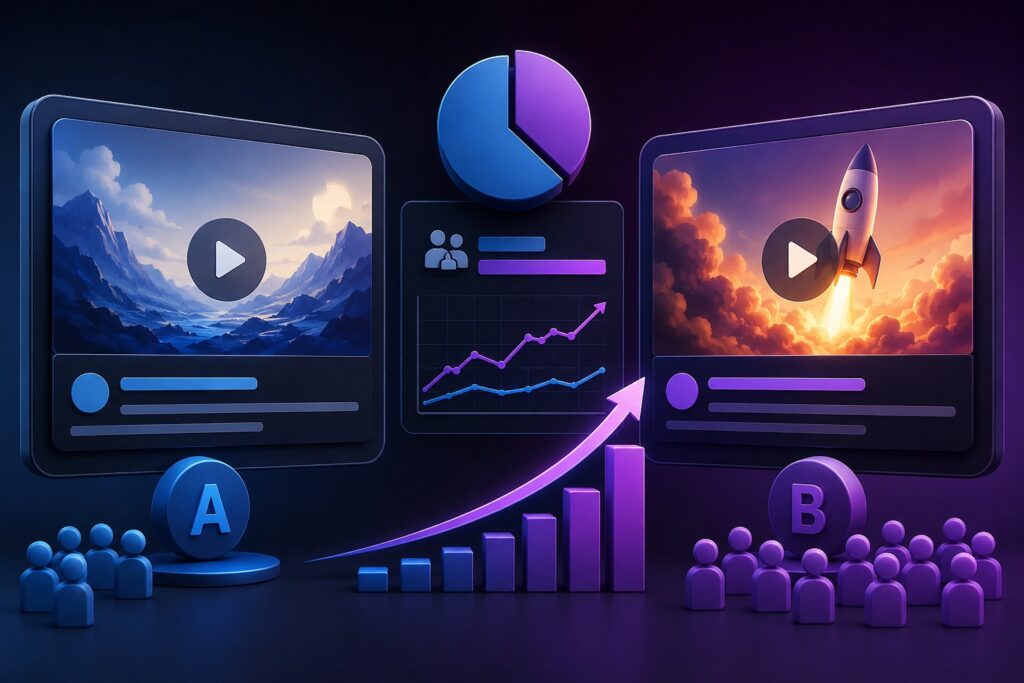
A/B Testing Video Titles, Thumbnails, and Descriptions for Higher CTR

Why Small Changes Can Lead to Big Results

Publishing a great video is only half the battle. Whether you’re creating content for YouTube, Facebook, Instagram, LinkedIn, or your own website, your audience first decides whether to click before they ever see what you’ve created. That decision often happens in just a few seconds.

Your title, thumbnail, and description work together as your video’s first impression. Even a professionally produced video can struggle if these elements fail to capture attention or communicate value. On the other hand, a few carefully tested adjustments can dramatically increase your click-through rate (CTR), helping your videos reach more viewers without spending additional money on advertising.

This is where A/B testing becomes one of the most valuable techniques in video marketing.

Instead of guessing what might work, you compare two versions, analyze the results, and make decisions based on real audience behavior. Over time, these small improvements compound into significant increases in traffic, engagement, and conversions.

A/B Testing Video Titles, Thumbnails, and Descriptions for Higher CTR
image generated by ChatGPT

What Is A/B Testing?

A/B testing is the process of comparing two versions of a marketing element to determine which one performs better.

For video marketing, you might test:

  • Video titles
  • Thumbnail designs
  • Video descriptions
  • Calls to action
  • Opening hooks
  • End screens

The goal is simple: improve the percentage of people who click on your video after seeing it.

For example, imagine two titles for the same video:

Version A:

“How to Create Better Marketing Videos”

Version B:

“Stop Wasting Money on Videos That Don’t Convert”

Although both describe similar content, they appeal to viewers differently. After collecting enough data, you may discover that one consistently generates a higher CTR.

Rather than relying on assumptions, A/B testing lets your audience tell you what they prefer.


Understanding Click-Through Rate (CTR)

Click-through rate measures how often people click your video after seeing it.

The formula is straightforward:

CTR = Clicks ÷ Impressions × 100

If your video appears 20,000 times and receives 1,200 clicks, your CTR is 6%.

While average CTR varies depending on industry, audience, and platform, improving it even by one or two percentage points can result in thousands of additional views over time.

Higher CTR also sends positive engagement signals that may help platforms recommend your content to more users.


Why Testing Titles Matters

Your title is usually the first thing potential viewers read.

An effective title should immediately communicate:

  • What the viewer will learn
  • Why it matters
  • Why they should watch now

Instead of stuffing keywords into every title, focus on clarity and usefulness.

Examples include:

  • How to Double Your Video Engagement Without Buying Ads
  • 10 Video Marketing Mistakes That Cost Businesses Customers
  • Beginner’s Guide to Creating Videos That Convert

Good titles create curiosity while accurately reflecting the video’s content.

Avoid misleading “clickbait” that promises something the video doesn’t deliver, as disappointed viewers often leave quickly, hurting overall performance.


Thumbnail Testing Can Produce Dramatic Results

Thumbnails often influence clicks more than any other visual element.

A strong thumbnail should remain clear and recognizable even on mobile devices.

When testing thumbnails, experiment with one variable at a time, such as:

  • Close-up faces versus product images
  • Bright backgrounds versus darker colors
  • Minimal text versus no text
  • Different emotional expressions
  • Clean layouts versus detailed designs

Consistency also matters. Developing a recognizable visual style can help returning viewers identify your content more easily.


Should You Test Video Descriptions?

Many creators overlook descriptions, but they play an important role in both discoverability and user experience.

A well-written description should:

  • Clearly summarize the video
  • Naturally include relevant keywords
  • Encourage viewers to continue watching
  • Link to related resources when appropriate
  • Include timestamps for longer videos

Testing different opening paragraphs, calls to action, and keyword placement can reveal which versions generate more clicks or longer viewing sessions.


Test One Variable at a Time

One of the biggest mistakes is changing everything simultaneously.

If you modify the title, thumbnail, and description together, you won’t know which change improved performance.

A better process looks like this:

  1. Publish the original version.
  2. Test a new title while keeping everything else the same.
  3. Measure the results.
  4. Keep the better-performing version.
  5. Test a different thumbnail.
  6. Repeat the process.

This structured approach produces reliable insights instead of guesswork.


Give Each Test Enough Time

Avoid drawing conclusions too quickly.

Depending on your audience size, allow enough time for your video to gather meaningful impressions before declaring a winner.

Testing over several days—or longer for lower-traffic channels—helps reduce the impact of daily fluctuations and gives a more accurate picture of performance.


Monitor More Than CTR

A higher CTR is valuable, but it isn’t the only metric worth tracking.

Also pay attention to:

  • Average view duration
  • Audience retention
  • Watch time
  • Engagement (likes, comments, shares)
  • Subscriber growth
  • Conversion rate
  • Website visits
  • Leads or sales generated

Sometimes a title that attracts more clicks may also attract the wrong audience, leading to lower watch time. The best-performing version is often the one that balances strong CTR with meaningful engagement.


Useful Ideas to Test

You don’t need to redesign your entire strategy. Start with simple experiments such as:

  • Questions versus statements in titles
  • Numbers versus no numbers
  • Short titles versus longer, descriptive titles
  • Different color combinations in thumbnails
  • Human faces versus product-focused images
  • Different calls to action in descriptions
  • Keyword placement in the first sentence
  • Different emotional triggers such as curiosity, urgency, or problem-solving

Even modest improvements can add up over dozens of videos.


Common Mistakes to Avoid

Many creators unintentionally limit their results by:

  • Changing multiple elements at once
  • Using misleading titles
  • Ignoring mobile users
  • Writing vague descriptions
  • Ending tests too early
  • Focusing only on views instead of conversions
  • Failing to document test results

Keeping a simple spreadsheet of your experiments can help identify long-term patterns and improve future decisions.


Build a Habit of Continuous Improvement

Successful video marketers rarely assume their first idea is the best one. They treat every upload as an opportunity to learn more about their audience.

By regularly testing titles, thumbnails, and descriptions, you’ll develop a better understanding of what captures attention, earns clicks, and keeps viewers engaged. Those insights can improve not only your current videos but every piece of content you create in the future.

A/B testing isn’t about chasing trends or making random changes. It’s about using data to refine your message, strengthen your presentation, and consistently deliver content that resonates with your audience.

Over time, those incremental improvements can lead to higher click-through rates, stronger audience engagement, increased search visibility, and more meaningful business results. Whether you’re growing a YouTube channel, promoting products, or building brand awareness, making A/B testing a regular part of your workflow is one of the smartest investments you can make in your video marketing strategy.

Frequently Asked Questions

How often should I A/B test my video titles?

Whenever possible. If a video continues receiving impressions, testing a new title or thumbnail can uncover opportunities to improve performance even months after publication.

Which should I test first: the title or the thumbnail?

Most marketers begin with the thumbnail because it’s often the first visual element viewers notice. After selecting a strong thumbnail, test the title to further improve CTR.

Does A/B testing help with YouTube SEO?

Yes. Improving click-through rate and viewer engagement can contribute to stronger overall performance, which may increase the likelihood of your videos being recommended and discovered by more viewers.

How long should an A/B test run?

The ideal duration depends on your audience size and traffic. Rather than focusing on a fixed number of days, wait until you’ve gathered enough impressions to make a meaningful comparison between versions.

source: YouTube Creators

Final Thoughts

Improving your video’s click-through rate doesn’t always require expensive equipment or a larger marketing budget. Often, the biggest gains come from refining the details that influence whether someone chooses to click in the first place.

By systematically testing your titles, thumbnails, and descriptions, measuring the results, and applying what you learn, you can create a repeatable process for growing your audience and increasing the effectiveness of every video you publish.

The written content on this page was generated by ChatGPT.
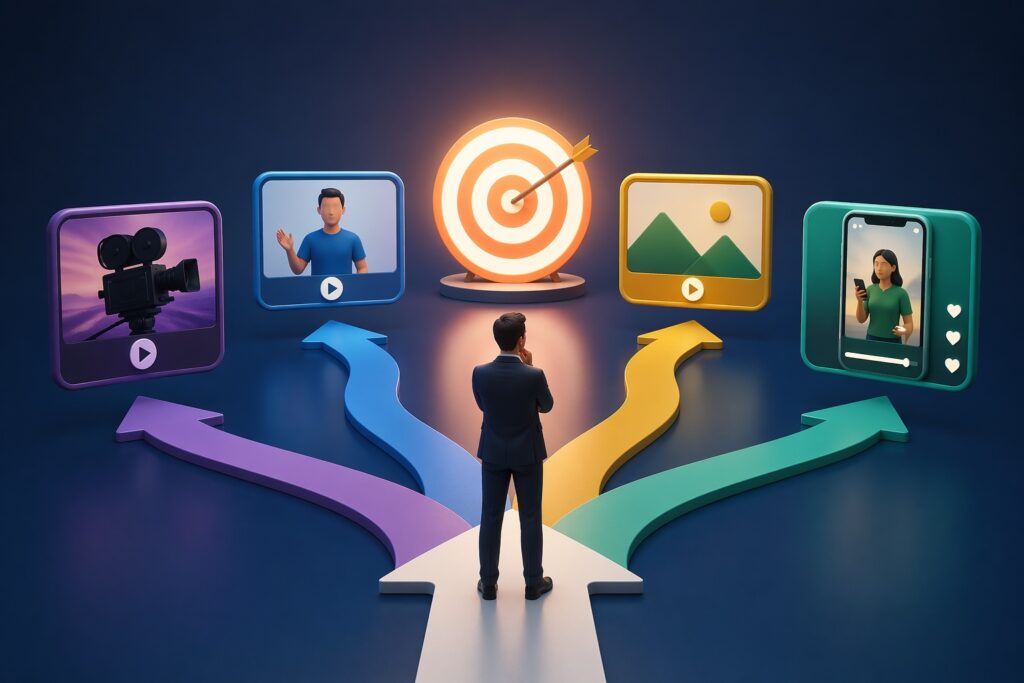
How to Choose the Right Video Format for Your Business Goals

Not every video works the same way. A short clip that performs well on social media might completely fail on a landing page. On the other hand, a detailed explainer video might be too heavy for a quick scroll audience on Instagram.

This is where many businesses get stuck. They focus on creating videos, but not on choosing the right type of video for the right purpose.

The truth is simple. Video marketing works best when the format matches the goal. Once that alignment is clear, everything from engagement to conversions becomes easier to achieve.

Let’s break down how to choose the right video format in a way that actually fits your business needs.

How to Choose the Right Video Format for Your Business Goals
image generated by ChatGPT

Start With the Outcome, Not the Video

Before thinking about cameras, editing, or platforms, the first question should always be: What do I want this video to accomplish?

Most business goals fall into a few categories:

Some videos are meant to introduce your brand to new audiences. Others are designed to explain a product in detail. And some are focused purely on turning viewers into paying customers.

If the goal is unclear, the video usually ends up unfocused too.

So instead of starting with “What video should I make?” it helps to ask:

  • Am I trying to attract attention?
  • Am I trying to explain something?
  • Am I trying to convince someone to buy?
  • Or am I trying to build trust over time?

Once you answer that, the format becomes much easier to choose.


If You Want Attention, Keep It Short

When the goal is visibility or awareness, shorter videos tend to perform better.

These are the types of videos that show up on platforms like TikTok, Instagram Reels, and YouTube Shorts. They are quick, direct, and designed to stop someone from scrolling.

They don’t need to explain everything. In fact, trying to include too much often hurts performance.

Good examples include:

  • Quick tips related to your industry
  • Short transformations or before-and-after clips
  • Simple product highlights
  • A single strong message or idea

These videos work best when they feel effortless to watch. The goal is not depth, but reach.


If You Need Leads, Focus on Explaining Clearly

When your goal is lead generation, clarity becomes more important than entertainment.

This is where explainer videos come in. They usually run a bit longer, often between one and three minutes, and focus on breaking down a service or solution in a simple way.

Instead of trying to impress the viewer, the goal is to remove confusion.

These videos are especially useful when your business involves something people don’t fully understand right away. For example:

  • Service based businesses
  • Software or tech tools
  • Specialized professional services

A good explainer video answers three things quickly:

  • What is the service?
  • How does it work?
  • Why should I care?

If those are clear, viewers are more likely to take the next step.


If You Want Sales, Show the Product in Action

When someone is close to making a decision, they don’t want theory. They want proof.

That’s where product demo videos work extremely well.

These videos focus less on storytelling and more on demonstration. They show exactly how something works in real situations.

They are especially effective because they reduce hesitation. People can see the value instead of just reading about it.

Common examples include:

  • Step-by-step product walkthroughs
  • Feature demonstrations
  • Real usage scenarios

The more practical and real it feels, the more effective it becomes.


If Trust Is the Goal, Let Customers Speak

People trust people more than brands. That’s why testimonial videos are so powerful.

Instead of you explaining why your business is good, your customers do it for you.

These videos don’t need to be heavily produced. In fact, slightly raw and natural footage often performs better because it feels authentic.

Strong testimonial videos usually focus on:

  • The problem the customer faced
  • How your product or service helped
  • The outcome they experienced

When done well, these videos can remove doubts that no sales pitch ever could.


If You Want Authority, Teach Something Useful

Educational videos take a different approach. Instead of selling directly, they focus on helping.

These are often longer and more detailed, but they attract highly engaged viewers.

They work well because they position your business as someone who understands the industry deeply.

Some examples include:

  • Step-by-step tutorials
  • Industry insights
  • Common mistakes and how to avoid them
  • In-depth explanations of topics your audience searches for

Over time, this type of content builds long-term credibility and also performs well in search engines.


Don’t Ignore Live Video Opportunities

Live video adds something that edited content can’t fully replicate: real-time interaction.

There’s no script in the same way, and that makes it feel more human.

Businesses often use live video for:

  • Q&A sessions
  • Product launches
  • Behind-the-scenes updates
  • Live demonstrations

Even though it feels less polished, it often builds stronger engagement because viewers can participate in the moment.


The Platform Changes Everything

A video is never just about content. Where it is published matters just as much.

A detailed video might work well on YouTube but feel out of place on Instagram. A short clip might perform well on social media but lack depth for a website landing page.

Here’s a simple way to think about it:

  • YouTube works best for searchable, longer content
  • Social media works best for fast attention and short messages
  • Websites need focused videos that support conversions
  • Email works best for short, direct messaging

Matching format to platform ensures your effort doesn’t get wasted.


One Video Is Never Enough

A common mistake businesses make is trying to use one video everywhere.

The reality is that each platform and goal requires a slightly different version of your content.

A single idea can often be repurposed into:

  • A short teaser clip
  • A full explanation video
  • A testimonial angle
  • A promotional version

When you stop thinking in terms of “one video” and start thinking in terms of “video systems,” your results usually improve significantly.

source: lacapturevisuals

Final Thoughts

Choosing the right video format is less about creativity and more about intention.

When the format matches the goal, everything becomes more effective. Your message is clearer, your audience understands faster, and your results become more predictable.

Instead of asking what video to make next, it helps to ask what role that video needs to play.

Once that is clear, the right format usually becomes obvious.

The written content on this page was generated by ChatGPT.
How Video Marketing Can Increase Engagement and Sales

Not long ago, most businesses relied on written descriptions and static images to promote their products and services. Today, that approach is no longer enough. Customers expect to see, hear, and experience what a business offers before they decide to trust it. Video has filled that gap. It gives businesses the ability to communicate quickly, clearly, and convincingly in a way that text alone cannot achieve.

People naturally respond to movement and sound. A well-crafted video can explain a product in seconds, demonstrate its value, and create a sense of familiarity that encourages customers to take action. This is why video marketing has become one of the most effective ways to increase engagement and drive sales across nearly every industry.

Businesses that use video strategically often see higher customer interest, stronger brand loyalty, and improved conversion rates. The impact goes beyond visibility. Video influences how customers feel, think, and ultimately decide.

How Video Marketing Can Increase Engagement and Sales

Why Video Captures Attention Better Than Other Content

Attention is the first step toward any sale. Without attention, even the best products remain unnoticed. Video is uniquely effective because it delivers information through multiple senses at once. Viewers can see the product, hear the explanation, and observe how it works in real situations.

This combination makes video easier to absorb and more memorable. Instead of asking customers to imagine how something works, video shows them directly. This reduces confusion and makes the message clearer.

Another advantage is speed. Many customers scan online content quickly. Video allows businesses to communicate their message within seconds. Even short videos can leave a lasting impression that encourages viewers to learn more.

Because of this, video often becomes the first point of meaningful interaction between a business and a potential customer.


Video Encourages Deeper Engagement

Engagement is more than just views. It reflects how interested people are in your content and how willing they are to interact with your brand. Video naturally encourages higher engagement because it feels more personal and easier to consume.

When visitors land on a website and see a video, they are more likely to stay longer. Instead of leaving quickly, they watch, listen, and absorb the information. This additional time creates more opportunities to influence their decision.

On social media, video consistently generates more interaction than other types of content. People are more likely to comment on videos, share them with others, and return to watch more. Each interaction increases your visibility and helps your business reach new audiences without additional advertising costs.

Engagement also strengthens familiarity. The more often customers see your brand through video, the more comfortable they become with it.


Video Builds Trust Faster

Trust is essential in any business relationship. Customers are more likely to buy from businesses they trust, and video helps establish that trust quickly.

When people see a real person explaining a product or sharing knowledge, it feels more genuine than reading anonymous text. Facial expressions, tone of voice, and body language all contribute to credibility.

Videos also create transparency. Showing how your product works, how it is made, or how it solves problems removes uncertainty. Customers can see the details for themselves instead of relying solely on written claims.

Testimonial videos are especially powerful. When potential customers see others sharing positive experiences, it reinforces confidence. This social proof reduces hesitation and makes purchasing decisions easier.

Over time, consistent video content helps build a reliable and trustworthy brand image.


Video Makes Products Easier to Understand

One of the most common reasons customers hesitate to buy is uncertainty. If they do not fully understand how a product works or how it benefits them, they may delay or avoid making a purchase.

Video removes this barrier by showing the product in action. Instead of explaining features in abstract terms, video demonstrates them clearly. Customers can see how the product fits into their lives and solves their problems.

This clarity simplifies decision-making. When customers understand the value, they feel more confident moving forward.

Instructional videos also reduce frustration after purchase. Customers who know how to use a product correctly are more satisfied, which leads to positive reviews and repeat business.


Video Strengthens Emotional Connection

Purchasing decisions are often influenced by emotion as much as logic. Video is one of the most effective tools for creating emotional connection because it combines storytelling, visuals, and sound.

A story told through video can inspire, reassure, or motivate viewers. It can show how a product improves someone’s life or solves a meaningful problem. These stories help customers see themselves in similar situations.

When customers feel emotionally connected, they are more likely to remember the brand and remain loyal over time. Emotional connection transforms one-time buyers into long-term customers.

This connection also encourages customers to share your content, expanding your reach naturally.


Video Improves Conversion Rates

Conversions happen when viewers take action. This could be making a purchase, signing up for a service, or contacting your business.

Video helps guide customers toward these actions by answering questions and removing doubts. When customers feel informed and confident, they are more willing to move forward.

Adding video to product pages often increases sales because customers gain a clearer understanding of what they are buying. Seeing the product demonstrated provides reassurance.

Video also improves the effectiveness of landing pages. Visitors are more likely to stay and engage with the content, increasing the likelihood of conversion.

Even email marketing benefits from video. Messages that include video often receive higher open and click rates because they attract curiosity and interest.


Video Enhances Your Online Visibility

Visibility is essential for attracting new customers. Video plays an important role in improving your online presence.

Search engines favor content that keeps users engaged. When visitors spend more time watching videos on your website, it signals quality and relevance. This can improve your search rankings.

Video content also appears in multiple places, including search results, video platforms, and social media feeds. This increases the number of ways customers can discover your business.

As more people view and share your videos, your brand becomes more recognizable. This increased exposure leads to more traffic and sales opportunities.


Video Supports Every Stage of the Customer Journey

Customers move through several stages before making a purchase. Video can support each step.

In the awareness stage, videos introduce your brand and attract attention.

In the consideration stage, videos explain how your product works and why it is valuable.

In the decision stage, testimonial and demonstration videos provide reassurance and encourage action.

After the purchase, instructional videos help customers use the product successfully, increasing satisfaction and loyalty.

This ongoing support strengthens your relationship with customers and encourages repeat business.


Different Types of Videos That Drive Results

A strong video marketing strategy includes various types of content designed for different purposes.

Explainer videos help customers understand services or products quickly.

Product demonstration videos show features and real-world use.

Customer testimonials build trust through real experiences.

Educational videos provide helpful information and establish expertise.

Short-form videos capture attention and increase social media engagement.

Each type contributes to stronger engagement and higher conversion rates.


Getting Started With Video Marketing

Starting with video marketing does not require expensive equipment or complex production. What matters most is clarity and authenticity.

Begin by identifying common customer questions. Create videos that answer those questions clearly.

Focus on providing useful information rather than trying to impress with production quality alone. Authentic content often performs better because it feels genuine.

Consistency is also important. Regular video content builds familiarity and strengthens your presence over time.

As you gain experience, you can refine your approach and improve quality gradually.


Long-Term Benefits of Video Marketing

Video marketing continues to deliver value long after it is published. Unlike traditional advertising, which stops when the campaign ends, videos remain accessible and continue attracting viewers.

Over time, your video library becomes a valuable resource that educates customers, builds trust, and supports sales.

This lasting impact makes video one of the most efficient and cost-effective marketing strategies available.

Businesses that invest in video now position themselves for sustained growth and stronger customer relationships.

source: Monica Beeman

Video marketing has fundamentally changed how businesses connect with their audiences. It captures attention quickly, builds trust through transparency, and helps customers understand products more clearly. These benefits lead directly to increased engagement and higher sales.

More importantly, video creates meaningful connections. It allows businesses to communicate with clarity, authenticity, and emotional impact. Customers who feel informed and confident are far more likely to take action.

As digital competition continues to increase, businesses that embrace video marketing gain a powerful advantage. Video is not just a trend. It is a proven strategy for attracting attention, building trust, and driving consistent business growth.

The written content on this page was generated by ChatGPT.