Tag Archives: SEO for videos

A/B Testing Video Titles, Thumbnails, and Descriptions for Higher CTR

Why Small Changes Can Lead to Big Results

Publishing a great video is only half the battle. Whether you’re creating content for YouTube, Facebook, Instagram, LinkedIn, or your own website, your audience first decides whether to click before they ever see what you’ve created. That decision often happens in just a few seconds.

Your title, thumbnail, and description work together as your video’s first impression. Even a professionally produced video can struggle if these elements fail to capture attention or communicate value. On the other hand, a few carefully tested adjustments can dramatically increase your click-through rate (CTR), helping your videos reach more viewers without spending additional money on advertising.

This is where A/B testing becomes one of the most valuable techniques in video marketing.

Instead of guessing what might work, you compare two versions, analyze the results, and make decisions based on real audience behavior. Over time, these small improvements compound into significant increases in traffic, engagement, and conversions.

A/B Testing Video Titles, Thumbnails, and Descriptions for Higher CTR
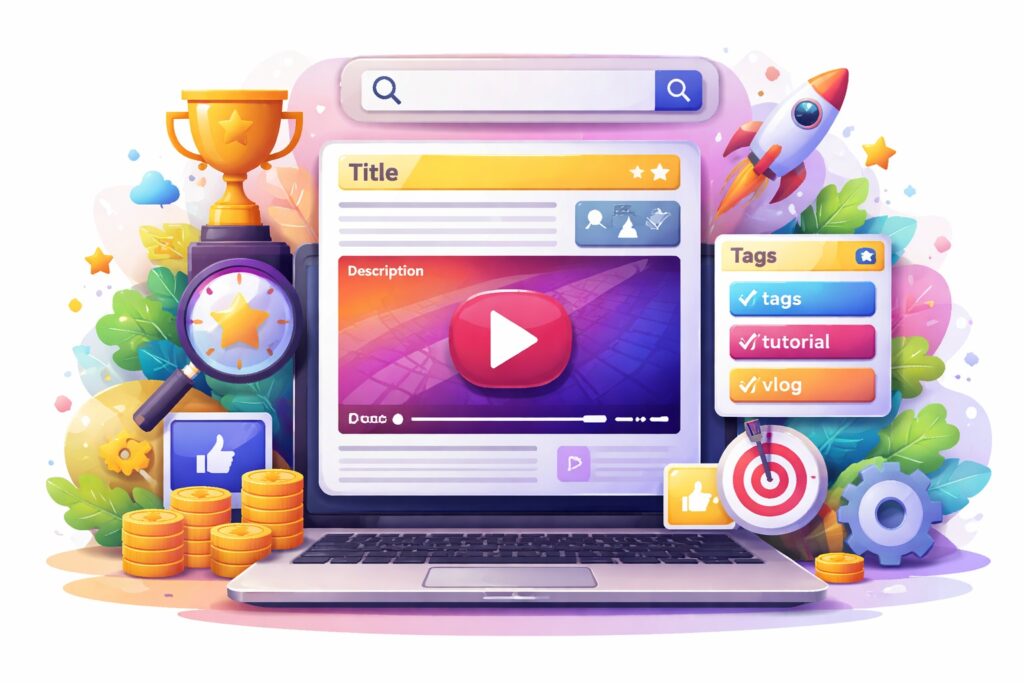
image generated by ChatGPT

What Is A/B Testing?

A/B testing is the process of comparing two versions of a marketing element to determine which one performs better.

For video marketing, you might test:

  • Video titles
  • Thumbnail designs
  • Video descriptions
  • Calls to action
  • Opening hooks
  • End screens

The goal is simple: improve the percentage of people who click on your video after seeing it.

For example, imagine two titles for the same video:

Version A:

“How to Create Better Marketing Videos”

Version B:

“Stop Wasting Money on Videos That Don’t Convert”

Although both describe similar content, they appeal to viewers differently. After collecting enough data, you may discover that one consistently generates a higher CTR.

Rather than relying on assumptions, A/B testing lets your audience tell you what they prefer.


Understanding Click-Through Rate (CTR)

Click-through rate measures how often people click your video after seeing it.

The formula is straightforward:

CTR = Clicks ÷ Impressions × 100

If your video appears 20,000 times and receives 1,200 clicks, your CTR is 6%.

While average CTR varies depending on industry, audience, and platform, improving it even by one or two percentage points can result in thousands of additional views over time.

Higher CTR also sends positive engagement signals that may help platforms recommend your content to more users.


Why Testing Titles Matters

Your title is usually the first thing potential viewers read.

An effective title should immediately communicate:

  • What the viewer will learn
  • Why it matters
  • Why they should watch now

Instead of stuffing keywords into every title, focus on clarity and usefulness.

Examples include:

  • How to Double Your Video Engagement Without Buying Ads
  • 10 Video Marketing Mistakes That Cost Businesses Customers
  • Beginner’s Guide to Creating Videos That Convert

Good titles create curiosity while accurately reflecting the video’s content.

Avoid misleading “clickbait” that promises something the video doesn’t deliver, as disappointed viewers often leave quickly, hurting overall performance.


Thumbnail Testing Can Produce Dramatic Results

Thumbnails often influence clicks more than any other visual element.

A strong thumbnail should remain clear and recognizable even on mobile devices.

When testing thumbnails, experiment with one variable at a time, such as:

  • Close-up faces versus product images
  • Bright backgrounds versus darker colors
  • Minimal text versus no text
  • Different emotional expressions
  • Clean layouts versus detailed designs

Consistency also matters. Developing a recognizable visual style can help returning viewers identify your content more easily.


Should You Test Video Descriptions?

Many creators overlook descriptions, but they play an important role in both discoverability and user experience.

A well-written description should:

  • Clearly summarize the video
  • Naturally include relevant keywords
  • Encourage viewers to continue watching
  • Link to related resources when appropriate
  • Include timestamps for longer videos

Testing different opening paragraphs, calls to action, and keyword placement can reveal which versions generate more clicks or longer viewing sessions.


Test One Variable at a Time

One of the biggest mistakes is changing everything simultaneously.

If you modify the title, thumbnail, and description together, you won’t know which change improved performance.

A better process looks like this:

  1. Publish the original version.
  2. Test a new title while keeping everything else the same.
  3. Measure the results.
  4. Keep the better-performing version.
  5. Test a different thumbnail.
  6. Repeat the process.

This structured approach produces reliable insights instead of guesswork.


Give Each Test Enough Time

Avoid drawing conclusions too quickly.

Depending on your audience size, allow enough time for your video to gather meaningful impressions before declaring a winner.

Testing over several days—or longer for lower-traffic channels—helps reduce the impact of daily fluctuations and gives a more accurate picture of performance.


Monitor More Than CTR

A higher CTR is valuable, but it isn’t the only metric worth tracking.

Also pay attention to:

  • Average view duration
  • Audience retention
  • Watch time
  • Engagement (likes, comments, shares)
  • Subscriber growth
  • Conversion rate
  • Website visits
  • Leads or sales generated

Sometimes a title that attracts more clicks may also attract the wrong audience, leading to lower watch time. The best-performing version is often the one that balances strong CTR with meaningful engagement.


Useful Ideas to Test

You don’t need to redesign your entire strategy. Start with simple experiments such as:

  • Questions versus statements in titles
  • Numbers versus no numbers
  • Short titles versus longer, descriptive titles
  • Different color combinations in thumbnails
  • Human faces versus product-focused images
  • Different calls to action in descriptions
  • Keyword placement in the first sentence
  • Different emotional triggers such as curiosity, urgency, or problem-solving

Even modest improvements can add up over dozens of videos.


Common Mistakes to Avoid

Many creators unintentionally limit their results by:

  • Changing multiple elements at once
  • Using misleading titles
  • Ignoring mobile users
  • Writing vague descriptions
  • Ending tests too early
  • Focusing only on views instead of conversions
  • Failing to document test results

Keeping a simple spreadsheet of your experiments can help identify long-term patterns and improve future decisions.


Build a Habit of Continuous Improvement

Successful video marketers rarely assume their first idea is the best one. They treat every upload as an opportunity to learn more about their audience.

By regularly testing titles, thumbnails, and descriptions, you’ll develop a better understanding of what captures attention, earns clicks, and keeps viewers engaged. Those insights can improve not only your current videos but every piece of content you create in the future.

A/B testing isn’t about chasing trends or making random changes. It’s about using data to refine your message, strengthen your presentation, and consistently deliver content that resonates with your audience.

Over time, those incremental improvements can lead to higher click-through rates, stronger audience engagement, increased search visibility, and more meaningful business results. Whether you’re growing a YouTube channel, promoting products, or building brand awareness, making A/B testing a regular part of your workflow is one of the smartest investments you can make in your video marketing strategy.

Frequently Asked Questions

How often should I A/B test my video titles?

Whenever possible. If a video continues receiving impressions, testing a new title or thumbnail can uncover opportunities to improve performance even months after publication.

Which should I test first: the title or the thumbnail?

Most marketers begin with the thumbnail because it’s often the first visual element viewers notice. After selecting a strong thumbnail, test the title to further improve CTR.

Does A/B testing help with YouTube SEO?

Yes. Improving click-through rate and viewer engagement can contribute to stronger overall performance, which may increase the likelihood of your videos being recommended and discovered by more viewers.

How long should an A/B test run?

The ideal duration depends on your audience size and traffic. Rather than focusing on a fixed number of days, wait until you’ve gathered enough impressions to make a meaningful comparison between versions.

source: YouTube Creators

Final Thoughts

Improving your video’s click-through rate doesn’t always require expensive equipment or a larger marketing budget. Often, the biggest gains come from refining the details that influence whether someone chooses to click in the first place.

By systematically testing your titles, thumbnails, and descriptions, measuring the results, and applying what you learn, you can create a repeatable process for growing your audience and increasing the effectiveness of every video you publish.

The written content on this page was generated by ChatGPT.
Using Schema Markup to Improve Video SEO and Visibility

A marketing team might spend hours filming a tutorial, editing clips, choosing the perfect thumbnail, and writing a thoughtful description. The video finally goes live on the website, but days later it receives very little organic traffic from search engines. The problem usually isn’t the video itself. In many cases, search engines simply do not understand the content well enough to highlight it in search results.

Search engines rely heavily on signals that help them interpret the meaning of content on a webpage. Videos can be particularly difficult for algorithms to analyze because they contain visual and audio information rather than plain text. This is where schema markup becomes incredibly valuable. By adding structured data to a webpage, website owners can give search engines clear instructions about what a video contains and how it should appear in search listings.

Schema markup may sound technical, but it is one of the most practical tools available for improving video visibility in search results. When implemented correctly, it can help your content appear in rich results, increase click-through rates, and ensure that your videos are properly indexed by search engines.

Using Schema Markup to Improve Video SEO and Visibility

Understanding Schema Markup

Schema markup is a form of structured data placed within the code of a webpage. It acts as a detailed label system that helps search engines identify the elements of a page and understand how they relate to one another.

Instead of leaving search engines to interpret content based only on text and links, schema markup provides specific information such as:

  • The title of a video
  • A summary or description of the content
  • The duration of the video
  • The date the video was uploaded
  • The thumbnail image associated with the video
  • The creator or publisher of the content

When search engines receive this information in a structured format, they can display the content more accurately in search results.

Schema markup is part of a broader vocabulary supported by major search engines. It allows websites to describe many types of content including articles, events, products, and of course videos.


Why Schema Markup Matters for Video SEO

Video has become one of the most engaging forms of online content. Businesses use it to introduce products, answer customer questions, and build trust with audiences. Yet many videos remain buried in search results because search engines cannot easily interpret them.

Adding schema markup provides several advantages that improve the likelihood of your video appearing prominently in search results.

Greater Visibility in Search Results

One of the most noticeable benefits of schema markup is the possibility of appearing in enhanced search listings. Instead of displaying as a simple blue link, video pages may appear with thumbnails, video duration, and additional details that catch a user’s attention.

These enhanced listings are often referred to as rich results, and they can significantly increase the chances of someone clicking on your content.

Improved Click-Through Rates

When users scroll through search results, visual elements naturally draw attention. A video result that includes a thumbnail image is more likely to stand out compared to a plain text result. Even if your page ranks in a similar position to competitors, the added visual element can attract more clicks.

Better Content Understanding

Search engines rely on algorithms to interpret information. Schema markup removes guesswork by providing structured data that clearly identifies the subject and characteristics of a video.

This improved understanding helps search engines match your content to relevant search queries more accurately.

Faster and More Accurate Indexing

Structured data also helps search engines process pages more efficiently. When important information is clearly labeled, search engines can index the content faster and categorize it more effectively.


How Search Engines Interpret Video Schema

Search engines analyze webpages by scanning HTML code and looking for structured data that follows recognized formats. One of the most commonly used formats is JSON-LD, which is designed to communicate structured information in a simple, readable way.

When a search engine finds video schema markup on a page, it evaluates several factors:

  • Whether the page contains a playable video
  • The subject of the video
  • The length of the video
  • The upload date
  • The thumbnail associated with the content

This information can influence whether the video appears in search features such as video carousels or specialized video search results.

Without structured data, search engines must rely primarily on surrounding text. While they can still attempt to understand the page, the process is less precise and often leads to missed opportunities for visibility.


The Role of VideoObject Schema

For video content, the most important schema type is known as VideoObject. This structured data format allows website owners to describe the essential details of a video in a way that search engines can easily interpret.

Typical properties used in VideoObject schema include:

  • name – the title of the video
  • description – a summary explaining what the video covers
  • thumbnailUrl – the preview image that represents the video
  • uploadDate – the date when the video was published
  • duration – the total length of the video
  • contentUrl – the direct file location of the video
  • embedUrl – the URL used to embed the video player on a webpage

By including these details, you provide search engines with a structured overview of the video’s key attributes.


Steps to Implement Video Schema Markup

Although schema markup may appear complicated at first, implementing it is often straightforward once you understand the process.

Create a Dedicated Page for Important Videos

One of the most effective approaches is to give each important video its own webpage. When a page focuses on a single video, search engines can more easily connect the structured data with the content.

A dedicated page also allows you to provide additional context such as a written explanation, supporting images, and links to related content.

Provide Supporting Text Content

Search engines still rely heavily on written information. Adding an introduction, summary, or transcript to the page strengthens the relevance of your video.

This extra content helps search engines understand the topic while also improving accessibility for visitors who prefer reading over watching.

Generate Schema Markup

Schema markup can be written manually in JSON-LD format or generated using structured data tools. Many content management systems also provide plugins that simplify the process.

A basic example might look like this:

{
"@context": "https://schema.org",
"@type": "VideoObject",
"name": "Video SEO Tips for Businesses",
"description": "Learn how to optimize videos to improve search visibility.",
"thumbnailUrl": "https://example.com/video-thumbnail.jpg",
"uploadDate": "2026-02-10",
"duration": "PT6M30S",
"embedUrl": "https://example.com/video-player"
}

Once added to your page’s code, search engines can begin interpreting the structured data.

Test Your Structured Data

Before publishing, it is important to verify that the markup works properly. Structured data testing tools allow you to confirm that search engines can read your schema and identify any errors that need to be corrected.


Best Practices for Video Schema Implementation

Schema markup works best when combined with strong overall SEO practices. Several strategies can maximize its effectiveness.

Use High-Quality Thumbnails

The thumbnail image is often the first visual element users see in search results. Clear, high-resolution thumbnails tend to attract more attention and improve engagement.

Keep Metadata Accurate

The title and description in your schema markup should match the content on the page. Misleading information can prevent search engines from displaying enhanced results.

Include Video Transcripts

Transcripts provide additional text that reinforces the topic of the video. They also make content accessible to users who prefer reading or who cannot watch videos with sound.

Maintain Consistency Across Platforms

If your video is hosted on another platform, make sure the title, description, and metadata remain consistent across all locations.


Mistakes That Can Limit Video SEO Performance

Even when schema markup is implemented, certain mistakes can reduce its impact.

One common issue is adding schema markup to a page that does not visibly display the video. Search engines expect structured data to reflect what users actually see.

Another mistake involves using the same metadata across multiple videos. Duplicate information can confuse search engines and weaken your optimization efforts.

In addition, some websites accidentally block video files from being crawled by search engines. If search engines cannot access the video, they cannot evaluate it for search features.


Schema Markup and Embedded Videos

Many websites embed videos hosted on external platforms. Even when using an embedded player, adding schema markup to your own webpage is still beneficial.

Structured data helps search engines connect the video with your website rather than only associating it with the hosting platform. This means your website can gain visibility in search results instead of directing all traffic elsewhere.


Measuring the Results of Schema Implementation

After adding schema markup, performance improvements may not appear immediately. Search engines need time to crawl the updated page and process the structured data.

Monitoring performance metrics can help you evaluate the impact of your changes. Some indicators to watch include:

  • Increased impressions in video search results
  • Higher click-through rates from search pages
  • Growth in organic traffic to video pages
  • Improved rankings for video-related keywords

Tracking these metrics over time provides valuable insight into how well your optimization strategy is working.


Why Schema Markup Is Becoming Essential for Video Content

As search engines evolve, they continue to rely more heavily on structured data to organize and present information. Video consumption online continues to rise, and competition for visibility is becoming increasingly intense.

Websites that invest in structured data give search engines a clearer roadmap for understanding their content. This advantage can make a significant difference in how often videos appear in search results.

Rather than treating schema markup as a technical afterthought, forward-thinking marketers integrate it into their overall SEO strategy from the beginning.

source: Webflow

Final Thoughts

Producing high-quality videos requires time, creativity, and resources. Yet without proper optimization, even the most informative video can struggle to reach its intended audience.

Schema markup helps bridge the gap between content creation and discoverability. By providing structured information about your videos, you make it easier for search engines to interpret and showcase your content.

For businesses and content creators who rely on video to educate customers or promote products, structured data can play a crucial role in improving search visibility. When combined with strong content, thoughtful keyword research, and user-friendly webpages, schema markup becomes a powerful tool for increasing reach and long-term online growth.

The written content on this page was generated by ChatGPT.