Tag Archives: watch time

How to Use Audience Retention Data to Improve Business Videos

Creating a business video takes time. You have to choose a topic, write a script, record the footage, edit the final version, create a thumbnail, and then promote it. After all that work, it can be frustrating to discover that viewers are leaving after only a few seconds.

That is where audience retention data becomes useful.

Instead of guessing why a video is not performing as expected, you can look at viewer behavior and identify the moments when people lose interest, skip ahead, rewatch a section, or continue watching until the end.

Audience retention data can help businesses make better videos over time. It can reveal whether the introduction is too slow, whether the main information arrives too late, whether certain sections are confusing, or whether viewers are particularly interested in a specific part of the content.

The goal is not simply to get more views. A successful business video should hold the attention of the right audience and move viewers toward a useful next step.
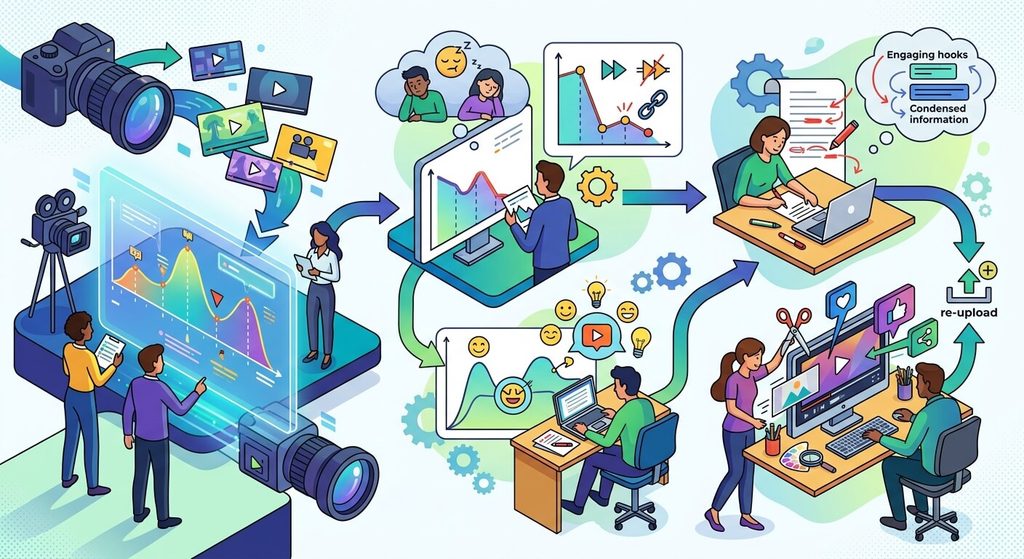
How to Use Audience Retention Data to Improve Business Videos
image generated using Google Gemini AI

What Is Audience Retention?

Audience retention measures how much of a video people watch and how long they remain engaged with it.

For example, imagine you publish a five-minute video explaining how customers can choose the right service for their needs. If many viewers leave during the first 20 seconds, the opening may not be giving them enough reason to continue.

If viewers consistently watch until the middle of the video but leave when you begin discussing a particular subject, that section deserves closer attention.

Retention data gives you a picture of what happens after someone presses play.

Depending on the platform and analytics system, you may be able to see information such as:

  • Average view duration
  • Average percentage viewed
  • Audience retention over time
  • Points where viewers leave
  • Sections that receive repeated views
  • Moments where viewers skip ahead
  • Video completion behavior
  • Differences in retention between videos

These measurements can turn video analytics into practical information for your next piece of content.

Why Audience Retention Matters for Business Videos

A business video can have an attractive thumbnail and a strong title, but those elements only help get someone to click.

The video itself has to give the viewer a reason to stay.

When people leave quickly, your message may never reach them. They may not hear about your product, understand your service, see your demonstration, or reach your call to action.

High viewer retention does not automatically mean that a video will generate customers. However, retention can help you determine whether your content is holding attention long enough to communicate its intended message.

For businesses, this creates an important feedback loop:

Publish → Measure → Identify problems → Improve → Publish again

Over time, this process can make your video marketing strategy more informed and consistent.

Start by Looking at the First Few Seconds

The beginning of a video deserves special attention.

People usually decide very quickly whether the content appears relevant to them. If your introduction spends too much time on greetings, company history, unnecessary background information, or vague statements, viewers may leave before reaching the useful portion.

Consider an opening such as:

“Hi everyone. Welcome back to our channel. Today we’re going to talk about…”

It is not necessarily wrong, but it may delay the information the viewer came to find.

A more direct introduction could begin with the problem:

“Not sure which garage door opener is right for your home? Here are three things to check before buying one.”

The second approach immediately establishes the subject and gives the viewer a reason to continue.

Look at your retention graph and ask:

Where does the largest early drop happen?

If there is a sharp decline near the beginning, review those opening seconds carefully.

Ask yourself:

  • Did the video clearly explain what viewers would learn?
  • Did I get to the point quickly?
  • Does the opening match the title and thumbnail?
  • Is there unnecessary introductory material?
  • Does the first section address the viewer’s problem?

These questions can lead to simple improvements in future videos.

Identify Sudden Drops in Audience Retention

A gradual decline throughout a video is normal. Not everyone who starts a video will watch every second.

Sudden drops are more interesting.

A sharp decline may occur when:

  • The subject changes unexpectedly
  • A long introduction begins
  • The speaker becomes repetitive
  • A complicated explanation starts
  • A promotional section appears
  • The video pauses for unnecessary information
  • The editing becomes slower
  • The viewer’s original question has already been answered

When you see a significant drop, go back to that exact point in the video.

Do not immediately assume the problem is the subject itself. The problem could be the way the information was presented.

For example, a video about choosing business software might retain viewers well while comparing features but experience a major drop when the presenter spends two minutes discussing the company’s history.

That suggests something useful: viewers may be more interested in practical information than background material.

The next video can be structured accordingly.

Look for Retention Spikes

Retention data is not only about finding problems.

Spikes can be just as valuable.

A spike may indicate that viewers watched a particular section more frequently or returned to that portion of the video.

Suppose you publish a ten-minute video about improving local business marketing. The section covering Google Business Profile optimization receives noticeably more attention than the other sections.

That could tell you that the topic deserves more content.

You could create a dedicated video about:

“How to Optimize Your Google Business Profile for Local Customers”

The retention data has effectively helped you discover a potential content topic.

This is one of the smartest ways to use analytics. Instead of constantly guessing what your audience wants, you can use actual viewing behavior to find subjects that deserve further attention.

Pay Attention to Rewatched Sections

When viewers repeatedly watch a section, it can mean that the information is particularly useful, interesting, or difficult to understand.

There are several possible explanations.

A viewer may replay a product demonstration because they want to see how something works. They might replay instructions because they are following along. Or they may rewatch an important detail that was delivered quickly.

Do not automatically interpret every spike as proof that the section was perfect.

Instead, investigate it.

Ask:

What was happening on screen at this moment?

You might discover that viewers respond particularly well to:

  • Demonstrations
  • Examples
  • Before-and-after comparisons
  • Step-by-step instructions
  • Specific statistics
  • Product features
  • Visual explanations
  • Answers to common questions

Those patterns can influence future videos.

Compare Retention Across Similar Videos

One video rarely tells the whole story.

If you want useful insights, compare several videos that cover related subjects.

For example, a business might have five videos about social media marketing. One has a much stronger average percentage viewed than the others.

Look for differences.

Maybe the successful video:

  • Gets to the point faster
  • Uses a shorter introduction
  • Has a clearer structure
  • Answers a specific question
  • Uses more demonstrations
  • Has shorter sections
  • Provides examples throughout
  • Uses a more engaging presentation style

The purpose of comparison is not to copy one video exactly.

Instead, look for patterns.

If several of your strongest videos share similar characteristics, those characteristics can become part of your future video production process.

Improve Your Video Introductions

Audience retention data often reveals whether your introduction is doing its job.

A strong business video introduction should establish three things fairly quickly:

What is this video about?

Why should the viewer care?

What will they get from watching?

You do not need to explain everything at the beginning.

In many cases, a concise introduction works better than a long setup.

For example:

“If your website receives visitors but very few inquiries, your videos may be missing one important element. In this video, we’ll show you how to build a stronger call to action.”

The viewer immediately understands the problem and what the video intends to address.

Once you have retention data from several videos, you can compare different opening styles and see which approaches keep viewers watching longer.

Remove Unnecessary Filler

Filler can creep into business videos surprisingly easily.

Common examples include:

  • Repeating the same point
  • Long transitions
  • Extended greetings
  • Unnecessary personal stories
  • Excessive disclaimers
  • Repeating calls to action
  • Explaining information that viewers already understand

None of these automatically makes a video bad. Context matters.

The problem occurs when they take up valuable viewing time without adding meaningful information.

If your retention data shows repeated drops during lengthy explanations, consider tightening the editing.

You do not necessarily need to make every video shorter.

You need to make every section useful.

A seven-minute video with valuable information can be more effective than a three-minute video that feels rushed or incomplete.

Use Retention Data to Improve Your Video Structure

Audience retention can also help you determine how your videos should be organized.

A simple structure might look like this:

Introduction

Tell viewers what problem the video addresses.

Main Point One

Give the first useful piece of information.

Main Point Two

Continue with another practical insight.

Example or Demonstration

Show how the concept works in a real situation.

Main Point Three

Add another important takeaway.

Summary

Briefly reinforce the key points.

Call to Action

Tell viewers what they can do next.

This structure is not mandatory for every business video, but it provides a useful starting point.

Your analytics can then tell you where viewers remain engaged and where they tend to leave.

Make the Content Match the Viewer’s Expectation

There is an important relationship between your title, thumbnail, and video content.

If the title promises one thing but the video focuses on something else, viewers may leave quickly.

For example, imagine a video titled:

“How to Create a Business Video on Your Phone”

If the first minute is spent discussing the history of mobile video production, someone looking for practical instructions may leave.

The solution is straightforward: deliver what the title promised.

Audience retention can help identify whether your content is meeting that expectation.

A strong click is only the beginning. The content has to follow through.

Use Retention Data When Writing Scripts

Analytics should not only influence editing.

It can also influence your next script.

Suppose your previous videos consistently lose viewers when you introduce a long list of five or six points at once.

Your next script could break that information into shorter sections.

Instead of:

“There are five things you need to know…”

You could introduce each idea individually and provide an example before moving to the next.

Likewise, if viewers consistently remain engaged during demonstrations, build more demonstrations into future scripts.

This creates a connection between analytics and content planning.

Your old videos become research for your new ones.

Don’t Chase Retention at the Expense of Useful Information

There is a temptation to optimize every second of a video simply to keep people watching.

That can create its own problems.

Business videos have a purpose. They may educate customers, explain a service, demonstrate a product, answer questions, generate leads, or help existing customers.

A section that causes some viewers to leave is not necessarily useless.

For example, detailed pricing information might cause casual viewers to leave but remain extremely valuable to people who are seriously considering a purchase.

That is why retention should be considered alongside other business metrics.

Look at:

  • Leads
  • Sales
  • Click-throughs
  • Website visits
  • Form submissions
  • Calls
  • Engagement
  • Comments
  • Customer questions

The objective is to understand audience behavior, not manipulate viewers into watching every second.

Segment Your Audience When Possible

Not every viewer has the same reason for watching.

Someone discovering your company for the first time may behave differently from an existing customer.

Similarly, a beginner may watch differently from an experienced professional.

If your analytics platform provides audience segmentation, use it to investigate these differences.

You may discover that one group watches educational videos longer while another group responds more strongly to product demonstrations.

This information can help you create content for specific stages of the customer journey.

Instead of trying to create one video that appeals to everyone, you can develop different videos for different needs.

Use Retention Data to Improve Calls to Action

The call to action is another area worth studying.

If viewers consistently leave before reaching your CTA, you may need to reconsider where you place it.

A call to action does not always have to wait until the final seconds.

For some videos, a relevant next step can be introduced earlier.

For example:

“If you’re comparing these options for your business, we’ve created a detailed checklist you can use. We’ll show you where to find it at the end of the video.”

The CTA becomes part of the viewer’s journey rather than an interruption at the end.

Again, the goal is relevance. A CTA should make sense in the context of what the viewer has just learned.

Create More Content Around Successful Sections

One of the easiest ways to turn audience retention data into new content ideas is to expand on topics that already perform well.

Imagine a ten-minute video contains a two-minute section about creating product demonstration videos.

That section generates strong viewer interest.

Instead of simply moving on to another unrelated topic, you could develop additional content around it:

  • How to Script a Product Demo Video
  • Product Demo Video Mistakes to Avoid
  • How to Film Product Demonstrations at Home
  • Product Demo Videos for Social Media
  • How to Measure Product Video Performance

One successful section can become an entire content cluster.

This approach can make your video marketing strategy more focused and easier to manage.

Keep a Video Performance Log

You do not need an elaborate system.

A simple spreadsheet can track your videos and help you identify trends.

Useful columns include:

VideoTopicLengthAverage View DurationAverage Percentage ViewedMajor Drop-OffStrong SectionLeads
Video 1Topic A6 min——IntroductionDemonstration—
Video 2Topic B8 min——Product explanationExample—
Video 3Topic C5 min——CTATutorial—

The exact metrics available will depend on the platform you’re using.

The important thing is consistency.

After you have enough videos in the spreadsheet, patterns become easier to spot.

Review Your Retention Data Regularly

Do not check analytics only when a video performs poorly.

Make reviewing retention part of your normal content process.

A practical routine might look like this:

After publishing: Check early performance and confirm that the video is reaching its intended audience.

After enough viewing data accumulates: Review the retention graph and identify major drops and spikes.

Before creating the next video: Use those observations when planning the structure and script.

Periodically: Compare several videos to identify broader patterns.

This turns analytics into an ongoing learning process rather than a one-time report.

Common Audience Retention Mistakes Businesses Make

There are several mistakes that can make retention data less useful.

Looking at views alone

A large number of views does not tell you how long people watched or whether they took a valuable next step.

Making decisions from one video

One unusual video may not represent your broader audience.

Ignoring the actual video

A graph can tell you where something happened. You still need to watch the corresponding section to understand why.

Optimizing only for watch time

Longer viewing is not automatically better if the content does not serve the business objective.

Copying competitors

Another company’s audience may behave differently from yours.

Changing everything at once

If you change your introduction, thumbnail, topic, video length, editing style, and CTA simultaneously, it becomes difficult to determine which change made a difference.

Instead, make thoughtful adjustments and observe the results.

Turn Audience Retention Into a Continuous Improvement System

The most useful way to think about audience retention is as feedback.

Every published video gives you information.

A drop in the opening may encourage you to improve your introductions.

A spike around a demonstration may suggest creating more practical content.

Strong retention on a particular topic may indicate an opportunity for a larger content series.

Consistent drop-offs during lengthy explanations may encourage tighter scripting and editing.

Over time, these observations can become a repeatable system:

Create → Publish → Measure → Study → Improve → Repeat

This approach is much more sustainable than trying to make every video perfect before publishing it.

Final Thoughts

Audience retention data gives businesses a window into how viewers actually experience their videos.

Instead of relying entirely on assumptions, you can examine where people stay engaged, where they leave, which sections receive additional attention, and how different videos perform against one another.

The most important step is not simply checking the retention graph. It is connecting what you see in the data to specific changes in your content.

Improve the opening when viewers leave early. Tighten sections where attention consistently drops. Expand topics that generate strong engagement. Make your videos match the expectations established by their titles and thumbnails. Then measure the results of those changes.

Video marketing becomes much more effective when every video teaches you something about the next one.

The goal is not to create videos that hold everyone’s attention from beginning to end. The goal is to create useful, relevant business videos that keep the right viewers engaged long enough to understand your message and take the next appropriate step.

The written content on this page was generated by ChatGPT.

Click-Through Rate vs Watch Time: What Matters More in Video Marketing

Video marketing has become one of the most powerful ways to grow a business online, but it has also become one of the most misunderstood. Many creators obsess over numbers without fully understanding what those numbers actually represent.

Two metrics usually sit at the center of the debate: Click-Through Rate (CTR) and Watch Time. At first glance, they seem to compete with each other. One measures how many people click. The other measures how long they stay.

But in reality, they are not rivals at all. They are two stages of the same journey.

If you want consistent growth on platforms like YouTube, Facebook, or TikTok, you need to understand not only what these metrics mean—but how they influence each other.

Click-Through Rate vs Watch Time: What Matters More in Video Marketing
Generated by ChatGPT

Why Video Metrics Matter More Than Ever

In earlier forms of marketing, success was measured in simple exposure. How many people saw your ad. How many impressions you bought. How many eyeballs were reached.

Video marketing changed that completely.

Today, platforms don’t just care about whether someone saw your content. They care about what people did after seeing it. Did they click? Did they stay? Did they engage?

That shift is why CTR and Watch Time became so important. They are no longer vanity numbers. They are signals that determine whether your video gets pushed to more people or quietly disappears.


What Click-Through Rate Actually Tells You

Click-Through Rate is often misunderstood as a success metric, but it is really a curiosity metric.

It answers one simple question:

“Did your video look interesting enough for someone to click?”

CTR is shaped before anyone even watches your content. It depends on how your video is presented in the feed.

This includes:

  • The thumbnail
  • The title
  • The topic framing
  • Audience targeting
  • Emotional appeal

A high CTR usually means your packaging works. People see it and think, “I want to know more.”

But CTR alone does not guarantee success. It only gets someone through the door.


What Watch Time Really Measures

Watch Time is where reality shows up.

Unlike CTR, which is about attraction, Watch Time is about retention. It measures whether your content can actually hold attention once someone clicks.

This includes:

  • How long people stay
  • When they drop off
  • Whether they finish the video
  • Overall audience retention

Watch Time tells platforms something very important:

“This content delivered on its promise.”

If CTR is the invitation, Watch Time is the experience.

And in most modern algorithms, experience matters more than curiosity.


The Hidden Relationship Between CTR and Watch Time

It’s easy to treat these two metrics separately, but platforms don’t.

They evaluate them together as a sequence:

  1. A user sees your video (impression)
  2. They decide whether to click (CTR)
  3. They decide whether to stay (Watch Time)

If either step fails, the chain breaks.

A video with high CTR but low Watch Time sends a negative signal. It tells the platform that the packaging worked, but the content didn’t deliver.

On the other hand, a video with low CTR but high Watch Time struggles to scale. It performs well only after people find it, but not enough people ever see it.


When CTR Is High but Watch Time Is Weak

This is one of the most common problems in video marketing.

It usually happens when:

  • Titles are too sensational
  • Thumbnails are misleading
  • Expectations are inflated

At first, everything looks promising. Views come in quickly. The CTR looks strong.

But then something changes.

People start leaving within seconds. Retention drops. The algorithm slows down distribution.

What went wrong is simple: the video attracted attention but didn’t sustain it.

Over time, platforms stop recommending it because it fails to satisfy viewers.


When Watch Time Is Strong but CTR Is Low

This is a quieter problem, but just as limiting.

Here, the content itself is solid. People who watch tend to stay. Engagement is strong. The video performs well internally.

But it never gets enough exposure.

Why?

Because the packaging doesn’t trigger curiosity.

Weak thumbnails, unclear titles, or poor positioning can all reduce CTR. And if people don’t click in the first place, even great content stays hidden.

In this case, the video is valuable—but invisible.


So Which Metric Matters More?

If you look at how modern platforms operate, the answer becomes clearer.

Watch Time carries more long-term weight because it reflects satisfaction and content quality.

However, CTR is still essential because it determines whether your content gets tested in the first place.

A simple way to think about it is this:

  • CTR opens the door
  • Watch Time determines how long you stay inside

One without the other creates imbalance.


How Platforms Actually Evaluate Your Video

Most major platforms don’t look at metrics in isolation. Instead, they evaluate performance in stages.

Stage 1: Exposure and Clicks

Your video is shown to a small audience. The platform measures CTR to see if people are interested.

If CTR is too low, distribution slows immediately.


Stage 2: Engagement and Retention

If people click, the platform watches behavior closely.

  • Do they stay?
  • Do they leave early?
  • Do they watch more content afterward?

This is where Watch Time becomes critical.


Stage 3: Satisfaction Signals

Beyond watch behavior, platforms also track:

  • Likes
  • Comments
  • Shares
  • “Not interested” clicks

These signals help refine future recommendations.

Together, these stages decide whether your video grows or fades.


How to Improve Click-Through Rate Naturally

Improving CTR is less about tricks and more about clarity and curiosity.

Strong CTR usually comes from:

  • Clear, high-contrast thumbnails
  • Titles that create curiosity without confusion
  • Topics that match audience intent
  • Emotional or outcome-driven framing

The goal is not to exaggerate—but to make people want to understand more.


How to Improve Watch Time Effectively

Watch Time improves when the content itself respects attention.

That means:

  • Starting quickly without long introductions
  • Delivering value early in the video
  • Keeping pacing dynamic
  • Avoiding unnecessary filler
  • Matching what the title promised

A viewer should never feel like they clicked into something different from what they expected.


The Real Strategy: Balancing Both Metrics

The strongest video marketing systems don’t optimize for CTR or Watch Time alone. They build alignment between them.

When your packaging and your content match, something powerful happens:

  • More people click
  • More people stay
  • The algorithm gains confidence
  • Distribution expands

This creates a compounding effect where each new video performs better than the last.

source: Nick Nimmin

Final Thoughts

Click-Through Rate and Watch Time are often discussed as if one must be more important than the other. But in reality, they are part of the same system.

CTR determines whether your video gets attention.
Watch Time determines whether it deserves more.

If you want sustainable video marketing growth, the goal is not to choose between them—but to build a structure where both naturally improve together.

That’s what separates videos that get a few views from videos that consistently grow over time.

The written content on this page was generated by ChatGPT.

How to Measure Success in Your First Video Marketing Campaign

Starting your first video marketing campaign often feels like a major milestone. You plan the script, shoot the footage, edit everything together, and finally publish it. There is a sense of accomplishment when the video goes live.

But after that initial excitement fades, a more important question appears. How do you actually know if it worked?

A video can look polished and still fail to deliver results. At the same time, a simple video shot on a phone can quietly bring in customers, leads, and real business growth. The difference is not always in production quality—it is in how success is measured and interpreted.

Understanding how to evaluate performance early on helps you avoid guesswork and gives you a clearer path for improvement with every video you create.

How to Measure Success in Your First Video Marketing Campaign
image generate by ChatGPT

Why Measurement Matters More Than the Video Itself

Many beginners focus heavily on making the video look perfect. Lighting, editing, background music, and transitions all take priority. While these things matter, they do not guarantee results.

What truly determines success is how your audience responds after watching.

When you measure properly, you begin to understand:

  • What actually holds attention
  • What causes viewers to lose interest
  • What motivates people to take action
  • Which content style fits your audience best

Without measurement, you are simply publishing content and hoping for the best. With measurement, you are building a strategy that improves over time.


Start by Defining What Success Means for You

Before checking any numbers, it is important to step back and ask a simple question: what is this video supposed to achieve?

Different businesses use video for different reasons.

Some want visibility and awareness, especially if they are just starting out. Others are focused on getting inquiries, calls, or direct sales. Some simply want to educate their audience and build trust over time.

A few common goals include:

  • Getting more people to recognize your brand
  • Driving traffic to your website
  • Generating leads or inquiries
  • Increasing product or service sales
  • Building audience engagement

The key is to choose one primary goal for each video. Trying to measure everything at once often leads to confusion.


Views Are Only the Starting Point

One of the first numbers people look at is views. It is easy to understand and gives a quick sense of reach.

However, views alone do not tell the full story.

A video might get thousands of views simply because it was shown to the right audience at the right time. But if those viewers do not stay, interact, or take action, the video is not truly effective.

Instead of focusing only on how many people clicked play, it is more useful to look at what happens after they start watching.


Watch Time Shows Real Interest

Watch time is one of the strongest indicators of content quality.

It tells you how long people are actually paying attention to your video. A high watch time usually means your message is clear, engaging, and relevant to the viewer.

If people stop watching early, that is also important information. It could mean:

  • The introduction is too slow
  • The message is not clear enough
  • The video does not match audience expectations

Improving watch time is often more valuable than increasing views, because it signals genuine interest.


Audience Retention Reveals Where You Lose People

While watch time gives an overall picture, audience retention shows something more detailed.

It helps you understand exactly where viewers stop watching. This can reveal patterns that are easy to miss otherwise.

For example:

  • If many viewers leave in the first 10 seconds, your intro may need improvement
  • If there is a drop in the middle, the content may be too complex or slow
  • If viewers stay until the end, your structure is likely working well

This type of insight allows you to refine your videos step by step instead of guessing what went wrong.


Engagement Shows Emotional Connection

Engagement is where you start to see how people feel about your content.

When viewers like, comment, or share your video, it shows they are not just watching—they are reacting.

Each type of engagement gives different insight:

  • Likes suggest approval or agreement
  • Comments show interest or curiosity
  • Shares indicate strong value or relatability
  • Saves suggest usefulness or reference value

High engagement often leads to better reach, because platforms tend to promote content that keeps people interacting.


Click-Through Rate Tells You If People Take Action

If your video includes a link, offer, or next step, click-through rate becomes an important measure.

It shows how many viewers moved from watching to doing something.

A low click-through rate does not always mean the video is bad. It may simply mean:

  • The call-to-action was unclear
  • The timing of the CTA was off
  • The offer was not strong enough

Sometimes a small adjustment in wording or placement can significantly improve results.


Conversions Show Real Business Impact

Ultimately, the most meaningful measure of success is whether the video helped your business grow.

Conversions can include things like:

  • Filling out a contact form
  • Making a purchase
  • Booking a service
  • Signing up for a newsletter
  • Making a phone call

This is where video marketing becomes more than content creation. It becomes a business tool.

Tracking conversions often requires analytics tools or tracking links, but it is worth the effort because it connects your video directly to real outcomes.


Comparing Platforms Gives You Direction

Not every platform will perform the same way. A video that works well on one platform may perform differently on another.

By comparing results, you can learn:

  • Where your audience is most active
  • Which platform brings better engagement
  • Where conversions are strongest

This helps you focus your energy instead of spreading your content too thin across multiple channels.


Understanding Return on Investment

If you spent money producing or promoting your video, it is important to understand what you gained in return.

Return on investment is not always just financial. It can also include:

  • New leads
  • Increased website traffic
  • Improved brand visibility
  • Higher engagement rates

A simple way to think about it is whether the value you gained is greater than what you spent.

Even small wins can justify continuing your video strategy.


Use What You Learn to Improve the Next Video

The most important part of measuring success is not the report itself—it is what you do with it.

Every video you publish gives you new information about your audience. Over time, patterns start to appear. You begin to see what works and what does not.

This allows you to improve:

  • Video length
  • Messaging style
  • Visual presentation
  • Calls to action
  • Target audience focus

Instead of starting from scratch each time, you are building on experience. That is where real growth happens.

source: Semrush

Final Thoughts

Measuring success in your first video marketing campaign is not about chasing big numbers. It is about understanding behavior, learning from it, and making better decisions moving forward.

When you focus on meaningful metrics like watch time, engagement, and conversions, you move away from guesswork and toward a more intentional strategy.

The goal is not just to create videos. The goal is to create videos that improve with every attempt and contribute directly to your business growth.

The written content on this page was generated by ChatGPT.
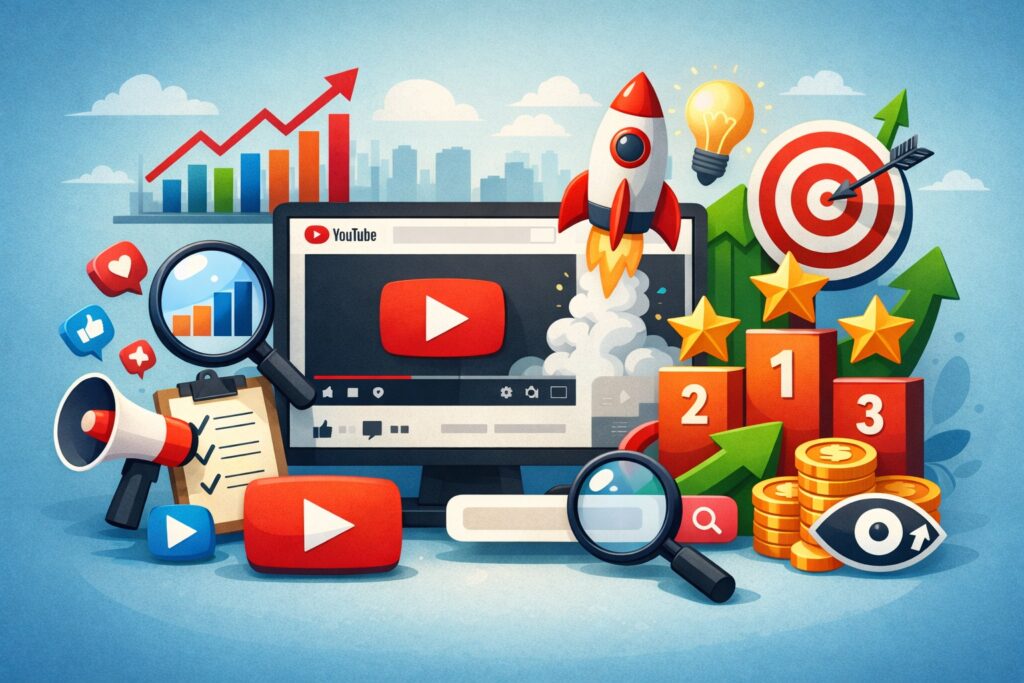
YouTube SEO Tips: Rank Your Videos Higher and Get More Views

Uploading a video to YouTube can feel like shouting into a crowded room. Millions of creators are publishing content daily, and without the right strategy, even high-quality videos can disappear into the algorithm’s depths. The truth is simple: success on YouTube is rarely accidental. Behind most high-performing videos is a deliberate SEO strategy designed to help them surface in search results and recommended feeds.

If you want your content to rank higher and consistently attract more views, you need to understand how YouTube actually works. It’s not just a video platform. It’s a search engine powered by engagement signals, metadata, and viewer behavior.

Let’s break down how to optimize your videos properly and position your channel for long-term growth.

Understanding How YouTube SEO Really Works

YouTube’s algorithm focuses on two main things:

  1. Relevance — Does your video match what someone is searching for?
  2. Performance — Do viewers actually enjoy and engage with it?

Keywords help with relevance. Watch time, click-through rate, and engagement help with performance. You need both.

Many creators obsess over tags but ignore audience retention. Others produce engaging content but fail to optimize their titles and descriptions. Ranking well requires balance.


Start With Smart Keyword Research

Before you record or upload anything, identify what your audience is actively searching for.

Use YouTube’s search bar and pay attention to autocomplete suggestions. These are real queries typed by real users. Look at the “People also watched” and related video sections for additional keyword ideas.

Longer, specific phrases often perform better than broad ones. For example:

  • “YouTube SEO tips for beginners”
  • “How to rank YouTube videos in 2026”
  • “Best YouTube title optimization strategies”

These long-tail phrases face less competition and attract viewers who are closer to taking action.

Once you choose your target keyword, build your video around it naturally. Avoid forcing keywords into scripts or descriptions. Relevance should feel organic.


Write Titles That Balance Search and Curiosity

Your title has two jobs:

  1. Help YouTube understand your content
  2. Convince people to click

Place your primary keyword near the beginning of the title. This strengthens ranking potential. Then add a benefit or outcome to increase clicks.

For example:

Weak:
YouTube Marketing Tips

Stronger:
YouTube SEO Tips to Rank Higher and Increase Views

Even stronger:
YouTube SEO Tips: Rank Higher and Get More Views Fast

Clarity almost always beats cleverness. If viewers instantly understand what they’ll gain, they’re more likely to click.


Make Your Description Work Harder

Most creators treat the description box like an afterthought. That’s a mistake.

The first two sentences are crucial because they appear in search previews. Include your main keyword early and clearly explain what the video covers.

Instead of writing a vague summary, add depth. Mention related terms naturally. Expand on the value of the video. This increases keyword coverage and improves context signals.

A strong description might include:

  • A concise overview of the video
  • Secondary keywords woven naturally
  • Links to related videos or blog posts
  • Timestamps to improve user experience
  • A call to action encouraging comments or subscriptions

Well-written descriptions improve both discoverability and engagement.


Thumbnails: The Silent Ranking Factor

YouTube tracks click-through rate closely. Even if your video ranks in search, it won’t stay there if people don’t click.

Your thumbnail should:

  • Use high contrast colors
  • Include minimal but bold text
  • Highlight emotion or a clear benefit
  • Stay visually consistent with your brand

Avoid clutter. Simplicity often wins. When your thumbnail stands out on a crowded results page, your click-through rate increases, and that sends a powerful positive signal to YouTube’s algorithm.


Watch Time Is More Important Than You Think

Watch time and audience retention are core ranking signals.

If viewers click but leave after 20 seconds, your rankings will suffer. On the other hand, if people stay engaged for most of the video, YouTube interprets that as quality content.

Improve retention by:

  • Hooking viewers in the first 10 seconds
  • Avoiding long, unnecessary intros
  • Delivering value quickly
  • Maintaining pacing and energy
  • Teasing what’s coming later in the video

Structure matters. Plan your content intentionally rather than improvising loosely.


Use Tags and Categories Strategically

Tags are no longer the dominant ranking factor they once were, but they still help YouTube understand context.

Use:

  • Your main keyword
  • Variations of the keyword
  • Related phrases
  • Common misspellings if relevant

Choose the most appropriate category when uploading. Proper categorization helps YouTube associate your content with similar high-performing videos.

Think of tags as supporting signals rather than primary ranking tools.


Add Captions and Transcripts

Captions serve two purposes:

  1. Accessibility
  2. SEO context

YouTube can crawl caption text. Adding accurate captions increases keyword relevance and improves clarity for search engines.

It also allows viewers to watch without sound, which is common on mobile devices.

If possible, edit auto-generated captions for accuracy. Mistakes in captions can affect how your content is interpreted.


Organize Videos Into Playlists

Playlists are often overlooked but extremely powerful.

When viewers watch multiple videos in a playlist, total session watch time increases. YouTube values this highly.

Create keyword-rich playlist titles and descriptions. Structure them around themes such as:

  • YouTube SEO Tutorials
  • Video Marketing Strategies
  • Beginner YouTube Growth Guides

This strengthens topical authority and keeps viewers on your channel longer.


Drive Traffic From Outside YouTube

External traffic can give your videos an initial boost.

Embed videos in blog posts. Share them in newsletters. Post them across social media platforms. When viewers arrive and engage positively, it reinforces performance signals.

Cross-platform promotion increases early velocity, which can help videos gain traction faster.


Monitor Analytics and Refine Your Strategy

Growth on YouTube is rarely linear. The key is testing and adjusting.

Pay attention to:

  • Click-through rate
  • Average view duration
  • Audience retention graphs
  • Traffic sources
  • Keyword discovery data

If a video underperforms, consider adjusting the thumbnail or rewriting the title. Small changes can dramatically improve performance.

Optimization does not stop after publishing.


The Bigger Picture: Consistency Builds Authority

YouTube favors channels that consistently produce relevant content around specific topics. Instead of jumping between unrelated themes, build clusters of videos around your niche.

When you create multiple videos focused on similar keywords, YouTube begins to recognize your channel as an authority in that area.

Over time, this increases your chances of appearing in suggested videos and search results.

source: Youri van Hofwegen

Ranking higher on YouTube is not about tricks or shortcuts. It’s about alignment — aligning keywords with intent, aligning thumbnails with curiosity, and aligning content with viewer expectations.

When you combine smart keyword research, compelling titles, optimized descriptions, strong retention, and consistent publishing, your visibility improves naturally.

The algorithm rewards videos that satisfy viewers. Focus on delivering real value, refine your strategy based on data, and treat SEO as an ongoing process rather than a one-time task.

With patience and strategic optimization, your videos won’t just get uploaded — they’ll get discovered.

The written content on this page was generated by ChatGPT.