Tag Archives: digital marketing

Click-Through Rate vs Watch Time: What Matters More in Video Marketing

Video marketing has become one of the most powerful ways to grow a business online, but it has also become one of the most misunderstood. Many creators obsess over numbers without fully understanding what those numbers actually represent.

Two metrics usually sit at the center of the debate: Click-Through Rate (CTR) and Watch Time. At first glance, they seem to compete with each other. One measures how many people click. The other measures how long they stay.

But in reality, they are not rivals at all. They are two stages of the same journey.

If you want consistent growth on platforms like YouTube, Facebook, or TikTok, you need to understand not only what these metrics mean—but how they influence each other.
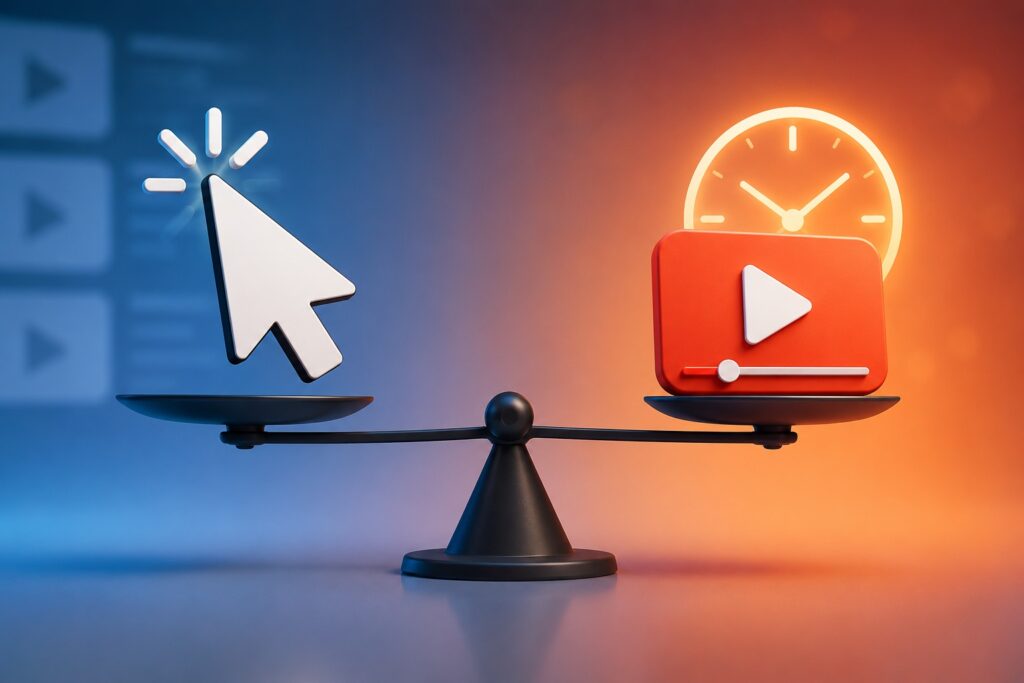
Click-Through Rate vs Watch Time: What Matters More in Video Marketing
Generated by ChatGPT

Why Video Metrics Matter More Than Ever

In earlier forms of marketing, success was measured in simple exposure. How many people saw your ad. How many impressions you bought. How many eyeballs were reached.

Video marketing changed that completely.

Today, platforms don’t just care about whether someone saw your content. They care about what people did after seeing it. Did they click? Did they stay? Did they engage?

That shift is why CTR and Watch Time became so important. They are no longer vanity numbers. They are signals that determine whether your video gets pushed to more people or quietly disappears.


What Click-Through Rate Actually Tells You

Click-Through Rate is often misunderstood as a success metric, but it is really a curiosity metric.

It answers one simple question:

“Did your video look interesting enough for someone to click?”

CTR is shaped before anyone even watches your content. It depends on how your video is presented in the feed.

This includes:

  • The thumbnail
  • The title
  • The topic framing
  • Audience targeting
  • Emotional appeal

A high CTR usually means your packaging works. People see it and think, “I want to know more.”

But CTR alone does not guarantee success. It only gets someone through the door.


What Watch Time Really Measures

Watch Time is where reality shows up.

Unlike CTR, which is about attraction, Watch Time is about retention. It measures whether your content can actually hold attention once someone clicks.

This includes:

  • How long people stay
  • When they drop off
  • Whether they finish the video
  • Overall audience retention

Watch Time tells platforms something very important:

“This content delivered on its promise.”

If CTR is the invitation, Watch Time is the experience.

And in most modern algorithms, experience matters more than curiosity.


The Hidden Relationship Between CTR and Watch Time

It’s easy to treat these two metrics separately, but platforms don’t.

They evaluate them together as a sequence:

  1. A user sees your video (impression)
  2. They decide whether to click (CTR)
  3. They decide whether to stay (Watch Time)

If either step fails, the chain breaks.

A video with high CTR but low Watch Time sends a negative signal. It tells the platform that the packaging worked, but the content didn’t deliver.

On the other hand, a video with low CTR but high Watch Time struggles to scale. It performs well only after people find it, but not enough people ever see it.


When CTR Is High but Watch Time Is Weak

This is one of the most common problems in video marketing.

It usually happens when:

  • Titles are too sensational
  • Thumbnails are misleading
  • Expectations are inflated

At first, everything looks promising. Views come in quickly. The CTR looks strong.

But then something changes.

People start leaving within seconds. Retention drops. The algorithm slows down distribution.

What went wrong is simple: the video attracted attention but didn’t sustain it.

Over time, platforms stop recommending it because it fails to satisfy viewers.


When Watch Time Is Strong but CTR Is Low

This is a quieter problem, but just as limiting.

Here, the content itself is solid. People who watch tend to stay. Engagement is strong. The video performs well internally.

But it never gets enough exposure.

Why?

Because the packaging doesn’t trigger curiosity.

Weak thumbnails, unclear titles, or poor positioning can all reduce CTR. And if people don’t click in the first place, even great content stays hidden.

In this case, the video is valuable—but invisible.


So Which Metric Matters More?

If you look at how modern platforms operate, the answer becomes clearer.

Watch Time carries more long-term weight because it reflects satisfaction and content quality.

However, CTR is still essential because it determines whether your content gets tested in the first place.

A simple way to think about it is this:

  • CTR opens the door
  • Watch Time determines how long you stay inside

One without the other creates imbalance.


How Platforms Actually Evaluate Your Video

Most major platforms don’t look at metrics in isolation. Instead, they evaluate performance in stages.

Stage 1: Exposure and Clicks

Your video is shown to a small audience. The platform measures CTR to see if people are interested.

If CTR is too low, distribution slows immediately.


Stage 2: Engagement and Retention

If people click, the platform watches behavior closely.

  • Do they stay?
  • Do they leave early?
  • Do they watch more content afterward?

This is where Watch Time becomes critical.


Stage 3: Satisfaction Signals

Beyond watch behavior, platforms also track:

  • Likes
  • Comments
  • Shares
  • “Not interested” clicks

These signals help refine future recommendations.

Together, these stages decide whether your video grows or fades.


How to Improve Click-Through Rate Naturally

Improving CTR is less about tricks and more about clarity and curiosity.

Strong CTR usually comes from:

  • Clear, high-contrast thumbnails
  • Titles that create curiosity without confusion
  • Topics that match audience intent
  • Emotional or outcome-driven framing

The goal is not to exaggerate—but to make people want to understand more.


How to Improve Watch Time Effectively

Watch Time improves when the content itself respects attention.

That means:

  • Starting quickly without long introductions
  • Delivering value early in the video
  • Keeping pacing dynamic
  • Avoiding unnecessary filler
  • Matching what the title promised

A viewer should never feel like they clicked into something different from what they expected.


The Real Strategy: Balancing Both Metrics

The strongest video marketing systems don’t optimize for CTR or Watch Time alone. They build alignment between them.

When your packaging and your content match, something powerful happens:

  • More people click
  • More people stay
  • The algorithm gains confidence
  • Distribution expands

This creates a compounding effect where each new video performs better than the last.

source: Nick Nimmin

Final Thoughts

Click-Through Rate and Watch Time are often discussed as if one must be more important than the other. But in reality, they are part of the same system.

CTR determines whether your video gets attention.
Watch Time determines whether it deserves more.

If you want sustainable video marketing growth, the goal is not to choose between them—but to build a structure where both naturally improve together.

That’s what separates videos that get a few views from videos that consistently grow over time.

The written content on this page was generated by ChatGPT.
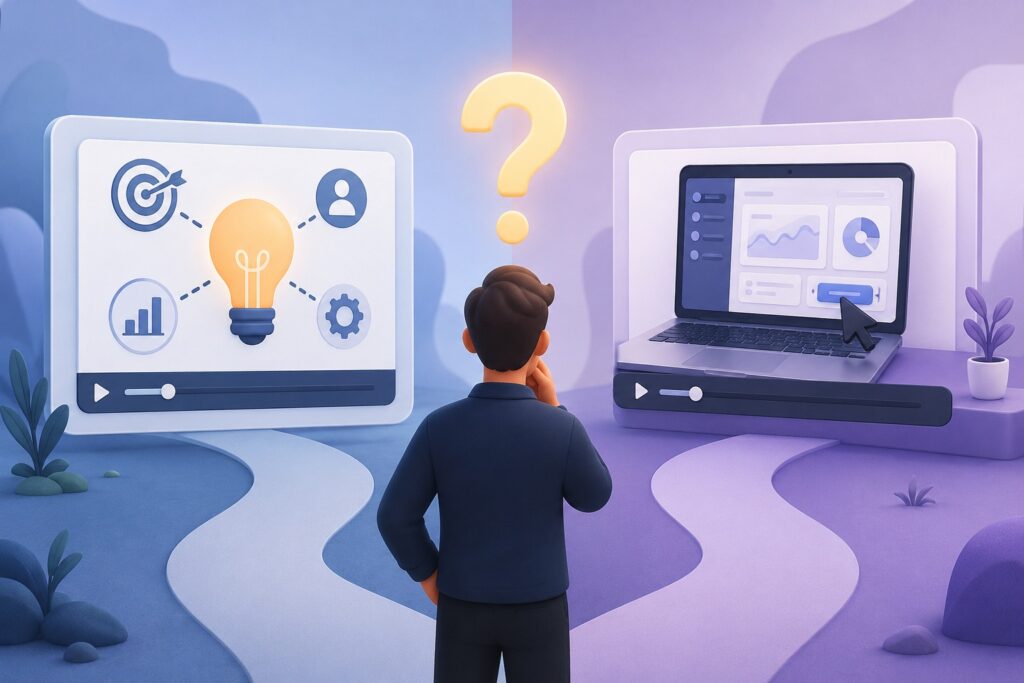
Explainer Videos vs Product Demo Videos: Which One Should You Use First?

Most businesses don’t struggle with whether video marketing works. That part is already settled. The real challenge shows up much earlier—choosing what kind of video to start with.

Two of the most commonly used formats are explainer videos and product demo videos. On the surface, they might look similar. Both are short, both are promotional, and both are used to increase sales. But in practice, they serve very different roles in your marketing strategy.

So the real question is not just what they are—but which one actually makes sense to create first when you’re starting from zero or building a new campaign?

To answer that properly, it helps to understand how each one behaves in the real world.

Explainer Videos vs Product Demo Videos: Which One Should You Use First?

What an Explainer Video Actually Does for Your Business

An explainer video is usually the first “conversation” your business has with a potential customer.

At this stage, people don’t really know you yet. They may have landed on your website, seen a social post, or clicked an ad out of curiosity. They are not looking for deep technical details. They are still trying to answer something very basic:

“What is this, and why should I care?”

That’s exactly where explainer videos perform best.

Instead of focusing on features or step-by-step usage, they focus on clarity. They take something that might be complicated—like a service, software, or business model—and turn it into something easy to understand in under two minutes.

Where explainer videos really shine

They are especially effective when:

  • Your product or service is new to the market
  • Your idea needs context before it makes sense
  • Your audience is cold and unfamiliar with your brand
  • You need to simplify something technical or abstract

A good explainer video removes confusion. And in marketing, clarity often comes before interest.

For example, if a company offers a subscription-based cleaning service, most people won’t immediately understand how scheduling, pricing, or recurring visits work. An explainer video can walk through that entire experience in a simple story, helping the viewer understand the value without effort.

That “instant understanding” is what makes explainer videos powerful at the beginning of a customer journey.


What a Product Demo Video Actually Focuses On

A product demo video comes in at a very different stage.

By the time someone is watching a demo, they already have some level of interest. They are no longer asking what the product is. Instead, they are asking something more practical:

“How does it actually work, and will it solve my problem?”

This is where detail matters.

Unlike explainer videos, demos don’t simplify the idea—they prove it. They show the product in action, often step by step, so the viewer can visualize exactly what owning or using it would feel like.

Where product demo videos perform best

They are most effective when:

  • Your audience already understands the product category
  • You’re targeting warm leads or returning visitors
  • The purchase decision depends on features or usability
  • You need to reduce hesitation before buying

For example, if you’re selling a project management tool, the audience likely already knows what such tools do. What they need now is confidence. A demo video showing task creation, team collaboration, and workflow automation helps remove doubt and makes the decision easier.

In other words, demos don’t introduce—they reassure.


The Real Difference Between the Two

Although both formats sit under video marketing, they operate at different stages of persuasion.

Here’s a simple way to think about it:

  • Explainer videos build understanding
  • Product demos build confidence

That difference changes everything.

Explainer videos are emotional and conceptual. They focus on the “why.”
Product demos are logical and functional. They focus on the “how.”

One prepares the audience. The other convinces them.


So Which One Should You Create First?

If you’re just starting out, the safest and most effective answer is usually this:

Start with an explainer video.

That might feel less exciting, especially if you’re eager to show off your product. But in most cases, skipping the explainer stage creates a hidden problem—people don’t fully understand what you do, which means they don’t engage deeply enough to care about the demo.

There are a few reasons why explainer videos typically come first:

1. Most audiences need context before details

If someone doesn’t fully understand your offer, showing them features won’t help. It only adds more confusion.

2. Cold traffic needs simplicity

People seeing your brand for the first time are not ready for technical explanations. They need a clear message before anything else.

3. It forces you to refine your message

Creating an explainer video forces you to simplify your business into its core idea. That clarity improves everything else—ads, landing pages, and even sales conversations.


When a Product Demo Should Come First Instead

There are situations where starting with a demo actually makes more sense.

For example:

1. Your product category is already familiar

If people already understand what your product is (like smartphones, apps, or tools), you don’t need to explain the concept—you just need to show what makes yours better.

2. You already have warm traffic

If visitors are already aware of your brand, a demo becomes more powerful than another introduction.

3. Your focus is direct conversion

If your goal is immediate sales rather than awareness, demos can push people closer to purchase faster.


The Most Effective Strategy: Use Both in Sequence

The real strength of video marketing comes when you stop thinking in terms of “which one is better” and start thinking in terms of “what order makes sense.”

A strong funnel often looks like this:

Stage 1: Awareness

  • Explainer videos
  • Short brand introductions
  • Educational content

Stage 2: Consideration

  • Product demos
  • Tutorials
  • Feature breakdowns

Stage 3: Decision

  • Testimonials
  • Case studies
  • Reviews

When structured this way, each video has a clear job. Nothing overlaps, and nothing feels wasted.


A Simple Real-World Example

Imagine a small business offering an online fitness coaching app.

At the beginning, most people don’t know what makes it different from hundreds of other fitness apps. An explainer video helps introduce the concept, the benefits, and the transformation it offers.

Once that interest is built, a product demo shows how the app actually works—tracking workouts, logging meals, and following guided programs.

The result is a smoother customer journey. People understand the idea first, then see the proof, and finally feel comfortable committing.


A Mistake Many Businesses Make

One of the most common mistakes is skipping the explainer stage entirely and jumping straight into product demos.

On paper, it sounds logical. If you show the product, people should buy it. But in reality, it often fails because the viewer is still trying to figure out the bigger picture.

Without that foundation, even a great demo can feel irrelevant.

source: XPLAI

Final Takeaway

There is no universal winner between explainer videos and product demo videos. The right choice depends entirely on where your audience is in their journey.

But as a general rule:

  • Start with an explainer video when you need to build awareness and clarity
  • Use a product demo video when you need to build confidence and drive decisions
  • Combine both when you want a complete, structured marketing system

When used in the right order, these two video types don’t compete with each other—they support each other.

And that combination is often what separates average video marketing from campaigns that actually convert.

The written content on this page was generated by ChatGPT.
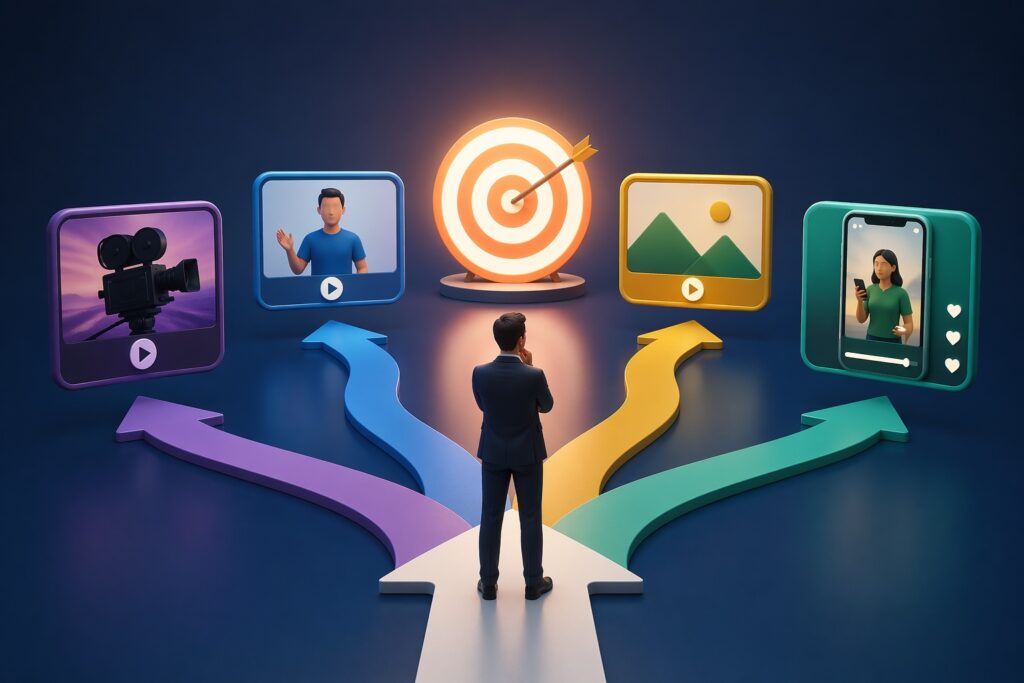
How to Choose the Right Video Format for Your Business Goals

Not every video works the same way. A short clip that performs well on social media might completely fail on a landing page. On the other hand, a detailed explainer video might be too heavy for a quick scroll audience on Instagram.

This is where many businesses get stuck. They focus on creating videos, but not on choosing the right type of video for the right purpose.

The truth is simple. Video marketing works best when the format matches the goal. Once that alignment is clear, everything from engagement to conversions becomes easier to achieve.

Let’s break down how to choose the right video format in a way that actually fits your business needs.

How to Choose the Right Video Format for Your Business Goals
image generated by ChatGPT

Start With the Outcome, Not the Video

Before thinking about cameras, editing, or platforms, the first question should always be: What do I want this video to accomplish?

Most business goals fall into a few categories:

Some videos are meant to introduce your brand to new audiences. Others are designed to explain a product in detail. And some are focused purely on turning viewers into paying customers.

If the goal is unclear, the video usually ends up unfocused too.

So instead of starting with “What video should I make?” it helps to ask:

  • Am I trying to attract attention?
  • Am I trying to explain something?
  • Am I trying to convince someone to buy?
  • Or am I trying to build trust over time?

Once you answer that, the format becomes much easier to choose.


If You Want Attention, Keep It Short

When the goal is visibility or awareness, shorter videos tend to perform better.

These are the types of videos that show up on platforms like TikTok, Instagram Reels, and YouTube Shorts. They are quick, direct, and designed to stop someone from scrolling.

They don’t need to explain everything. In fact, trying to include too much often hurts performance.

Good examples include:

  • Quick tips related to your industry
  • Short transformations or before-and-after clips
  • Simple product highlights
  • A single strong message or idea

These videos work best when they feel effortless to watch. The goal is not depth, but reach.


If You Need Leads, Focus on Explaining Clearly

When your goal is lead generation, clarity becomes more important than entertainment.

This is where explainer videos come in. They usually run a bit longer, often between one and three minutes, and focus on breaking down a service or solution in a simple way.

Instead of trying to impress the viewer, the goal is to remove confusion.

These videos are especially useful when your business involves something people don’t fully understand right away. For example:

  • Service based businesses
  • Software or tech tools
  • Specialized professional services

A good explainer video answers three things quickly:

  • What is the service?
  • How does it work?
  • Why should I care?

If those are clear, viewers are more likely to take the next step.


If You Want Sales, Show the Product in Action

When someone is close to making a decision, they don’t want theory. They want proof.

That’s where product demo videos work extremely well.

These videos focus less on storytelling and more on demonstration. They show exactly how something works in real situations.

They are especially effective because they reduce hesitation. People can see the value instead of just reading about it.

Common examples include:

  • Step-by-step product walkthroughs
  • Feature demonstrations
  • Real usage scenarios

The more practical and real it feels, the more effective it becomes.


If Trust Is the Goal, Let Customers Speak

People trust people more than brands. That’s why testimonial videos are so powerful.

Instead of you explaining why your business is good, your customers do it for you.

These videos don’t need to be heavily produced. In fact, slightly raw and natural footage often performs better because it feels authentic.

Strong testimonial videos usually focus on:

  • The problem the customer faced
  • How your product or service helped
  • The outcome they experienced

When done well, these videos can remove doubts that no sales pitch ever could.


If You Want Authority, Teach Something Useful

Educational videos take a different approach. Instead of selling directly, they focus on helping.

These are often longer and more detailed, but they attract highly engaged viewers.

They work well because they position your business as someone who understands the industry deeply.

Some examples include:

  • Step-by-step tutorials
  • Industry insights
  • Common mistakes and how to avoid them
  • In-depth explanations of topics your audience searches for

Over time, this type of content builds long-term credibility and also performs well in search engines.


Don’t Ignore Live Video Opportunities

Live video adds something that edited content can’t fully replicate: real-time interaction.

There’s no script in the same way, and that makes it feel more human.

Businesses often use live video for:

  • Q&A sessions
  • Product launches
  • Behind-the-scenes updates
  • Live demonstrations

Even though it feels less polished, it often builds stronger engagement because viewers can participate in the moment.


The Platform Changes Everything

A video is never just about content. Where it is published matters just as much.

A detailed video might work well on YouTube but feel out of place on Instagram. A short clip might perform well on social media but lack depth for a website landing page.

Here’s a simple way to think about it:

  • YouTube works best for searchable, longer content
  • Social media works best for fast attention and short messages
  • Websites need focused videos that support conversions
  • Email works best for short, direct messaging

Matching format to platform ensures your effort doesn’t get wasted.


One Video Is Never Enough

A common mistake businesses make is trying to use one video everywhere.

The reality is that each platform and goal requires a slightly different version of your content.

A single idea can often be repurposed into:

  • A short teaser clip
  • A full explanation video
  • A testimonial angle
  • A promotional version

When you stop thinking in terms of “one video” and start thinking in terms of “video systems,” your results usually improve significantly.

source: lacapturevisuals

Final Thoughts

Choosing the right video format is less about creativity and more about intention.

When the format matches the goal, everything becomes more effective. Your message is clearer, your audience understands faster, and your results become more predictable.

Instead of asking what video to make next, it helps to ask what role that video needs to play.

Once that is clear, the right format usually becomes obvious.

The written content on this page was generated by ChatGPT.
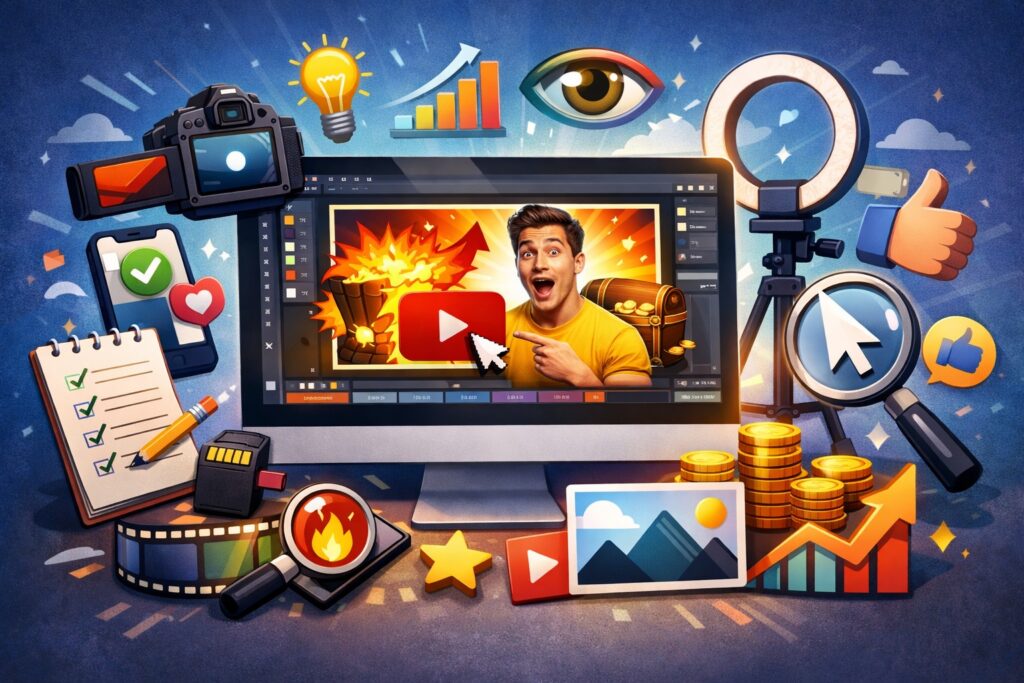
The Complete Guide to Video Thumbnails That Drive Clicks

If your video were a storefront, the thumbnail would be the display window. Before viewers hear a word you say or watch a single second of footage, they make a decision based entirely on what they see. In crowded search results and fast scrolling social feeds, thumbnails determine whether your content gets ignored or earns attention.

Many businesses invest heavily in filming and editing but treat thumbnails as an afterthought. That mistake quietly limits reach, engagement, and conversions. A well-designed thumbnail can dramatically improve click-through rates, increase watch time, and help videos rank higher in search results.

This guide breaks down exactly how to create video thumbnails that attract clicks while supporting long-term SEO performance.

The Complete Guide to Video Thumbnails That Drive Clicks

Why Video Thumbnails Matter More Than Ever

Search platforms rely heavily on engagement signals. When users consistently choose your video over others, algorithms interpret that behavior as relevance and quality.

A strong thumbnail directly influences:

  • Click-through rate (CTR)
  • Watch time potential
  • Audience retention
  • Video rankings in search results
  • Brand recognition

Even a small improvement in CTR can multiply views over time. A video that receives more clicks early often gains momentum, appearing more frequently in recommendations and suggested content.


The Psychology Behind Click-Worthy Thumbnails

Successful thumbnails work because they trigger curiosity and clarity at the same time. Viewers want to know two things instantly:

  1. What is this video about?
  2. Why should I watch it?

High-performing thumbnails typically use psychological cues such as:

Emotional Expression

Human faces naturally draw attention. Expressions showing surprise, excitement, concern, or curiosity create emotional connection before playback begins.

Contrast and Visual Hierarchy

The brain scans images quickly. Bold contrast helps viewers understand the focal point immediately.

Curiosity Gaps

A thumbnail should hint at value without revealing everything. When viewers feel there’s something to learn or discover, they click.


Essential Elements of High-Converting Thumbnails

1. A Clear Focal Point

Avoid clutter. A thumbnail should communicate one main idea, not five competing visuals.

Good examples include:

  • One subject
  • One product
  • One action
  • One strong visual concept

If viewers need more than two seconds to understand the image, it’s too complicated.


2. Readable Text That Adds Context

Text works best when it reinforces the video’s promise rather than repeating the title word-for-word.

Best practices:

  • Use 3 to 5 words maximum
  • Choose bold, easy-to-read fonts
  • Ensure readability on mobile devices
  • Use contrasting colors

Remember that most viewers see thumbnails on small screens first.


3. Strong Color Strategy

Color is one of the fastest ways to stand out in search feeds.

Effective approaches include:

  • Bright foreground against darker backgrounds
  • Consistent brand color accents
  • Avoiding colors that blend into platform interfaces

Consistency also helps audiences recognize your content instantly over time.


4. High-Quality Images Only

Blurry or poorly lit thumbnails reduce perceived credibility. Even excellent content struggles when the preview looks unprofessional.

Use:

  • High-resolution images
  • Proper lighting
  • Sharp focus
  • Clean composition

A thumbnail should feel intentional, not like a random frame pulled from the video.


Thumbnail Design Principles That Increase Click-Through Rate

Keep It Simple

The highest-performing thumbnails often look surprisingly minimal. Simplicity improves clarity and makes your message digestible at a glance.

Design for Mobile First

Most video consumption happens on phones. Always zoom out and test your thumbnail at small sizes before publishing.

Ask yourself:

  • Can I still read the text?
  • Is the subject still clear?
  • Does it stand out among others?

Create Visual Contrast

Contrast can come from:

  • Color differences
  • Light vs dark backgrounds
  • Subject isolation
  • Bold outlines or shadows

Contrast guides the viewer’s eye instantly.


Thumbnail SEO: The Overlooked Ranking Factor

While thumbnails are visual assets, they influence measurable SEO signals.

When more users click your video, platforms interpret it as relevance. This increases visibility in search and suggested feeds.

To support SEO performance:

  • Match thumbnail messaging with keywords in your title
  • Deliver exactly what the thumbnail promises
  • Avoid misleading visuals that cause quick drop-offs

High CTR combined with strong watch time sends powerful ranking signals.


Branding Your Thumbnails for Long-Term Growth

Consistency builds familiarity. Over time, viewers begin recognizing your videos before reading the title.

Consider creating a recognizable style using:

  • Consistent fonts
  • Brand colors
  • Similar layouts
  • Logo placement (subtle, not dominant)

Branding should enhance recognition without overwhelming the main message.


Common Thumbnail Mistakes Businesses Make

Overcrowding the Image

Too many elements confuse viewers and reduce clarity.

Using Too Much Text

Long sentences shrink readability and weaken impact.

Misleading Clickbait

While exaggerated thumbnails may earn short-term clicks, they damage audience trust and reduce retention.

Ignoring Audience Expectations

A corporate audience may respond differently than entertainment viewers. Align design style with your niche.


Tools for Creating Professional Thumbnails

You don’t need advanced design experience to produce effective thumbnails. Many tools simplify the process:

  • Canva for quick branded layouts
  • Adobe Express for customization
  • Photoshop for advanced editing
  • Online background removal tools for clean subject isolation

Templates can speed up workflow while maintaining consistency.


A Step-by-Step Thumbnail Creation Process

Step 1: Define the Video’s Core Promise
Identify the single takeaway viewers will gain.

Step 2: Choose the Strongest Visual Moment
Use emotion, action, or transformation.

Step 3: Add Supporting Text
Highlight the benefit or curiosity factor.

Step 4: Apply Brand Styling
Colors, fonts, and layout consistency.

Step 5: Test at Small Sizes
Ensure clarity on mobile screens.

Step 6: Compare Against Competitors
Search your topic and confirm your thumbnail stands out.


A/B Testing Thumbnails for Better Results

Many creators overlook testing, yet small adjustments can produce significant gains.

Test variables such as:

  • Facial expression vs no face
  • Bright vs neutral backgrounds
  • Text vs no text
  • Close-up vs wide shot

Track performance using analytics dashboards and replace underperforming thumbnails when needed.


How Thumbnails Influence Viewer Retention

A strong thumbnail attracts the right audience. When viewers know what to expect, they stay longer.

Misalignment between thumbnail and content leads to:

  • Quick exits
  • Lower watch time
  • Reduced ranking potential

The best thumbnails act as accurate previews, not exaggerations.


Future Trends in Video Thumbnail Optimization

As video platforms evolve, thumbnail strategy continues to change. Emerging trends include:

  • Cleaner minimalist designs
  • Emotion-driven visuals
  • Personalized branding styles
  • AI-assisted thumbnail testing
  • Data-driven visual decisions

Businesses that treat thumbnails as part of marketing strategy rather than decoration will have a competitive advantage.

source: Aprilynne Alter

Final Thoughts

A video thumbnail is not just an image. It is a marketing asset, a branding tool, and an SEO signal combined into one small frame.

Businesses that consistently create intentional, clear, and visually compelling thumbnails often see stronger engagement without increasing advertising spend or production costs.

The goal isn’t to trick viewers into clicking. The goal is to communicate value instantly.

When your thumbnail clearly answers why a video matters, clicks follow naturally and growth becomes sustainable.

The written content on this page was generated by ChatGPT.

Types of Marketing Videos: Which Ones Work Best for Your Business?

Scroll through your phone for five minutes and you’ll notice something: almost everything is video. Product launches. Customer reviews. Behind-the-scenes clips. Tutorials. Even emails now include embedded video thumbnails.

Video is no longer a “nice addition” to a marketing strategy. For many businesses, it has become the backbone of how they attract attention, build trust, and convert viewers into paying customers.

But here’s where most businesses get stuck.

They know they need video marketing. What they don’t know is which type of video actually fits their goals.

Should you create a polished brand story? A quick social media clip? A detailed product demo? A customer testimonial? The answer depends on what you’re trying to achieve and who you’re trying to reach.

Let’s break down the most effective types of marketing videos, how they work, and when to use them so you can choose the right format for your business.

Types of Marketing Videos: Which Ones Work Best for Your Business?

Explainer Videos: Turning Confusion Into Clarity

If your product or service requires explanation, an explainer video can become one of your most valuable marketing assets.

Explainer videos are typically short, focused pieces that clarify what you do, who you help, and why it matters. They are especially powerful for startups, tech companies, service providers, and businesses introducing something new to the market.

What makes them effective is their simplicity. A good explainer video answers three questions quickly:

  1. What problem does your audience have?
  2. How does your solution fix it?
  3. Why should they trust you?

When done well, explainer videos improve landing page conversions, reduce bounce rates, and make complex offers easier to understand. Animation works well for abstract ideas, while live-action works better for service-based businesses that want a human touch.

If your audience says, “I’m not sure I understand what you do,” start here.


Product Demonstration Videos: Show, Don’t Just Tell

There’s a big difference between describing a product and watching it solve a problem in real time.

Product demo videos walk viewers through how something works. Instead of listing features, they highlight benefits in action. This is especially important for e-commerce brands, SaaS tools, gadgets, and physical products.

Why are demo videos so persuasive?

Because they remove doubt.

Customers can see functionality. They can evaluate ease of use. They can imagine themselves using the product. That visualization shortens the buying cycle dramatically.

The most effective demos focus less on technical specifications and more on real-world application. Show the transformation. Show the before and after. Show the experience.

If your business depends on convincing customers that your product delivers, product demos are essential.


Testimonial and Case Study Videos: Building Trust Through Proof

Modern consumers are skeptical. They trust other customers more than they trust brands.

That’s why testimonial and case study videos often outperform other content when it comes to conversion.

A testimonial video is simple: a satisfied customer shares their experience. A case study video goes deeper, explaining the challenge, the solution, and measurable results.

These videos work because they provide social proof. Instead of saying “We’re great,” you let your customers say it for you.

For service-based businesses, consultants, agencies, and B2B companies, this format can be a game changer. Potential clients want reassurance before committing. Seeing real results from real people lowers risk in their mind.

Keep testimonials authentic. Overproduced or overly scripted reviews can feel staged. Honest stories resonate more than perfection.


Brand Story Videos: Creating Emotional Connection

Not every marketing video needs to push for a sale.

Some of the most powerful videos simply tell a story.

Brand story videos introduce your mission, your values, and the people behind your company. They create emotional alignment between your brand and your audience.

In crowded markets, this matters.

When customers feel connected to your story, they are more likely to choose you over competitors offering similar products or services. Emotional branding builds loyalty, not just transactions.

This type of video works especially well on homepages, about pages, and social media campaigns focused on awareness rather than direct response.

If you want people to remember your brand, not just your offer, storytelling is key.


Social Media Videos: Capturing Attention Quickly

Attention spans are shorter than ever, especially on social platforms.

Short-form videos designed specifically for social media are built for speed. They grab attention in the first few seconds and deliver value quickly.

These videos might include:

  • Quick tips
  • Mini tutorials
  • Behind-the-scenes moments
  • Product highlights
  • Industry insights

The goal here is engagement. Likes, shares, comments, and saves all signal relevance and increase visibility.

What makes social media videos different from other formats is pacing. They are fast, visually dynamic, and optimized for mobile viewing. Captions are essential since many users watch without sound.

If your goal is brand awareness and audience growth, short-form social video should be part of your strategy.


Educational and How-To Videos: Positioning Yourself as an Authority

When you teach something useful, you build credibility.

Educational videos and tutorials are among the most powerful long-term marketing tools because they attract organic search traffic and establish authority in your niche.

These videos answer specific questions your audience is already searching for. Over time, they become evergreen content that continues generating leads.

For example:

  • How to use your software
  • How to solve a common industry problem
  • Step-by-step guides related to your service

This format works particularly well on YouTube and blog pages embedded with video. Educational content builds trust before the sales conversation even begins.

If your business relies on expertise, tutorials can position you as the go-to resource in your field.


Live Videos and Webinars: Real-Time Engagement

Live video creates immediacy.

Whether it’s a product launch, Q&A session, workshop, or webinar, live formats allow direct interaction with your audience. Viewers can ask questions, leave comments, and engage in real time.

This interaction builds authenticity. It feels less scripted and more human.

Live video also creates urgency. People tune in because they don’t want to miss out.

For coaches, consultants, educators, and brands launching new offers, live video can significantly increase engagement and conversions.

Repurposing live sessions into shorter clips afterward extends their value even further.


Which Type of Marketing Video Is Right for You?

There is no single “best” marketing video. The right choice depends on your goals.

If you want clarity, use an explainer.
If you want persuasion, use a product demo.
If you want trust, use testimonials.
If you want connection, tell your story.
If you want visibility, create social videos.
If you want authority, teach.
If you want interaction, go live.

The most effective video marketing strategies combine multiple formats. A business might use social videos for awareness, explainer videos on landing pages, testimonials during the decision stage, and tutorials for long-term traffic.

The key is alignment. Your video type should match your audience’s needs and your business objectives.

source: Spiel Creative

Video marketing is not about producing the flashiest content. It is about choosing the right format for the right moment in your customer’s journey.

When businesses treat video as a strategic tool rather than a trend, results follow. Engagement increases. Trust grows. Conversions improve.

Start with one format that aligns with your immediate goals. Measure performance. Learn what resonates. Then expand your approach.

The businesses that win with video are not necessarily the ones with the biggest budgets. They are the ones who understand which types of marketing videos work best for their audience and use them intentionally.

And that is where real growth begins.

The written content on this page was generated by ChatGPT.