Tag Archives: business video marketing

Click-Through Rate vs Watch Time: What Matters More in Video Marketing

Video marketing has become one of the most powerful ways to grow a business online, but it has also become one of the most misunderstood. Many creators obsess over numbers without fully understanding what those numbers actually represent.

Two metrics usually sit at the center of the debate: Click-Through Rate (CTR) and Watch Time. At first glance, they seem to compete with each other. One measures how many people click. The other measures how long they stay.

But in reality, they are not rivals at all. They are two stages of the same journey.

If you want consistent growth on platforms like YouTube, Facebook, or TikTok, you need to understand not only what these metrics mean—but how they influence each other.

Click-Through Rate vs Watch Time: What Matters More in Video Marketing
Generated by ChatGPT

Why Video Metrics Matter More Than Ever

In earlier forms of marketing, success was measured in simple exposure. How many people saw your ad. How many impressions you bought. How many eyeballs were reached.

Video marketing changed that completely.

Today, platforms don’t just care about whether someone saw your content. They care about what people did after seeing it. Did they click? Did they stay? Did they engage?

That shift is why CTR and Watch Time became so important. They are no longer vanity numbers. They are signals that determine whether your video gets pushed to more people or quietly disappears.


What Click-Through Rate Actually Tells You

Click-Through Rate is often misunderstood as a success metric, but it is really a curiosity metric.

It answers one simple question:

“Did your video look interesting enough for someone to click?”

CTR is shaped before anyone even watches your content. It depends on how your video is presented in the feed.

This includes:

  • The thumbnail
  • The title
  • The topic framing
  • Audience targeting
  • Emotional appeal

A high CTR usually means your packaging works. People see it and think, “I want to know more.”

But CTR alone does not guarantee success. It only gets someone through the door.


What Watch Time Really Measures

Watch Time is where reality shows up.

Unlike CTR, which is about attraction, Watch Time is about retention. It measures whether your content can actually hold attention once someone clicks.

This includes:

  • How long people stay
  • When they drop off
  • Whether they finish the video
  • Overall audience retention

Watch Time tells platforms something very important:

“This content delivered on its promise.”

If CTR is the invitation, Watch Time is the experience.

And in most modern algorithms, experience matters more than curiosity.


The Hidden Relationship Between CTR and Watch Time

It’s easy to treat these two metrics separately, but platforms don’t.

They evaluate them together as a sequence:

  1. A user sees your video (impression)
  2. They decide whether to click (CTR)
  3. They decide whether to stay (Watch Time)

If either step fails, the chain breaks.

A video with high CTR but low Watch Time sends a negative signal. It tells the platform that the packaging worked, but the content didn’t deliver.

On the other hand, a video with low CTR but high Watch Time struggles to scale. It performs well only after people find it, but not enough people ever see it.


When CTR Is High but Watch Time Is Weak

This is one of the most common problems in video marketing.

It usually happens when:

  • Titles are too sensational
  • Thumbnails are misleading
  • Expectations are inflated

At first, everything looks promising. Views come in quickly. The CTR looks strong.

But then something changes.

People start leaving within seconds. Retention drops. The algorithm slows down distribution.

What went wrong is simple: the video attracted attention but didn’t sustain it.

Over time, platforms stop recommending it because it fails to satisfy viewers.


When Watch Time Is Strong but CTR Is Low

This is a quieter problem, but just as limiting.

Here, the content itself is solid. People who watch tend to stay. Engagement is strong. The video performs well internally.

But it never gets enough exposure.

Why?

Because the packaging doesn’t trigger curiosity.

Weak thumbnails, unclear titles, or poor positioning can all reduce CTR. And if people don’t click in the first place, even great content stays hidden.

In this case, the video is valuable—but invisible.


So Which Metric Matters More?

If you look at how modern platforms operate, the answer becomes clearer.

Watch Time carries more long-term weight because it reflects satisfaction and content quality.

However, CTR is still essential because it determines whether your content gets tested in the first place.

A simple way to think about it is this:

  • CTR opens the door
  • Watch Time determines how long you stay inside

One without the other creates imbalance.


How Platforms Actually Evaluate Your Video

Most major platforms don’t look at metrics in isolation. Instead, they evaluate performance in stages.

Stage 1: Exposure and Clicks

Your video is shown to a small audience. The platform measures CTR to see if people are interested.

If CTR is too low, distribution slows immediately.


Stage 2: Engagement and Retention

If people click, the platform watches behavior closely.

  • Do they stay?
  • Do they leave early?
  • Do they watch more content afterward?

This is where Watch Time becomes critical.


Stage 3: Satisfaction Signals

Beyond watch behavior, platforms also track:

  • Likes
  • Comments
  • Shares
  • “Not interested” clicks

These signals help refine future recommendations.

Together, these stages decide whether your video grows or fades.


How to Improve Click-Through Rate Naturally

Improving CTR is less about tricks and more about clarity and curiosity.

Strong CTR usually comes from:

  • Clear, high-contrast thumbnails
  • Titles that create curiosity without confusion
  • Topics that match audience intent
  • Emotional or outcome-driven framing

The goal is not to exaggerate—but to make people want to understand more.


How to Improve Watch Time Effectively

Watch Time improves when the content itself respects attention.

That means:

  • Starting quickly without long introductions
  • Delivering value early in the video
  • Keeping pacing dynamic
  • Avoiding unnecessary filler
  • Matching what the title promised

A viewer should never feel like they clicked into something different from what they expected.


The Real Strategy: Balancing Both Metrics

The strongest video marketing systems don’t optimize for CTR or Watch Time alone. They build alignment between them.

When your packaging and your content match, something powerful happens:

  • More people click
  • More people stay
  • The algorithm gains confidence
  • Distribution expands

This creates a compounding effect where each new video performs better than the last.

source: Nick Nimmin

Final Thoughts

Click-Through Rate and Watch Time are often discussed as if one must be more important than the other. But in reality, they are part of the same system.

CTR determines whether your video gets attention.
Watch Time determines whether it deserves more.

If you want sustainable video marketing growth, the goal is not to choose between them—but to build a structure where both naturally improve together.

That’s what separates videos that get a few views from videos that consistently grow over time.

The written content on this page was generated by ChatGPT.

Why Testimonial Videos Are One of the Most Powerful Marketing Tools

Most businesses say the same thing: “We’re the best,” “We deliver quality,” “We care about our customers.” The problem is, those claims don’t mean much on their own anymore. People hear them all the time, across every industry, from every competitor.

What actually breaks through that noise is something far more grounded—real customers sharing real experiences in their own words. That’s where testimonial videos come in, and why they’ve become one of the most effective tools in modern marketing.

Unlike polished advertisements, testimonial videos don’t try to convince in a traditional sense. Instead, they show proof. And in today’s environment, proof matters more than promotion.

Why Testimonial Videos Are One of the Most Powerful Marketing Tools
image generate by ChatGPT

Why People Trust Other People More Than Brands

There’s a simple reason testimonial videos work so well: people trust other people more than they trust companies.

When someone is deciding whether to buy a product or hire a service, they naturally look for reassurance. They want to know if it has worked for someone else, especially someone who seems relatable.

This is where psychology plays a big role. Humans rely heavily on social proof when making decisions. If others have had a good experience, it reduces uncertainty. It makes the choice feel safer.

A written review can help with that, but video goes further. When you see a real person speaking, you pick up on details that text cannot carry—tone, emotion, hesitation, excitement, confidence. All of these signals shape how believable the message feels.


The Difference Between Hearing It and Seeing It

There’s a major gap between reading a testimonial and watching one.

A written review might say:
“Great service, highly recommended.”

But a video shows someone explaining:
what problem they had,
why they were frustrated,
how they discovered the solution,
and what actually changed afterward.

That narrative structure matters. People don’t just want praise—they want context. They want to understand the journey.

Video makes that journey visible. It adds facial expressions, voice tone, and real reactions. Those small details make the story feel less like marketing and more like a conversation.


Why Testimonial Videos Build Trust Faster Than Anything Else

Trust usually takes time to develop. Businesses often spend months or even years building credibility through branding, content, and advertising.

Testimonial videos speed up that process significantly.

Instead of a company trying to convince a potential customer, the message comes from someone who has no obligation to promote the brand. That difference changes how the message is received.

It lowers skepticism. It reduces hesitation. And it replaces “Is this really true?” with “This seems to have worked for them.”

In many cases, that shift is enough to move someone from browsing to buying.


Why Video Testimonials Convert Better Than Written Reviews

Written testimonials still have value, but they are easy to overlook. People scroll past them, skim them, or question their authenticity.

Video, on the other hand, demands attention.

It also holds attention longer. When someone is watching a testimonial video, they’re not just reading words—they’re observing a real human experience unfold. That engagement increases the chances that the message will actually stick.

There’s also an emotional element. A satisfied customer speaking with genuine enthusiasm is far more persuasive than text alone. Emotion plays a major role in decision-making, even when people think they are being purely logical.


How Testimonial Videos Influence Every Stage of Buying Decisions

Testimonial videos are useful at every stage of the customer journey.

At the beginning, they introduce your brand in a relatable way. Instead of a business explaining what it does, a customer explains what they experienced.

During the consideration stage, they help compare options. When someone is weighing different providers, real feedback often becomes the deciding factor.

At the final stage, they reduce doubt. Even when a customer is close to making a decision, hesitation can still appear. A strong testimonial can remove that final barrier.

This is especially true in industries where trust is essential—services, healthcare, coaching, real estate, and high-ticket products.


Authenticity Matters More Than Production Quality

One common mistake businesses make is overproducing testimonial videos. While high-quality visuals can be helpful, perfection is not the goal.

What actually works best is authenticity.

A slightly imperfect video, where a customer speaks naturally and casually, often feels more believable than a heavily scripted production. People can tell when something feels rehearsed, and that can reduce trust instead of building it.

What matters most is honesty. If the emotion is real, the video works.


How Businesses Should Approach Testimonial Videos

Getting effective testimonial videos is not about asking customers to repeat marketing messages. It’s about guiding them to tell their story.

A simple structure works best:
What problem did they have?
Why was it important to solve it?
What made them choose your business?
What happened after using your product or service?

This structure creates a natural narrative that viewers can follow easily.

Placement also matters. Testimonial videos should not be hidden away on a separate page. They perform best when placed where decisions are made—landing pages, product pages, checkout pages, and even social media ads.


The Impact on Conversions and Sales

Testimonial videos often have a direct effect on conversion rates.

When people see others achieving results, it reduces perceived risk. Buying anything involves uncertainty, and testimonials help remove that uncertainty by showing real outcomes.

This is why businesses that use testimonial videos often see stronger performance metrics, including higher engagement, longer time on page, and better sales conversions.

It’s not just about persuasion—it’s about reassurance.


Where Testimonial Videos Are Heading Next

As online competition continues to grow, trust will become even more important. And video is becoming the most natural way to build that trust at scale.

We are also starting to see new developments in personalization and distribution. Businesses are beginning to use testimonial content more strategically, matching different testimonials to different audience segments.

In the future, testimonial videos may become even more targeted, interactive, and integrated into customer journeys.

But even with all the changes in technology, the foundation remains the same.

People trust people.

That is something marketing will never replace.

source: Aleric Heck

Final Thoughts

Testimonial videos are powerful because they don’t feel like marketing. They feel like experience sharing. That difference is what makes them so effective.

They shorten the trust-building process, reduce hesitation, and help potential customers feel more confident in their decisions.

In a digital world filled with claims and promises, real voices stand out. And those real voices often make the difference between someone just looking—and someone actually buying.

The written content on this page was generated by ChatGPT.

How Consistency in Video Marketing Builds Audience Trust

Most businesses don’t struggle with creating video content once. The real challenge is showing up again and again with content that people can rely on. In video marketing, consistency isn’t just a scheduling habit—it becomes part of how your audience judges your credibility.

When people repeatedly see your brand delivering useful, relevant videos, something important happens: they stop seeing you as a random content creator and start seeing you as a dependable source.

Trust is not built instantly. It develops slowly, through repeated exposure and predictable value.

How Consistency in Video Marketing Builds Audience Trust

Why Consistency Matters More Than One Viral Video

It’s easy to get excited about the idea of going viral. A single video can bring thousands of views overnight. But what happens after that moment fades?

In most cases, nothing lasting.

Virality creates attention, but consistency creates relationships. And relationships are what build trust.

When a viewer sees your content regularly, your brand becomes familiar. That familiarity removes uncertainty. And when uncertainty drops, trust increases naturally.

Think about the brands or creators you trust most. It’s rarely because of one video—it’s because they show up consistently over time.


Familiarity Is the First Step Toward Trust

Before someone trusts your business, they need to recognize it. Familiarity is the bridge between awareness and trust.

Every time your audience sees your videos, they are quietly learning:

  • What your brand stands for
  • How you communicate
  • What value you offer
  • Whether you are reliable

Even if they don’t engage immediately, the repetition is still working in the background. Over time, your presence becomes part of their routine.

That repeated exposure is what turns a cold viewer into a warm lead.


Consistency Builds the Image of Reliability

A business that posts regularly sends a silent but powerful message: “We are active, stable, and committed.”

On the other hand, irregular posting can create doubt. If someone visits your page and sees long gaps between videos, they may question whether the business is still active or relevant.

Consistency removes that doubt.

Even simple, steady uploads—once a week or twice a month—signal that your business is engaged and paying attention. In the eyes of your audience, that reliability matters more than high production value alone.


Authority Is Built Through Repetition, Not One-Off Efforts

No one becomes an authority in a niche overnight. Authority is built through accumulation.

When you consistently publish helpful videos—tutorials, explanations, insights, or answers—you begin to occupy mental space in your audience’s mind.

Eventually, people start associating your brand with expertise.

For example, if someone repeatedly finds your videos helpful when searching for solutions in your industry, they will naturally begin to view you as a trusted voice.

Search engines also recognize this pattern. Regular content signals activity, relevance, and topical depth, all of which support better visibility over time.


Algorithms Reward Consistent Creators

Beyond human psychology, consistency also matters for platform algorithms.

YouTube, Facebook, Instagram, and other platforms are designed to promote active creators. When you upload regularly, you give the algorithm more data about your content and audience.

This often leads to:

  • More recommendations
  • Higher visibility in search results
  • Increased watch time distribution
  • Stronger engagement signals

In simple terms, consistency improves both trust with people and trust with platforms.


Emotional Trust Develops Over Time

Trust is not only logical—it’s emotional.

When people consistently see your face, hear your voice, or experience your content style, they begin forming a connection with your brand.

That emotional familiarity matters more than many businesses realize.

At some point, your audience stops asking, “Who are you?” and starts thinking, “I know this brand. I trust what they share.”

This emotional shift is what turns viewers into loyal customers.


What Real Consistency Looks Like in Video Marketing

Consistency does not mean posting every day or burning yourself out.

It means choosing a schedule you can realistically maintain over the long term.

Some practical examples include:

  • One well-planned video per week
  • Two videos per month with supporting short clips
  • Weekly short-form content combined with monthly in-depth videos

The important part is predictability. Your audience should know that you will show up regularly.


Mistakes That Break Consistency and Trust

Many businesses struggle not because they lack ideas, but because they lose momentum. Here are a few common issues:

Starting strong, then disappearing

A burst of early content followed by silence creates confusion and weakens trust instead of building it.

Posting without a clear direction

Random content makes it hard for audiences to understand your value, which reduces long-term engagement.

Focusing only on quantity

More videos do not always mean better results. Low-value content can damage credibility.


How to Maintain Long-Term Consistency

Staying consistent becomes much easier with structure.

Plan your content in advance

A simple content calendar helps you avoid last-minute decisions and keeps your ideas organized.

Batch your production

Filming multiple videos in one session reduces pressure and ensures you always have content ready.

Repurpose your videos

One video can become:

  • Short clips for social media
  • Blog content
  • Email content
  • Educational posts

Focus on evergreen topics

Content that stays relevant over time continues to bring value long after it is published.


The Long-Term Impact of Consistent Video Marketing

The real power of consistency is that its results compound.

At first, progress may feel slow. But over time, consistent video marketing builds a strong foundation of:

  • Brand recognition
  • Audience trust
  • Organic traffic growth
  • Higher conversion rates
  • Stronger customer loyalty

Each video adds another layer to your brand’s digital presence. Eventually, your content works for you even when you’re not actively promoting it.

source: @omnivistapro

Final Thoughts

Consistency in video marketing is not about being perfect or producing endless content. It’s about reliability, structure, and long-term commitment.

When your audience knows they can expect value from you regularly, trust develops naturally. And once trust is established, every other part of your marketing becomes easier.

In the end, businesses that win with video aren’t always the loudest or most viral—they are the ones that keep showing up.

The written content on this page was generated by ChatGPT.

How to Measure the ROI of Your First Video Marketing Campaign

The first time you publish a marketing video, there’s usually a mix of excitement and uncertainty. You might refresh your analytics page more often than you’d like to admit, watching the views climb and wondering what those numbers actually mean. Are those views turning into real customers, or are they just surface-level engagement?

This is where understanding ROI becomes essential. Without it, you’re guessing. With it, you’re making informed decisions that can shape every future campaign you create.

How to Measure the ROI of Your First Video Marketing Campaign

Why ROI Matters More Than Views

It’s easy to get caught up in vanity metrics. A video with thousands of views can feel like a win, but if it doesn’t lead to inquiries, sales, or even meaningful engagement, it’s not doing much for your business.

Return on investment goes deeper. It connects your effort and spending to real outcomes. Instead of asking “How many people watched this?” you begin asking “What did this video actually do for my business?”

That shift in thinking changes everything.


Define Success Before You Hit Publish

Before you even begin measuring ROI, you need to decide what success looks like for your campaign. This step is often skipped, which leads to confusion later.

A single video can’t do everything at once. Trying to make it generate sales, build awareness, grow followers, and educate your audience all at the same time usually leads to weak results across the board.

Instead, choose one primary goal:

  • Drive traffic to your website
  • Generate leads through a form or signup
  • Increase direct sales
  • Build brand awareness

Once your objective is clear, measuring ROI becomes much more straightforward because you know exactly what you’re looking for.


Break Down the Costs Behind Your Campaign

To understand your return, you first need to understand your investment. This includes more than just money spent on equipment or ads.

Think about everything that went into your video:

  • Time spent planning and scripting
  • Filming and editing
  • Any tools or software used
  • Paid promotions or boosted posts

Even if you handled everything yourself, your time has value. Assigning a reasonable cost to your effort gives you a more accurate picture of your total investment.


Choose Metrics That Match Your Goal

Not all metrics are created equal. The numbers you track should directly reflect your campaign objective.

If your goal is awareness, then reach and impressions matter. You want to know how many people your video is reaching and how often it’s being seen.

If your focus is engagement, then look at watch time, shares, comments, and how long viewers stay before clicking away. These indicators reveal whether your content is actually connecting with people.

For campaigns aimed at conversions, the most important numbers are leads, sign-ups, and purchases. These are the metrics that tie your video directly to revenue.

Trying to track everything at once can muddy the waters. Focus on what aligns with your goal and ignore the rest.


How to Calculate ROI Without Overcomplicating It

Once you have your cost and your results, calculating ROI is simpler than it sounds.

The basic formula is:

ROI = (Revenue earned – Total cost) ÷ Total cost × 100

Let’s say your video cost $800 to produce and promote. If it generated $2,000 in sales, your return is:

(2000 – 800) ÷ 800 × 100 = 150% ROI

That means you earned one and a half times what you invested.

If your campaign didn’t generate direct revenue, you can still estimate value. For example, if you collected leads, you can assign an average value to each lead based on your typical conversion rate.


Connect Your Video to Real Results

One of the biggest challenges with measuring ROI is figuring out where your results are actually coming from. If someone watches your video but purchases later, how do you know the video influenced that decision?

This is where tracking becomes important.

You can create a clearer connection by:

  • Using dedicated landing pages linked in your video
  • Adding unique tracking links
  • Offering a specific promo code mentioned only in the video
  • Monitoring behavior through analytics tools

These methods help you trace the path from viewer to customer, making your ROI calculation more reliable.


Don’t Ignore the Long-Term Impact

Not every video delivers instant results. In fact, some of the most valuable content works quietly in the background over time.

A helpful tutorial or informative video might continue attracting viewers months after it’s published. As more people discover it, it keeps generating traffic, leads, and even sales without additional effort.

This long-term performance is often overlooked, especially in first campaigns. If you only measure ROI within the first few days or weeks, you might underestimate the true value of your video.


Look for Indirect Gains That Add Up

Your first campaign might not produce massive revenue right away, and that’s normal. However, that doesn’t mean it failed.

There are several indirect benefits that contribute to future success:

  • Increased brand recognition
  • More followers on social platforms
  • Higher engagement across your content
  • Better understanding of your audience preferences

These gains create momentum. They make your next campaign more effective and often lead to stronger ROI over time.


Compare Performance Across Different Channels

Where your video is published can significantly influence its results. A video that performs well on one platform might struggle on another.

Pay attention to where your audience responds best:

  • Which platform drives the most clicks
  • Where viewers watch the longest
  • Which channel produces actual conversions

Once you identify the strongest platforms, you can focus your efforts there instead of spreading yourself too thin.


Use What You Learn to Improve

Your first campaign is rarely perfect, and that’s a good thing. It gives you real data to work with.

Look closely at how viewers interacted with your video:

  • Did they watch until the end or drop off early?
  • Which parts held attention the most?
  • What messaging led to clicks or conversions?

These insights are incredibly valuable. They allow you to refine your approach and create better-performing videos moving forward.


Common Pitfalls to Watch Out For

When measuring ROI for the first time, it’s easy to fall into a few traps.

Some of the most common include:

  • Relying too heavily on views instead of meaningful actions
  • Forgetting to include all costs in your calculations
  • Expecting immediate results from every video
  • Tracking too many metrics without a clear focus

Keeping your approach simple and aligned with your goal will help you avoid these issues.


Turning Insights Into a Repeatable Strategy

Once you understand how to measure ROI, video marketing becomes much less of a guessing game. You begin to see patterns in what works and what doesn’t.

Over time, this allows you to:

  • Invest more confidently in video content
  • Focus on formats that deliver results
  • Improve efficiency in production and promotion

What started as a single campaign evolves into a repeatable system that consistently supports your business growth.

source: Webrunner Media

Final Thoughts

Measuring the ROI of your first video marketing campaign isn’t about chasing perfect numbers. It’s about understanding the relationship between your effort and your results.

Start with a clear goal, track the metrics that matter, and take the time to analyze what you learn. Even if your first campaign isn’t a massive success, it provides the foundation for smarter decisions moving forward.

With each video you create, your strategy becomes sharper, your content becomes stronger, and your returns become more predictable.

The written content on this page was generated by ChatGPT.
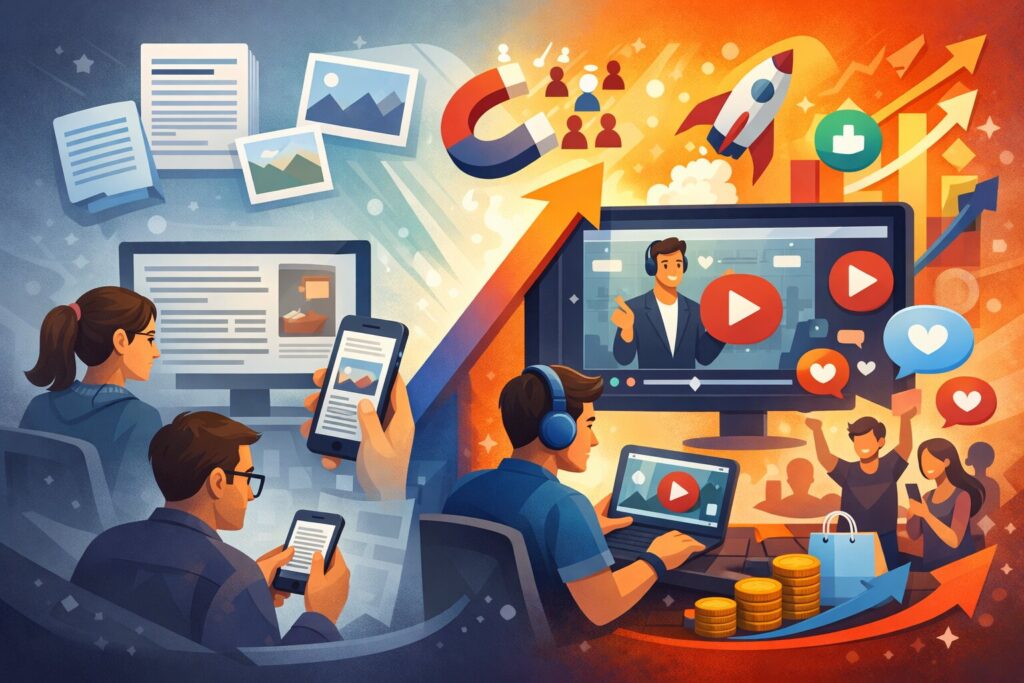
Why Video Marketing Outperforms Text and Image Content

There was a time when a well-written blog post or a striking image was enough to capture attention online. That time hasn’t disappeared completely, but the way people consume content has shifted in a big way. Today, audiences don’t just want information. They want to experience it. That’s exactly where video steps in and changes the game.

From quick clips on social media to in-depth tutorials and product demos, video has become the format people naturally gravitate toward. It doesn’t just compete with text and images—it consistently outperforms them. Understanding why this happens can completely reshape how you approach marketing.

Why Video Marketing Outperforms Text and Image Content

People Don’t Just Read Anymore—They Watch

Reading takes effort. Even scanning requires focus. When someone lands on a page filled with text, they often skim or bounce unless something immediately hooks them.

Video removes that barrier.

Instead of asking someone to interpret words or imagine a scenario, video shows everything in real time. The viewer doesn’t have to work as hard to understand the message. It’s delivered through visuals, sound, and pacing all at once. That combination makes it easier to absorb and far more appealing, especially for busy audiences.

This shift isn’t just a preference. It’s a behavioral change. People now expect content to be quick, clear, and engaging—and video checks all three boxes.


Movement Naturally Pulls Attention

There’s a simple reason video stops people mid-scroll: motion stands out.

When everything around you is static—text blocks, still images, banners—anything that moves instantly grabs attention. It’s almost instinctive. Your eyes are drawn to it before you even realize it.

That small moment of attention is incredibly valuable. Once someone pauses to watch, even for a few seconds, you’ve already achieved something text rarely does: you’ve interrupted the scroll.

And once that attention is captured, it becomes much easier to deliver your message.


Video Holds Attention Longer

Getting attention is one thing. Keeping it is another.

With text, readers often skim headings or jump around. With images, the interaction is usually brief. But video encourages people to stay.

A well-paced video creates curiosity. What happens next? What’s the takeaway? That natural progression keeps viewers engaged from start to finish.

Even short videos can hold attention longer than written content because they guide the viewer through a complete experience instead of leaving them to navigate it on their own.


It Creates a Stronger Emotional Response

One of the biggest advantages of video is its ability to make people feel something.

Tone of voice, facial expressions, background music, and visual storytelling all work together to create emotion. That emotional layer is something text struggles to fully replicate and images can only partially deliver.

Think about the difference between reading a customer review and watching someone share their experience on camera. The written version might be informative, but the video version feels real. You can hear sincerity, see reactions, and connect on a human level.

That connection matters. People are far more likely to trust and remember content that made them feel something.


Complex Ideas Become Simpler

Some concepts are difficult to explain with words alone. You can write step-by-step instructions, but they may still leave room for confusion. Images can help, but they don’t always provide enough context.

Video simplifies everything.

You can show how something works, demonstrate a process, or walk someone through a solution in real time. There’s no guessing involved. The viewer sees exactly what you mean.

This is especially useful for:

  • Product demonstrations
  • Tutorials and how-to guides
  • Service explanations

Clarity builds confidence, and confidence leads to action.


Video Builds Trust Faster Than Any Other Format

Trust is one of the hardest things to earn online. People are cautious, especially when they’re considering a purchase or choosing a service.

Video speeds up that process.

When someone sees a real person ಮಾತನಾಡ, explaining, or demonstrating something, it feels more genuine. It’s no longer just a brand speaking—it’s a person communicating.

That human element makes a difference. It reduces skepticism and makes your message more believable.

For newer businesses or brands trying to stand out, this can be a major advantage.


Higher Engagement Leads to Greater Reach

Engagement is the currency of online visibility. The more people interact with your content, the more platforms push it out to others.

Video consistently performs better in this area.

Viewers are more likely to:

  • Watch a video all the way through
  • Share it with others
  • Leave comments or reactions

These interactions signal value, which increases your reach without needing to rely entirely on paid promotion.

In simple terms, video gives your content a better chance of being seen.


It Drives Better Results Where It Matters

At the end of the day, marketing isn’t just about views. It’s about results.

Video often leads to higher conversion rates because it answers questions quickly and builds confidence in a short amount of time. Instead of reading multiple sections or searching for details, viewers get everything they need in one place.

A short product video can remove doubts. A clear explanation can eliminate confusion. A compelling story can influence decisions.

All of these moments move people closer to taking action.


Search Engines Favor Video Content

Search engines pay attention to how users interact with your content. If people stay longer, engage more, and don’t immediately leave, that sends a strong signal that your content is valuable.

Video helps improve those signals.

Pages with video often see longer visit durations and better engagement overall. That can positively impact rankings over time. On top of that, video content can appear in multiple search formats, increasing your visibility.

When optimized properly, video becomes more than just content—it becomes a tool for discovery.


It Fits Perfectly Into Modern Viewing Habits

Most people are no longer sitting at a desk when they consume content. They’re on their phones, often multitasking or on the move.

Video fits naturally into this lifestyle.

It’s easy to watch during short breaks, while commuting, or even while doing something else. You don’t need to sit down and concentrate the same way you would with long-form text.

That convenience makes video the preferred choice for many users.


One Piece of Content Can Go Further

Another advantage that often gets overlooked is how flexible video is.

A single video can be repurposed in multiple ways:

  • Short clips for social platforms
  • Snippets for ads
  • Transcripts turned into blog content
  • Key moments used for promotions

This means you’re not just creating content—you’re building a system where one effort leads to multiple outputs.

That kind of efficiency is hard to match with text or images alone.


The Real Difference Comes Down to Experience

Text informs. Images illustrate. Video immerses.

That’s the real reason video outperforms both.

It combines multiple elements into one seamless experience, making it easier for people to understand, connect, and respond. It doesn’t replace text or images entirely, but it elevates how your message is delivered.

source: Biteable

Final Thoughts

The rise of video isn’t a passing trend. It reflects how people prefer to learn, engage, and make decisions today.

Businesses that rely only on text and images risk blending into the background. Those that embrace video create something more dynamic—something that captures attention and holds it.

If your goal is to communicate clearly, build trust quickly, and stand out in a crowded space, video gives you a clear advantage. It meets your audience where they are and delivers your message in a way that feels natural, engaging, and effective.

And in a digital world where attention is limited, that advantage matters more than ever.

The written content on this page was generated by ChatGPT.

How Video Marketing Can Increase Engagement and Sales

Not long ago, most businesses relied on written descriptions and static images to promote their products and services. Today, that approach is no longer enough. Customers expect to see, hear, and experience what a business offers before they decide to trust it. Video has filled that gap. It gives businesses the ability to communicate quickly, clearly, and convincingly in a way that text alone cannot achieve.

People naturally respond to movement and sound. A well-crafted video can explain a product in seconds, demonstrate its value, and create a sense of familiarity that encourages customers to take action. This is why video marketing has become one of the most effective ways to increase engagement and drive sales across nearly every industry.

Businesses that use video strategically often see higher customer interest, stronger brand loyalty, and improved conversion rates. The impact goes beyond visibility. Video influences how customers feel, think, and ultimately decide.

How Video Marketing Can Increase Engagement and Sales

Why Video Captures Attention Better Than Other Content

Attention is the first step toward any sale. Without attention, even the best products remain unnoticed. Video is uniquely effective because it delivers information through multiple senses at once. Viewers can see the product, hear the explanation, and observe how it works in real situations.

This combination makes video easier to absorb and more memorable. Instead of asking customers to imagine how something works, video shows them directly. This reduces confusion and makes the message clearer.

Another advantage is speed. Many customers scan online content quickly. Video allows businesses to communicate their message within seconds. Even short videos can leave a lasting impression that encourages viewers to learn more.

Because of this, video often becomes the first point of meaningful interaction between a business and a potential customer.


Video Encourages Deeper Engagement

Engagement is more than just views. It reflects how interested people are in your content and how willing they are to interact with your brand. Video naturally encourages higher engagement because it feels more personal and easier to consume.

When visitors land on a website and see a video, they are more likely to stay longer. Instead of leaving quickly, they watch, listen, and absorb the information. This additional time creates more opportunities to influence their decision.

On social media, video consistently generates more interaction than other types of content. People are more likely to comment on videos, share them with others, and return to watch more. Each interaction increases your visibility and helps your business reach new audiences without additional advertising costs.

Engagement also strengthens familiarity. The more often customers see your brand through video, the more comfortable they become with it.


Video Builds Trust Faster

Trust is essential in any business relationship. Customers are more likely to buy from businesses they trust, and video helps establish that trust quickly.

When people see a real person explaining a product or sharing knowledge, it feels more genuine than reading anonymous text. Facial expressions, tone of voice, and body language all contribute to credibility.

Videos also create transparency. Showing how your product works, how it is made, or how it solves problems removes uncertainty. Customers can see the details for themselves instead of relying solely on written claims.

Testimonial videos are especially powerful. When potential customers see others sharing positive experiences, it reinforces confidence. This social proof reduces hesitation and makes purchasing decisions easier.

Over time, consistent video content helps build a reliable and trustworthy brand image.


Video Makes Products Easier to Understand

One of the most common reasons customers hesitate to buy is uncertainty. If they do not fully understand how a product works or how it benefits them, they may delay or avoid making a purchase.

Video removes this barrier by showing the product in action. Instead of explaining features in abstract terms, video demonstrates them clearly. Customers can see how the product fits into their lives and solves their problems.

This clarity simplifies decision-making. When customers understand the value, they feel more confident moving forward.

Instructional videos also reduce frustration after purchase. Customers who know how to use a product correctly are more satisfied, which leads to positive reviews and repeat business.


Video Strengthens Emotional Connection

Purchasing decisions are often influenced by emotion as much as logic. Video is one of the most effective tools for creating emotional connection because it combines storytelling, visuals, and sound.

A story told through video can inspire, reassure, or motivate viewers. It can show how a product improves someone’s life or solves a meaningful problem. These stories help customers see themselves in similar situations.

When customers feel emotionally connected, they are more likely to remember the brand and remain loyal over time. Emotional connection transforms one-time buyers into long-term customers.

This connection also encourages customers to share your content, expanding your reach naturally.


Video Improves Conversion Rates

Conversions happen when viewers take action. This could be making a purchase, signing up for a service, or contacting your business.

Video helps guide customers toward these actions by answering questions and removing doubts. When customers feel informed and confident, they are more willing to move forward.

Adding video to product pages often increases sales because customers gain a clearer understanding of what they are buying. Seeing the product demonstrated provides reassurance.

Video also improves the effectiveness of landing pages. Visitors are more likely to stay and engage with the content, increasing the likelihood of conversion.

Even email marketing benefits from video. Messages that include video often receive higher open and click rates because they attract curiosity and interest.


Video Enhances Your Online Visibility

Visibility is essential for attracting new customers. Video plays an important role in improving your online presence.

Search engines favor content that keeps users engaged. When visitors spend more time watching videos on your website, it signals quality and relevance. This can improve your search rankings.

Video content also appears in multiple places, including search results, video platforms, and social media feeds. This increases the number of ways customers can discover your business.

As more people view and share your videos, your brand becomes more recognizable. This increased exposure leads to more traffic and sales opportunities.


Video Supports Every Stage of the Customer Journey

Customers move through several stages before making a purchase. Video can support each step.

In the awareness stage, videos introduce your brand and attract attention.

In the consideration stage, videos explain how your product works and why it is valuable.

In the decision stage, testimonial and demonstration videos provide reassurance and encourage action.

After the purchase, instructional videos help customers use the product successfully, increasing satisfaction and loyalty.

This ongoing support strengthens your relationship with customers and encourages repeat business.


Different Types of Videos That Drive Results

A strong video marketing strategy includes various types of content designed for different purposes.

Explainer videos help customers understand services or products quickly.

Product demonstration videos show features and real-world use.

Customer testimonials build trust through real experiences.

Educational videos provide helpful information and establish expertise.

Short-form videos capture attention and increase social media engagement.

Each type contributes to stronger engagement and higher conversion rates.


Getting Started With Video Marketing

Starting with video marketing does not require expensive equipment or complex production. What matters most is clarity and authenticity.

Begin by identifying common customer questions. Create videos that answer those questions clearly.

Focus on providing useful information rather than trying to impress with production quality alone. Authentic content often performs better because it feels genuine.

Consistency is also important. Regular video content builds familiarity and strengthens your presence over time.

As you gain experience, you can refine your approach and improve quality gradually.


Long-Term Benefits of Video Marketing

Video marketing continues to deliver value long after it is published. Unlike traditional advertising, which stops when the campaign ends, videos remain accessible and continue attracting viewers.

Over time, your video library becomes a valuable resource that educates customers, builds trust, and supports sales.

This lasting impact makes video one of the most efficient and cost-effective marketing strategies available.

Businesses that invest in video now position themselves for sustained growth and stronger customer relationships.

source: Monica Beeman

Video marketing has fundamentally changed how businesses connect with their audiences. It captures attention quickly, builds trust through transparency, and helps customers understand products more clearly. These benefits lead directly to increased engagement and higher sales.

More importantly, video creates meaningful connections. It allows businesses to communicate with clarity, authenticity, and emotional impact. Customers who feel informed and confident are far more likely to take action.

As digital competition continues to increase, businesses that embrace video marketing gain a powerful advantage. Video is not just a trend. It is a proven strategy for attracting attention, building trust, and driving consistent business growth.

The written content on this page was generated by ChatGPT.