Tag Archives: YouTube marketing

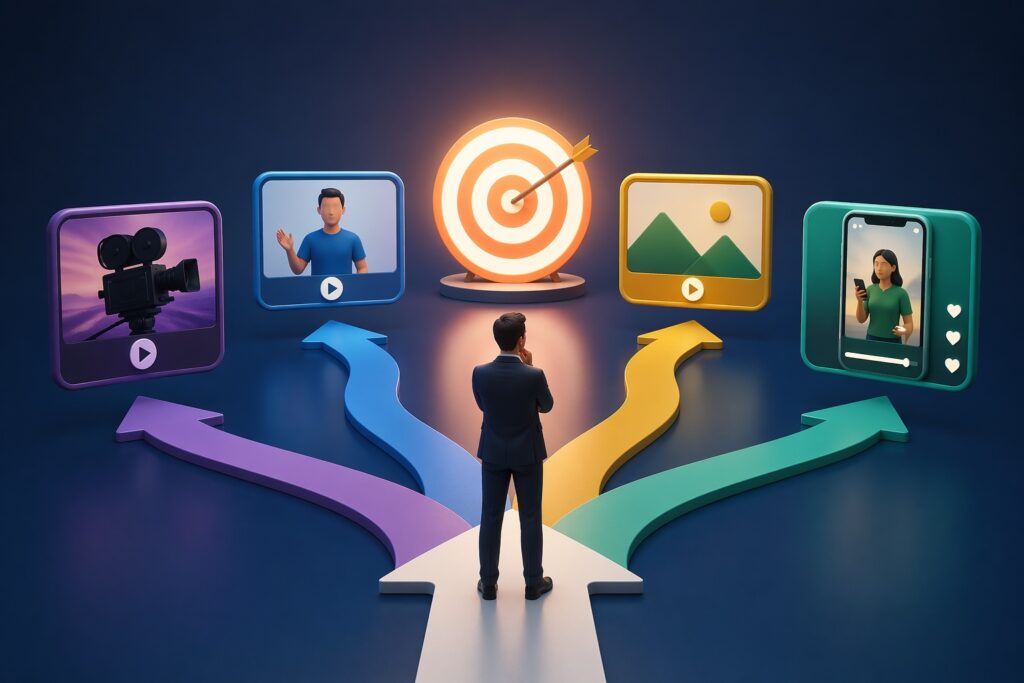
How to Choose the Right Video Format for Your Business Goals

Not every video works the same way. A short clip that performs well on social media might completely fail on a landing page. On the other hand, a detailed explainer video might be too heavy for a quick scroll audience on Instagram.

This is where many businesses get stuck. They focus on creating videos, but not on choosing the right type of video for the right purpose.

The truth is simple. Video marketing works best when the format matches the goal. Once that alignment is clear, everything from engagement to conversions becomes easier to achieve.

Let’s break down how to choose the right video format in a way that actually fits your business needs.
How to Choose the Right Video Format for Your Business Goals
image generated by ChatGPT

Start With the Outcome, Not the Video

Before thinking about cameras, editing, or platforms, the first question should always be: What do I want this video to accomplish?

Most business goals fall into a few categories:

Some videos are meant to introduce your brand to new audiences. Others are designed to explain a product in detail. And some are focused purely on turning viewers into paying customers.

If the goal is unclear, the video usually ends up unfocused too.

So instead of starting with “What video should I make?” it helps to ask:

  • Am I trying to attract attention?
  • Am I trying to explain something?
  • Am I trying to convince someone to buy?
  • Or am I trying to build trust over time?

Once you answer that, the format becomes much easier to choose.


If You Want Attention, Keep It Short

When the goal is visibility or awareness, shorter videos tend to perform better.

These are the types of videos that show up on platforms like TikTok, Instagram Reels, and YouTube Shorts. They are quick, direct, and designed to stop someone from scrolling.

They don’t need to explain everything. In fact, trying to include too much often hurts performance.

Good examples include:

  • Quick tips related to your industry
  • Short transformations or before-and-after clips
  • Simple product highlights
  • A single strong message or idea

These videos work best when they feel effortless to watch. The goal is not depth, but reach.


If You Need Leads, Focus on Explaining Clearly

When your goal is lead generation, clarity becomes more important than entertainment.

This is where explainer videos come in. They usually run a bit longer, often between one and three minutes, and focus on breaking down a service or solution in a simple way.

Instead of trying to impress the viewer, the goal is to remove confusion.

These videos are especially useful when your business involves something people don’t fully understand right away. For example:

  • Service based businesses
  • Software or tech tools
  • Specialized professional services

A good explainer video answers three things quickly:

  • What is the service?
  • How does it work?
  • Why should I care?

If those are clear, viewers are more likely to take the next step.


If You Want Sales, Show the Product in Action

When someone is close to making a decision, they don’t want theory. They want proof.

That’s where product demo videos work extremely well.

These videos focus less on storytelling and more on demonstration. They show exactly how something works in real situations.

They are especially effective because they reduce hesitation. People can see the value instead of just reading about it.

Common examples include:

  • Step-by-step product walkthroughs
  • Feature demonstrations
  • Real usage scenarios

The more practical and real it feels, the more effective it becomes.


If Trust Is the Goal, Let Customers Speak

People trust people more than brands. That’s why testimonial videos are so powerful.

Instead of you explaining why your business is good, your customers do it for you.

These videos don’t need to be heavily produced. In fact, slightly raw and natural footage often performs better because it feels authentic.

Strong testimonial videos usually focus on:

  • The problem the customer faced
  • How your product or service helped
  • The outcome they experienced

When done well, these videos can remove doubts that no sales pitch ever could.


If You Want Authority, Teach Something Useful

Educational videos take a different approach. Instead of selling directly, they focus on helping.

These are often longer and more detailed, but they attract highly engaged viewers.

They work well because they position your business as someone who understands the industry deeply.

Some examples include:

  • Step-by-step tutorials
  • Industry insights
  • Common mistakes and how to avoid them
  • In-depth explanations of topics your audience searches for

Over time, this type of content builds long-term credibility and also performs well in search engines.


Don’t Ignore Live Video Opportunities

Live video adds something that edited content can’t fully replicate: real-time interaction.

There’s no script in the same way, and that makes it feel more human.

Businesses often use live video for:

  • Q&A sessions
  • Product launches
  • Behind-the-scenes updates
  • Live demonstrations

Even though it feels less polished, it often builds stronger engagement because viewers can participate in the moment.


The Platform Changes Everything

A video is never just about content. Where it is published matters just as much.

A detailed video might work well on YouTube but feel out of place on Instagram. A short clip might perform well on social media but lack depth for a website landing page.

Here’s a simple way to think about it:

  • YouTube works best for searchable, longer content
  • Social media works best for fast attention and short messages
  • Websites need focused videos that support conversions
  • Email works best for short, direct messaging

Matching format to platform ensures your effort doesn’t get wasted.


One Video Is Never Enough

A common mistake businesses make is trying to use one video everywhere.

The reality is that each platform and goal requires a slightly different version of your content.

A single idea can often be repurposed into:

  • A short teaser clip
  • A full explanation video
  • A testimonial angle
  • A promotional version

When you stop thinking in terms of “one video” and start thinking in terms of “video systems,” your results usually improve significantly.

source: lacapturevisuals

Final Thoughts

Choosing the right video format is less about creativity and more about intention.

When the format matches the goal, everything becomes more effective. Your message is clearer, your audience understands faster, and your results become more predictable.

Instead of asking what video to make next, it helps to ask what role that video needs to play.

Once that is clear, the right format usually becomes obvious.

The written content on this page was generated by ChatGPT.
The Complete Guide to Video Thumbnails That Drive Clicks

If your video were a storefront, the thumbnail would be the display window. Before viewers hear a word you say or watch a single second of footage, they make a decision based entirely on what they see. In crowded search results and fast scrolling social feeds, thumbnails determine whether your content gets ignored or earns attention.

Many businesses invest heavily in filming and editing but treat thumbnails as an afterthought. That mistake quietly limits reach, engagement, and conversions. A well-designed thumbnail can dramatically improve click-through rates, increase watch time, and help videos rank higher in search results.

This guide breaks down exactly how to create video thumbnails that attract clicks while supporting long-term SEO performance.

The Complete Guide to Video Thumbnails That Drive Clicks

Why Video Thumbnails Matter More Than Ever

Search platforms rely heavily on engagement signals. When users consistently choose your video over others, algorithms interpret that behavior as relevance and quality.

A strong thumbnail directly influences:

  • Click-through rate (CTR)
  • Watch time potential
  • Audience retention
  • Video rankings in search results
  • Brand recognition

Even a small improvement in CTR can multiply views over time. A video that receives more clicks early often gains momentum, appearing more frequently in recommendations and suggested content.


The Psychology Behind Click-Worthy Thumbnails

Successful thumbnails work because they trigger curiosity and clarity at the same time. Viewers want to know two things instantly:

  1. What is this video about?
  2. Why should I watch it?

High-performing thumbnails typically use psychological cues such as:

Emotional Expression

Human faces naturally draw attention. Expressions showing surprise, excitement, concern, or curiosity create emotional connection before playback begins.

Contrast and Visual Hierarchy

The brain scans images quickly. Bold contrast helps viewers understand the focal point immediately.

Curiosity Gaps

A thumbnail should hint at value without revealing everything. When viewers feel there’s something to learn or discover, they click.


Essential Elements of High-Converting Thumbnails

1. A Clear Focal Point

Avoid clutter. A thumbnail should communicate one main idea, not five competing visuals.

Good examples include:

  • One subject
  • One product
  • One action
  • One strong visual concept

If viewers need more than two seconds to understand the image, it’s too complicated.


2. Readable Text That Adds Context

Text works best when it reinforces the video’s promise rather than repeating the title word-for-word.

Best practices:

  • Use 3 to 5 words maximum
  • Choose bold, easy-to-read fonts
  • Ensure readability on mobile devices
  • Use contrasting colors

Remember that most viewers see thumbnails on small screens first.


3. Strong Color Strategy

Color is one of the fastest ways to stand out in search feeds.

Effective approaches include:

  • Bright foreground against darker backgrounds
  • Consistent brand color accents
  • Avoiding colors that blend into platform interfaces

Consistency also helps audiences recognize your content instantly over time.


4. High-Quality Images Only

Blurry or poorly lit thumbnails reduce perceived credibility. Even excellent content struggles when the preview looks unprofessional.

Use:

  • High-resolution images
  • Proper lighting
  • Sharp focus
  • Clean composition

A thumbnail should feel intentional, not like a random frame pulled from the video.


Thumbnail Design Principles That Increase Click-Through Rate

Keep It Simple

The highest-performing thumbnails often look surprisingly minimal. Simplicity improves clarity and makes your message digestible at a glance.

Design for Mobile First

Most video consumption happens on phones. Always zoom out and test your thumbnail at small sizes before publishing.

Ask yourself:

  • Can I still read the text?
  • Is the subject still clear?
  • Does it stand out among others?

Create Visual Contrast

Contrast can come from:

  • Color differences
  • Light vs dark backgrounds
  • Subject isolation
  • Bold outlines or shadows

Contrast guides the viewer’s eye instantly.


Thumbnail SEO: The Overlooked Ranking Factor

While thumbnails are visual assets, they influence measurable SEO signals.

When more users click your video, platforms interpret it as relevance. This increases visibility in search and suggested feeds.

To support SEO performance:

  • Match thumbnail messaging with keywords in your title
  • Deliver exactly what the thumbnail promises
  • Avoid misleading visuals that cause quick drop-offs

High CTR combined with strong watch time sends powerful ranking signals.


Branding Your Thumbnails for Long-Term Growth

Consistency builds familiarity. Over time, viewers begin recognizing your videos before reading the title.

Consider creating a recognizable style using:

  • Consistent fonts
  • Brand colors
  • Similar layouts
  • Logo placement (subtle, not dominant)

Branding should enhance recognition without overwhelming the main message.


Common Thumbnail Mistakes Businesses Make

Overcrowding the Image

Too many elements confuse viewers and reduce clarity.

Using Too Much Text

Long sentences shrink readability and weaken impact.

Misleading Clickbait

While exaggerated thumbnails may earn short-term clicks, they damage audience trust and reduce retention.

Ignoring Audience Expectations

A corporate audience may respond differently than entertainment viewers. Align design style with your niche.


Tools for Creating Professional Thumbnails

You don’t need advanced design experience to produce effective thumbnails. Many tools simplify the process:

  • Canva for quick branded layouts
  • Adobe Express for customization
  • Photoshop for advanced editing
  • Online background removal tools for clean subject isolation

Templates can speed up workflow while maintaining consistency.


A Step-by-Step Thumbnail Creation Process

Step 1: Define the Video’s Core Promise
Identify the single takeaway viewers will gain.

Step 2: Choose the Strongest Visual Moment
Use emotion, action, or transformation.

Step 3: Add Supporting Text
Highlight the benefit or curiosity factor.

Step 4: Apply Brand Styling
Colors, fonts, and layout consistency.

Step 5: Test at Small Sizes
Ensure clarity on mobile screens.

Step 6: Compare Against Competitors
Search your topic and confirm your thumbnail stands out.


A/B Testing Thumbnails for Better Results

Many creators overlook testing, yet small adjustments can produce significant gains.

Test variables such as:

  • Facial expression vs no face
  • Bright vs neutral backgrounds
  • Text vs no text
  • Close-up vs wide shot

Track performance using analytics dashboards and replace underperforming thumbnails when needed.


How Thumbnails Influence Viewer Retention

A strong thumbnail attracts the right audience. When viewers know what to expect, they stay longer.

Misalignment between thumbnail and content leads to:

  • Quick exits
  • Lower watch time
  • Reduced ranking potential

The best thumbnails act as accurate previews, not exaggerations.


Future Trends in Video Thumbnail Optimization

As video platforms evolve, thumbnail strategy continues to change. Emerging trends include:

  • Cleaner minimalist designs
  • Emotion-driven visuals
  • Personalized branding styles
  • AI-assisted thumbnail testing
  • Data-driven visual decisions

Businesses that treat thumbnails as part of marketing strategy rather than decoration will have a competitive advantage.

source: Aprilynne Alter

Final Thoughts

A video thumbnail is not just an image. It is a marketing asset, a branding tool, and an SEO signal combined into one small frame.

Businesses that consistently create intentional, clear, and visually compelling thumbnails often see stronger engagement without increasing advertising spend or production costs.

The goal isn’t to trick viewers into clicking. The goal is to communicate value instantly.

When your thumbnail clearly answers why a video matters, clicks follow naturally and growth becomes sustainable.

The written content on this page was generated by ChatGPT.
YouTube SEO Tips: Rank Your Videos Higher and Get More Views

Uploading a video to YouTube can feel like shouting into a crowded room. Millions of creators are publishing content daily, and without the right strategy, even high-quality videos can disappear into the algorithm’s depths. The truth is simple: success on YouTube is rarely accidental. Behind most high-performing videos is a deliberate SEO strategy designed to help them surface in search results and recommended feeds.

If you want your content to rank higher and consistently attract more views, you need to understand how YouTube actually works. It’s not just a video platform. It’s a search engine powered by engagement signals, metadata, and viewer behavior.

Let’s break down how to optimize your videos properly and position your channel for long-term growth.

Understanding How YouTube SEO Really Works

YouTube’s algorithm focuses on two main things:

  1. Relevance — Does your video match what someone is searching for?
  2. Performance — Do viewers actually enjoy and engage with it?

Keywords help with relevance. Watch time, click-through rate, and engagement help with performance. You need both.

Many creators obsess over tags but ignore audience retention. Others produce engaging content but fail to optimize their titles and descriptions. Ranking well requires balance.


Start With Smart Keyword Research

Before you record or upload anything, identify what your audience is actively searching for.

Use YouTube’s search bar and pay attention to autocomplete suggestions. These are real queries typed by real users. Look at the “People also watched” and related video sections for additional keyword ideas.

Longer, specific phrases often perform better than broad ones. For example:

  • “YouTube SEO tips for beginners”
  • “How to rank YouTube videos in 2026”
  • “Best YouTube title optimization strategies”

These long-tail phrases face less competition and attract viewers who are closer to taking action.

Once you choose your target keyword, build your video around it naturally. Avoid forcing keywords into scripts or descriptions. Relevance should feel organic.


Write Titles That Balance Search and Curiosity

Your title has two jobs:

  1. Help YouTube understand your content
  2. Convince people to click

Place your primary keyword near the beginning of the title. This strengthens ranking potential. Then add a benefit or outcome to increase clicks.

For example:

Weak:
YouTube Marketing Tips

Stronger:
YouTube SEO Tips to Rank Higher and Increase Views

Even stronger:
YouTube SEO Tips: Rank Higher and Get More Views Fast

Clarity almost always beats cleverness. If viewers instantly understand what they’ll gain, they’re more likely to click.


Make Your Description Work Harder

Most creators treat the description box like an afterthought. That’s a mistake.

The first two sentences are crucial because they appear in search previews. Include your main keyword early and clearly explain what the video covers.

Instead of writing a vague summary, add depth. Mention related terms naturally. Expand on the value of the video. This increases keyword coverage and improves context signals.

A strong description might include:

  • A concise overview of the video
  • Secondary keywords woven naturally
  • Links to related videos or blog posts
  • Timestamps to improve user experience
  • A call to action encouraging comments or subscriptions

Well-written descriptions improve both discoverability and engagement.


Thumbnails: The Silent Ranking Factor

YouTube tracks click-through rate closely. Even if your video ranks in search, it won’t stay there if people don’t click.

Your thumbnail should:

  • Use high contrast colors
  • Include minimal but bold text
  • Highlight emotion or a clear benefit
  • Stay visually consistent with your brand

Avoid clutter. Simplicity often wins. When your thumbnail stands out on a crowded results page, your click-through rate increases, and that sends a powerful positive signal to YouTube’s algorithm.


Watch Time Is More Important Than You Think

Watch time and audience retention are core ranking signals.

If viewers click but leave after 20 seconds, your rankings will suffer. On the other hand, if people stay engaged for most of the video, YouTube interprets that as quality content.

Improve retention by:

  • Hooking viewers in the first 10 seconds
  • Avoiding long, unnecessary intros
  • Delivering value quickly
  • Maintaining pacing and energy
  • Teasing what’s coming later in the video

Structure matters. Plan your content intentionally rather than improvising loosely.


Use Tags and Categories Strategically

Tags are no longer the dominant ranking factor they once were, but they still help YouTube understand context.

Use:

  • Your main keyword
  • Variations of the keyword
  • Related phrases
  • Common misspellings if relevant

Choose the most appropriate category when uploading. Proper categorization helps YouTube associate your content with similar high-performing videos.

Think of tags as supporting signals rather than primary ranking tools.


Add Captions and Transcripts

Captions serve two purposes:

  1. Accessibility
  2. SEO context

YouTube can crawl caption text. Adding accurate captions increases keyword relevance and improves clarity for search engines.

It also allows viewers to watch without sound, which is common on mobile devices.

If possible, edit auto-generated captions for accuracy. Mistakes in captions can affect how your content is interpreted.


Organize Videos Into Playlists

Playlists are often overlooked but extremely powerful.

When viewers watch multiple videos in a playlist, total session watch time increases. YouTube values this highly.

Create keyword-rich playlist titles and descriptions. Structure them around themes such as:

  • YouTube SEO Tutorials
  • Video Marketing Strategies
  • Beginner YouTube Growth Guides

This strengthens topical authority and keeps viewers on your channel longer.


Drive Traffic From Outside YouTube

External traffic can give your videos an initial boost.

Embed videos in blog posts. Share them in newsletters. Post them across social media platforms. When viewers arrive and engage positively, it reinforces performance signals.

Cross-platform promotion increases early velocity, which can help videos gain traction faster.


Monitor Analytics and Refine Your Strategy

Growth on YouTube is rarely linear. The key is testing and adjusting.

Pay attention to:

  • Click-through rate
  • Average view duration
  • Audience retention graphs
  • Traffic sources
  • Keyword discovery data

If a video underperforms, consider adjusting the thumbnail or rewriting the title. Small changes can dramatically improve performance.

Optimization does not stop after publishing.


The Bigger Picture: Consistency Builds Authority

YouTube favors channels that consistently produce relevant content around specific topics. Instead of jumping between unrelated themes, build clusters of videos around your niche.

When you create multiple videos focused on similar keywords, YouTube begins to recognize your channel as an authority in that area.

Over time, this increases your chances of appearing in suggested videos and search results.

source: Youri van Hofwegen

Ranking higher on YouTube is not about tricks or shortcuts. It’s about alignment — aligning keywords with intent, aligning thumbnails with curiosity, and aligning content with viewer expectations.

When you combine smart keyword research, compelling titles, optimized descriptions, strong retention, and consistent publishing, your visibility improves naturally.

The algorithm rewards videos that satisfy viewers. Focus on delivering real value, refine your strategy based on data, and treat SEO as an ongoing process rather than a one-time task.

With patience and strategic optimization, your videos won’t just get uploaded — they’ll get discovered.

The written content on this page was generated by ChatGPT.